
:其对非小细胞肺癌的抗肿瘤作用综述。
: A Review of Its Antitumor Effects on Non-Small Cell Lung Cancer.
作者信息
Li Zhenyu, Liu Jimin, Cui Haishan, Qi Wenlong, Tong Yangyang, Wang Tan
机构信息
College of Traditional Chinese Medicine, Changchun University of Chinese Medicine, Changchun, 130117, People's Republic of China.
Department of Respiratory, The Third Affiliated Hospital to Changchun University of Chinese Medicine, Changchun, 130117, People's Republic of China.
出版信息
Cancer Manag Res. 2024 Jul 25;16:909-919. doi: 10.2147/CMAR.S466633. eCollection 2024.
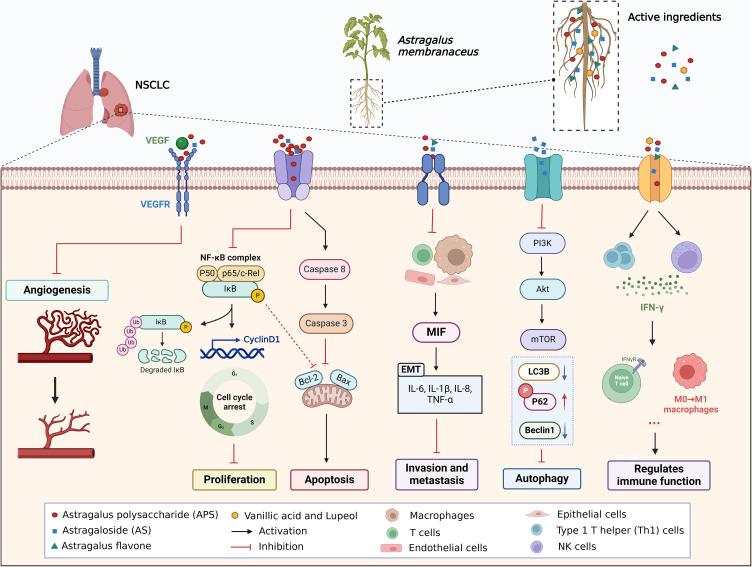
The rising global morbidity and mortality rates of non-small cell lung cancer (NSCLC) underscore the urgent need for more effective treatments. Current therapeutic modalities-including surgery, radiotherapy, chemotherapy, and targeted therapy-face several limitations. Recently, , a traditional Chinese medicine (TCM), has captured significant attention due to its broad pharmacological properties, such as immune regulation, anti-inflammatory effects, and the modulation of reactive oxygen species (ROS) and enzyme activities. This review delivers a comprehensive summary of the most recent advancements and ongoing applications of in NSCLC treatment, underlining its potential for integration into existing treatment protocols. It also highlights essential areas for future research, including the elucidation of its molecular mechanisms, optimization of dosage and administration, and evaluation of its efficacy and safety alongside standard therapies, all of which could potentially improve therapeutic outcomes for NSCLC patients.
非小细胞肺癌(NSCLC)在全球范围内不断上升的发病率和死亡率凸显了对更有效治疗方法的迫切需求。目前的治疗方式,包括手术、放疗、化疗和靶向治疗,都面临着一些局限性。最近,一种传统中药因其广泛的药理特性,如免疫调节、抗炎作用以及对活性氧(ROS)和酶活性的调节,而备受关注。本综述全面总结了其在NSCLC治疗中的最新进展和当前应用,强调了其融入现有治疗方案的潜力。它还突出了未来研究的关键领域,包括阐明其分子机制、优化剂量和给药方式,以及与标准疗法一起评估其疗效和安全性,所有这些都有可能改善NSCLC患者的治疗效果。

 Zotero 插件