
VMP1:细胞内稳态的多面调节因子,与疾病病理学相关。
VMP1: a multifaceted regulator of cellular homeostasis with implications in disease pathology.
作者信息
Tong Jia, Wang Qianqian, Gao Ziyan, Liu Yang, Lu Chengbiao
机构信息
The Third Affiliated Hospital of Xinxiang Medical University, Xinxiang, Henan, China.
Henan Key Laboratory of Biological Psychiatry (Xinxiang Medical University), The Second Affiliated Hospital of Xinxiang Medical University, Xinxiang, Henan, China.
出版信息
Front Cell Dev Biol. 2024 Jul 19;12:1436420. doi: 10.3389/fcell.2024.1436420. eCollection 2024.
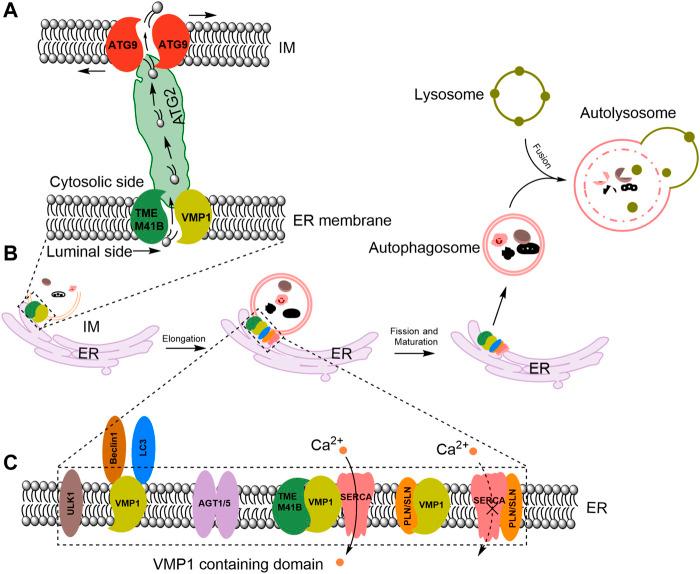
Vacuole membrane protein 1 (VMP1) is an integral membrane protein that plays a pivotal role in cellular processes, particularly in the regulation of autophagy. Autophagy, a self-degradative mechanism, is essential for maintaining cellular homeostasis by degradation and recycling damaged organelles and proteins. VMP1 involved in the autophagic processes include the formation of autophagosomes and the subsequent fusion with lysosomes. Moreover, VMP1 modulates endoplasmic reticulum (ER) calcium levels, which is significant for various cellular functions, including protein folding and cellular signaling. Recent studies have also linked VMP1 to the cellular response against viral infections and lipid droplet (LD). Dysregulation of VMP1 has been observed in several pathological conditions, including neurodegenerative diseases such as Parkinson's disease (PD), pancreatitis, hepatitis, and tumorogenesis, underscoring its potential as a therapeutic target. This review aims to provide an overview of VMP1's multifaceted roles and its implications in disease pathology.
液泡膜蛋白1(VMP1)是一种整合膜蛋白,在细胞过程中发挥关键作用,尤其是在自噬调节方面。自噬是一种自我降解机制,通过降解和回收受损细胞器及蛋白质来维持细胞内稳态,这一过程至关重要。VMP1参与的自噬过程包括自噬体的形成以及随后与溶酶体的融合。此外,VMP1调节内质网(ER)钙水平,这对包括蛋白质折叠和细胞信号传导在内的各种细胞功能具有重要意义。最近的研究还将VMP1与细胞对病毒感染和脂滴(LD)的反应联系起来。在包括帕金森病(PD)等神经退行性疾病、胰腺炎、肝炎和肿瘤发生等几种病理状况中,均观察到VMP1失调,这凸显了其作为治疗靶点的潜力。本综述旨在概述VMP1的多方面作用及其在疾病病理学中的意义。
 Zotero 插件