
程序性死亡受体配体1(PD-L1)与肿瘤微环境在喉鳞状细胞癌中的意义
Significance of PD-L1 and Tumor Microenvironment in Laryngeal Squamous Cell Cancer.
作者信息
Tudor Filip, Marijić Blažen, Babarović Emina, Hadžisejdić Ita
机构信息
Department of Otorhinolaryngology, Head and Neck Surgery, Clinical Hospital Center Rijeka, 51000 Rijeka, Croatia.
Faculty of Medicine, University of Rijeka, 51000 Rijeka, Croatia.
出版信息
Cancers (Basel). 2024 Jul 25;16(15):2645. doi: 10.3390/cancers16152645.
BACKGROUND
Despite the considerable advancement in the field of medicine over recent decades, laryngeal cancer continues to be a challenge. The field of immune oncology has generated promising immunomodulation therapies and opened up new ways of treatment.
METHODS
Our retrospective study included 102 patients diagnosed with laryngeal squamous cell cancer (LSCC). Immunohistochemistry was used to evaluate the expression of PD-L1 and tumor microenvironment cells (CD4, CD8, CD68 and CD163).
RESULTS
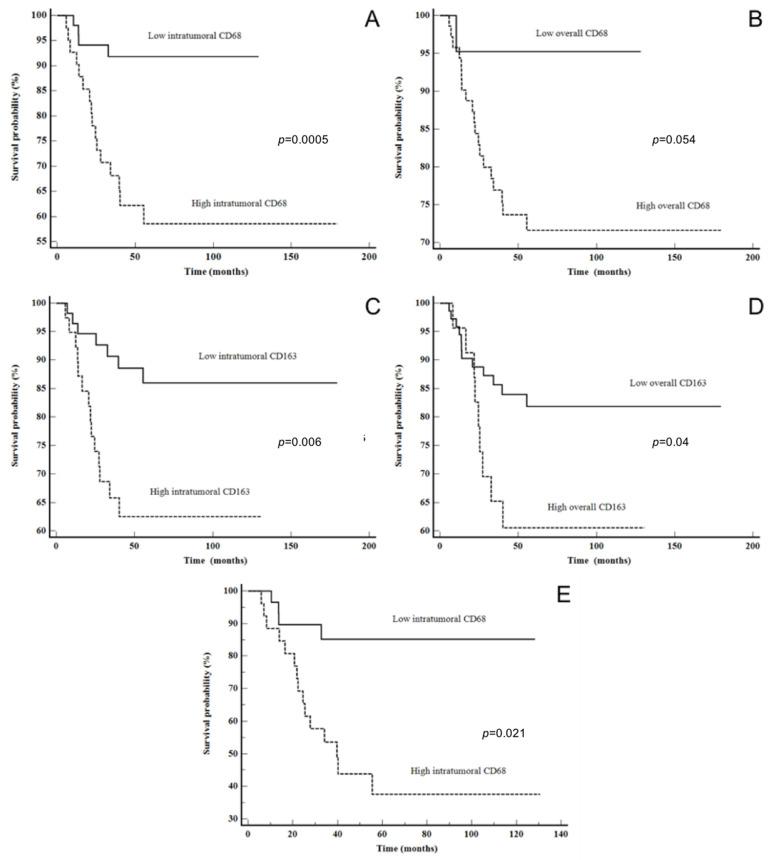
PD-L1 expression showed statistically significant positive correlations with all examined tumor microenvironment cells. Patients with high CD68 and CD163 expression intratumorally ( = 0.0005 and = 0.006, respectively) had statistically significant shorter disease-specific survival. Moreover, a statistically shorter time to recurrence was found in patients with high CD68 intratumoral and CD8 overall counts ( = 0.049 and = 0.019, respectively). Also, high CD8 overall (>23%) and CD68 intratumoral (>2.7%) expression were statistically significant predictors of recurrence ( = 0.028, OR = 3.11 and = 0.019, OR = 3.13, respectively).
CONCLUSIONS
Higher CD68 and CD163 expression represented significantly worse prognosticators for clinical outcomes in patients with LSCC. In order to determine which LSCC patients will benefit from anti-PD-1/PD-L1 inhibitors, it is crucial to elucidate the relationship between PD-L1 expression, immune cell distribution and prognosis in LSCC patients.
背景
尽管近几十年来医学领域取得了显著进展,但喉癌仍然是一个挑战。免疫肿瘤学领域已产生了有前景的免疫调节疗法,并开辟了新的治疗途径。
方法
我们的回顾性研究纳入了102例诊断为喉鳞状细胞癌(LSCC)的患者。采用免疫组织化学法评估PD-L1和肿瘤微环境细胞(CD4、CD8、CD68和CD163)的表达。
结果
PD-L1表达与所有检测的肿瘤微环境细胞呈统计学显著正相关。肿瘤内CD68和CD163表达高的患者(分别为 = 0.0005和 = 0.006)疾病特异性生存期在统计学上显著缩短。此外,肿瘤内CD68和总体CD8计数高的患者(分别为 = 0.049和 = 0.019)复发时间在统计学上较短。而且,总体CD8(>23%)和肿瘤内CD68(>2.7%)高表达是复发的统计学显著预测指标(分别为 = 0.028,OR = 3.11和 = 0.019,OR = 3.13)。
结论
较高的CD68和CD163表达对LSCC患者的临床结局而言是显著更差的预后指标。为了确定哪些LSCC患者将从抗PD-1/PD-L1抑制剂中获益,阐明LSCC患者中PD-L1表达、免疫细胞分布与预后之间的关系至关重要。



 Zotero 插件