
血流紊乱对动脉内膜僵硬的调节。
Modulation of arterial intima stiffness by disturbed blood flow.
机构信息
Department of Veterinary Pathobiology, Texas A&M University, College Station, TX, United States.
Department of Medical Physiology, Texas A&M Health Science Center, Bryan, TX, United States.
出版信息
Exp Biol Med (Maywood). 2024 Jul 31;249:10090. doi: 10.3389/ebm.2024.10090. eCollection 2024.
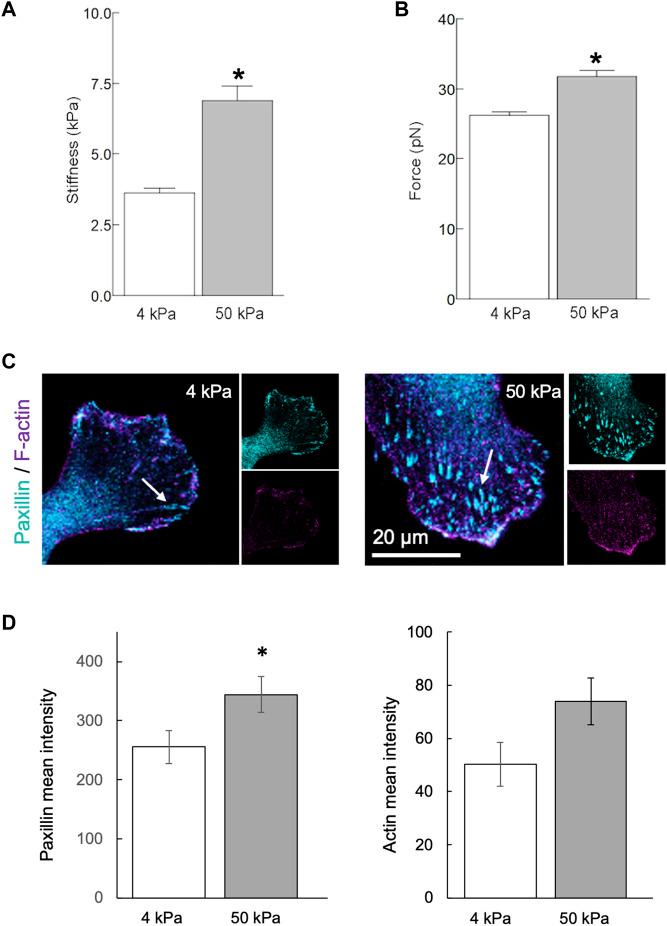
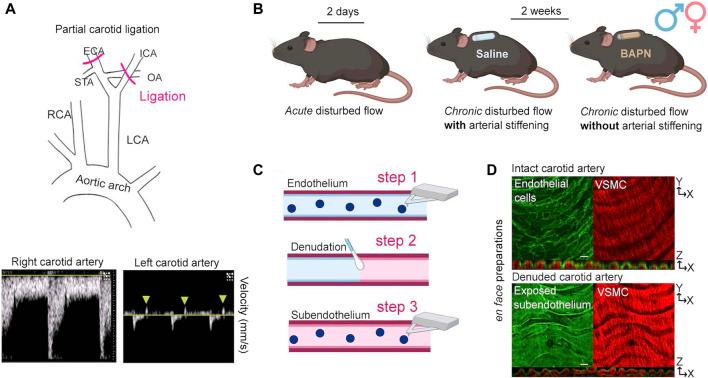
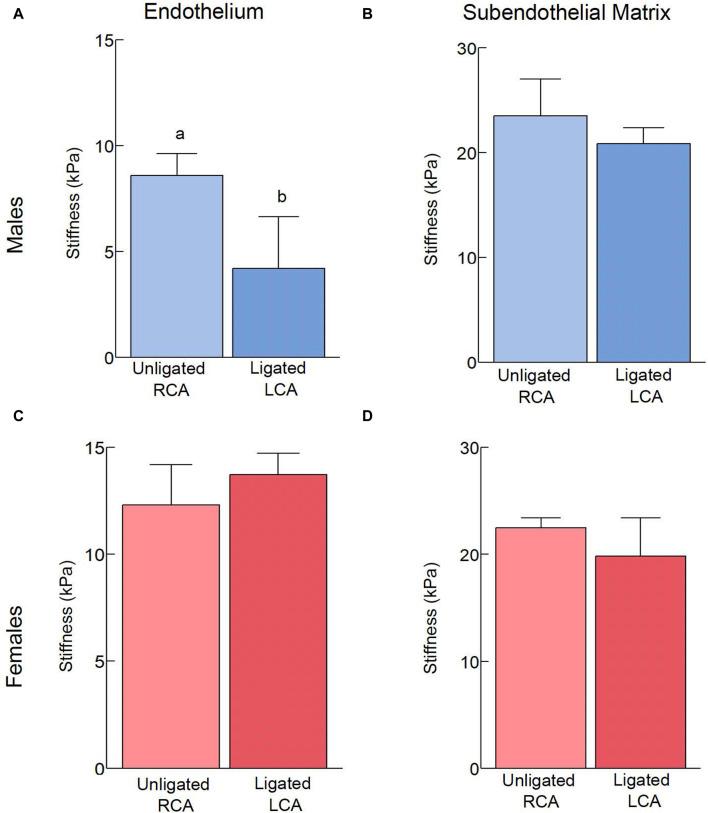
The intima, comprising the endothelium and the subendothelial matrix, plays a crucial role in atherosclerosis pathogenesis. The mechanical stress arising from disturbed blood flow (d-flow) and the stiffening of the arterial wall contributes to endothelial dysfunction. However, the specific impacts of these physical forces on the mechanical environment of the intima remain undetermined. Here, we investigated whether inhibiting collagen crosslinking could ameliorate the detrimental effects of persistent d-flow on the mechanical properties of the intima. Partial ligation of the left carotid artery (LCA) was performed in C57BL/6J mice, inducing d-flow. The right carotid artery (RCA) served as an internal control. Carotids were collected 2 days and 2 weeks after surgery to study acute and chronic effects of d-flow on the mechanical phenotype of the intima. The chronic effects of d-flow were decoupled from the ensuing arterial wall stiffening by administration of β-aminopropionitrile (BAPN), an inhibitor of collagen crosslinking by lysyl oxidase (LOX) enzymes. Atomic force microscopy (AFM) was used to determine stiffness of the endothelium and the denuded subendothelial matrix in carotid preparations. The stiffness of human aortic endothelial cells (HAEC) cultured on soft and stiff hydrogels was also determined. Acute exposure to d-flow caused a slight decrease in endothelial stiffness in male mice but had no effect on the stiffness of the subendothelial matrix in either sex. Regardless of sex, the intact endothelium was softer than the subendothelial matrix. In contrast, exposure to chronic d-flow led to a substantial increase in the endothelial and subendothelial stiffness in both sexes. The effects of chronic d-flow were largely prevented by concurrent BAPN administration. In addition, HAEC displayed reduced stiffness when cultured on soft vs. stiff hydrogels. We conclude that chronic d-flow results in marked stiffening of the arterial intima, which can be effectively prevented by inhibition of collagen crosslinking.
内膜由内皮细胞和内膜下基质组成,在动脉粥样硬化发病机制中起着至关重要的作用。血流紊乱(d-flow)产生的机械应力和动脉壁的僵硬导致内皮功能障碍。然而,这些物理力对内膜的机械环境的具体影响仍未确定。在这里,我们研究了抑制胶原交联是否可以改善持续的 d-flow 对内膜机械性能的不利影响。在 C57BL/6J 小鼠中进行左侧颈总动脉(LCA)部分结扎,诱导 d-flow。右侧颈总动脉(RCA)作为内部对照。手术 2 天后和 2 周后收集颈动脉以研究 d-flow 对内膜机械表型的急性和慢性影响。通过给予β-氨基丙腈(BAPN),即赖氨酰氧化酶(LOX)酶的胶原交联抑制剂,将 d-flow 的慢性作用与随后的动脉壁僵硬分离。原子力显微镜(AFM)用于确定颈动脉标本中内皮和去内皮下基质的硬度。还确定了在软质和硬质水凝胶上培养的人主动脉内皮细胞(HAEC)的硬度。急性暴露于 d-flow 导致雄性小鼠内皮硬度略有降低,但对两性的内膜下基质硬度均无影响。无论性别如何,完整的内皮都比内膜下基质软。相比之下,暴露于慢性 d-flow 会导致两性内皮和内膜下基质的硬度显著增加。同时给予 BAPN 可大大预防慢性 d-flow 的影响。此外,当在软质与硬质水凝胶上培养时,HAEC 的硬度降低。我们的结论是,慢性 d-flow 导致动脉内膜明显僵硬,通过抑制胶原交联可以有效预防。

 Zotero 插件