
晚期肝细胞癌中免疫检查点抑制剂和激酶抑制剂疗效的临床预测因素
Clinical predictive factors of the efficacy of immune checkpoint inhibitors and kinase inhibitors in advanced hepatocellular cancer.
作者信息
Lu Yunyun, Lu Yi
机构信息
Department of Radiation Oncology, Ningbo Medical Center Lihuili Hospital, Ningbo, 315048, Zhejiang, China.
出版信息
Clin Transl Oncol. 2025 Mar;27(3):1142-1154. doi: 10.1007/s12094-024-03644-9. Epub 2024 Aug 19.
BACKGROUND
Hepatocellular carcinoma (HCC) is a highly aggressive tumor associated with significant morbidity and mortality rates. Combination therapy with immune checkpoint inhibitors (ICIs) and kinase inhibitors has emerged as a promising strategy for liver cancer treatment in recent years. However, the clinical factors predicting the outcomes of combination therapy in patients with advanced liver cancer remain uncertain. Therefore, this study investigated the relationships between clinical predictors and the efficacy of ICI plus kinase inhibitor therapy to personalize treatment plans.
METHODS
We retrospectively enrolled 98 patients who received combination treatment with ICIs and kinase inhibitors for advanced HCC. Based on blood lipid levels and other clinical factors prior to treatment, we investigated potential biomarkers that could predict treatment responses in this patient population.
RESULTS
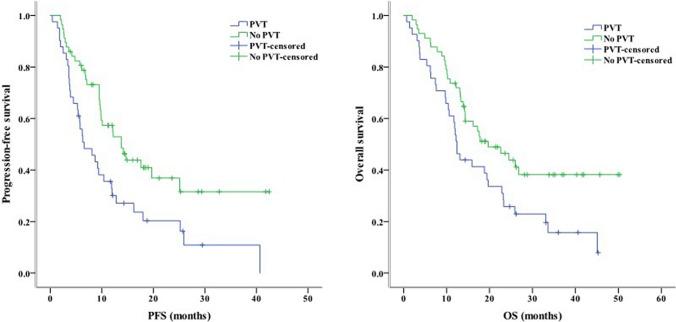
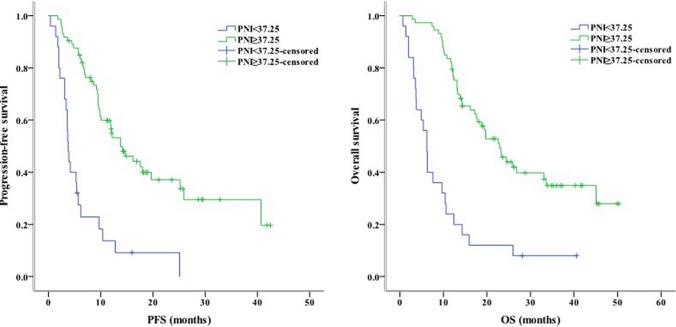
Mean progression-free survival (PFS) and overall survival (OS) in this cohort were 10.1 and 17.2 months, respectively. Via multivariate analysis, the absence of extrahepatic metastasis, the absence of portal vein thrombosis (PVT), neutrophil-to-lymphocyte ratio (NLR) < 3.225, platelet-to-lymphocyte ratio (PLR) < 140.75, and prognostic nutritional index (PNI) ≥ 37.25 were identified as independent predictors of improved PFS. Factors associated with better OS included PLR < 140.75 and total cholesterol (TC) < 3.46 mmol/L. Univariate analysis identified significant associations of Eastern Cooperative Oncology Group performance status (ECOG PS), hepatitis B virus (HBV) DNA levels, Child-Pugh classification, alpha-fetoprotein (AFP), TC, and the receipt of regorafenib with PFS. Additionally, ECOG PS, Child-Pugh classification, AFP, PVT, NLR, PNI, and the receipt of regorafenib were significantly associated with OS.
CONCLUSIONS
PLR and TC were potential clinical predictive factors for survival outcomes in patients with advanced HCC who received ICI/kinase inhibitor combination therapy. It is important to know the clinical characteristics of patients prior to treatment initiation to optimize outcomes.
背景
肝细胞癌(HCC)是一种侵袭性很强的肿瘤,其发病率和死亡率都很高。近年来,免疫检查点抑制剂(ICIs)与激酶抑制剂联合治疗已成为肝癌治疗的一种有前景的策略。然而,预测晚期肝癌患者联合治疗疗效的临床因素仍不明确。因此,本研究调查了临床预测指标与ICI加激酶抑制剂治疗疗效之间的关系,以制定个性化治疗方案。
方法
我们回顾性纳入了98例接受ICIs与激酶抑制剂联合治疗晚期HCC的患者。基于治疗前的血脂水平和其他临床因素,我们研究了可能预测该患者群体治疗反应的潜在生物标志物。
结果
该队列的平均无进展生存期(PFS)和总生存期(OS)分别为10.1个月和17.2个月。通过多变量分析,无肝外转移、无门静脉血栓形成(PVT)及中性粒细胞与淋巴细胞比值(NLR)<3.225、血小板与淋巴细胞比值(PLR)<140.75以及预后营养指数(PNI)≥37.25被确定为PFS改善的独立预测因素。与更好的OS相关的因素包括PLR<140.75和总胆固醇(TC)<3.46 mmol/L。单变量分析确定东部肿瘤协作组体能状态(ECOG PS)、乙型肝炎病毒(HBV)DNA水平、Child-Pugh分级、甲胎蛋白(AFP)、TC以及瑞戈非尼的使用与PFS显著相关。此外,ECOG PS、Child-Pugh分级、AFP、PVT、NLR、PNI以及瑞戈非尼的使用与OS显著相关。
结论
PLR和TC是接受ICI/激酶抑制剂联合治疗的晚期HCC患者生存结局的潜在临床预测因素。在开始治疗前了解患者的临床特征对于优化治疗结局很重要。





 Zotero 插件