
肌肽合成前体氨基酸对慢速生长鸡乳腺纤维微结构及肌纤维分化相关基因表达的影响
Effect of precursor amino acids for carnosine synthesis on breast fiber microstructures and myofiber differentiation-related gene expression in slow-growing chicken.
作者信息
Riou Cindy, Sinpru Panpradub, Suwanvichanee Chanadda, Kamkrathok Boonyarit, Phoovasawat Chalermluck, Rojviriya Catleya, Molee Wittawat, Molee Amonrat
机构信息
School of Animal Technology and Innovation, Institute of Agricultural Technology, Suranaree University of Technology, Nakhon Ratchasima 30000, Thailand.
Synchrotron Light Research Institute (Public Organization), Nakhon Ratchasima, 30000, Thailand.
出版信息
Anim Biosci. 2024 Nov;37(11):1834-1847. doi: 10.5713/ab.24.0012. Epub 2024 Aug 16.
OBJECTIVE
The effects of carnosine synthesis on the structural and microstructural determinants of meat quality have not been studied to date. Therefore, this study aimed to investigate the effect of supplementation with carnosine synthesis precursors on the characteristics and microstructure of breast muscle fibers in slow-growing Korat chickens (KR).
METHODS
Slow-growing KR were fed a non-supplemented commercial diet (control group) or a commercial diet supplemented with 1.0% β-alanine, 0.5% L-histidine, or a combination of both 1.0% β-alanine and 0.5% L-histidine. At 10 weeks, KR were slaughtered, and the breast muscle was collected. Samples were fixed and extracted to study the microstructure, fat level, and porosity of the meat using X-ray and scanning electron microscopy, and real-time polymerase chain reaction was performed to analyze the expression of genes related to myofiber differentiation.
RESULTS
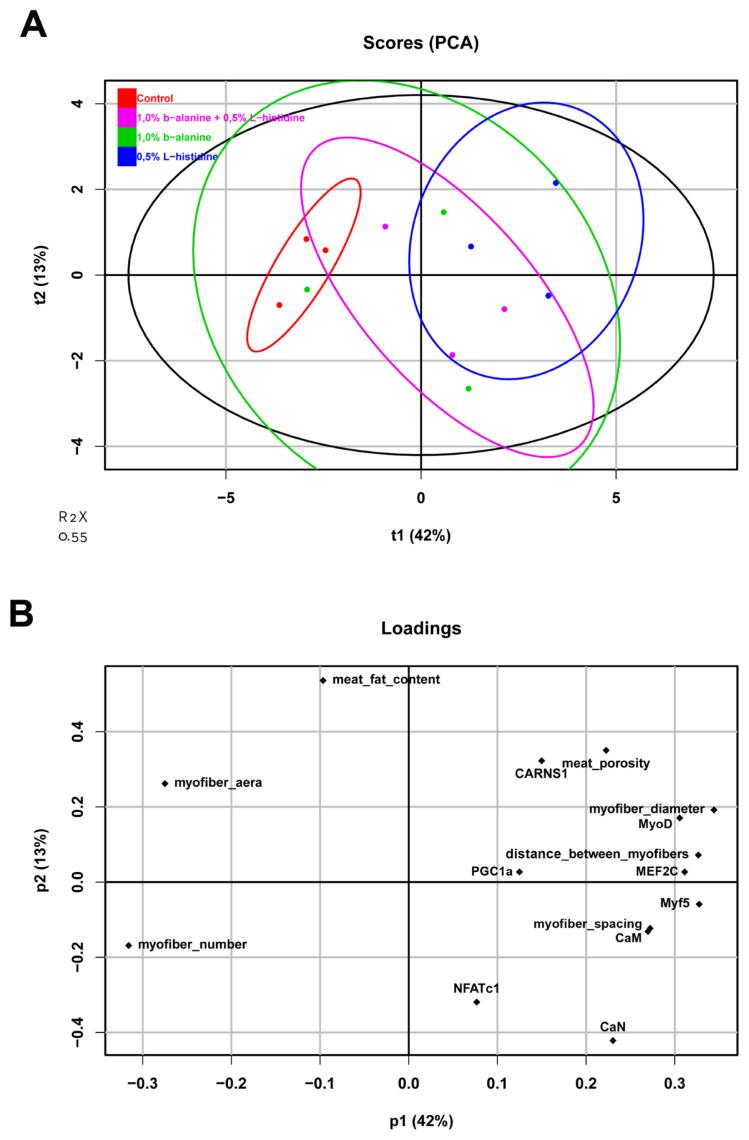
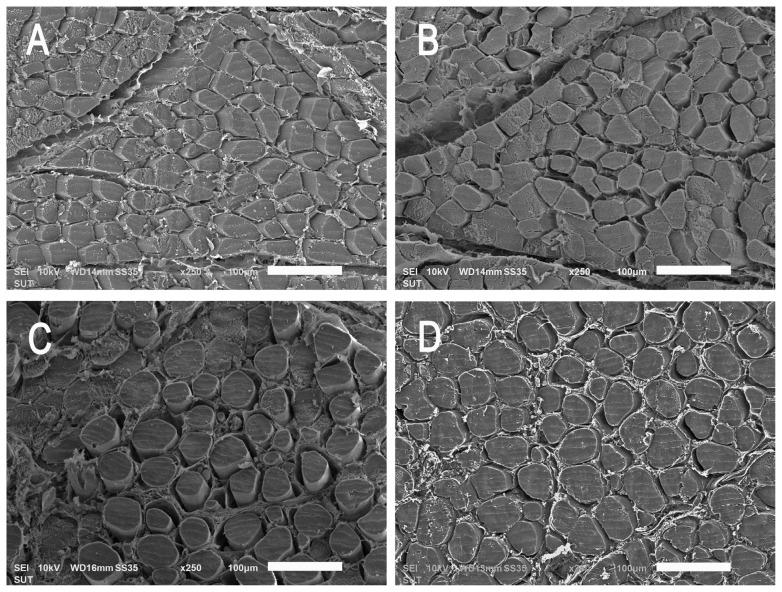
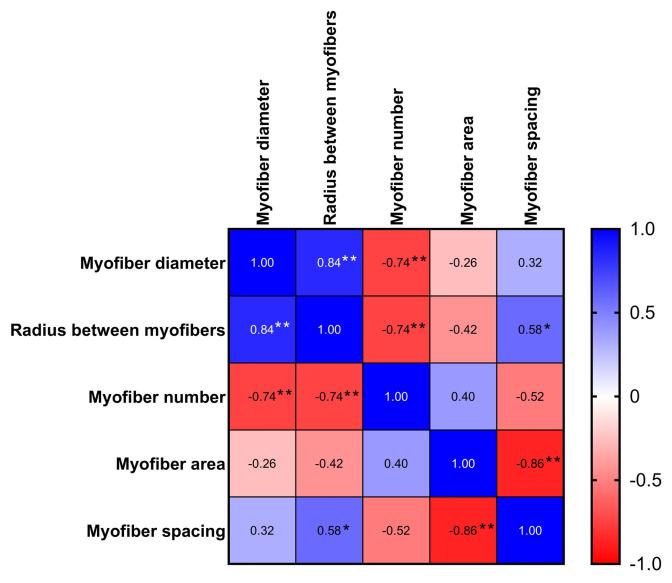
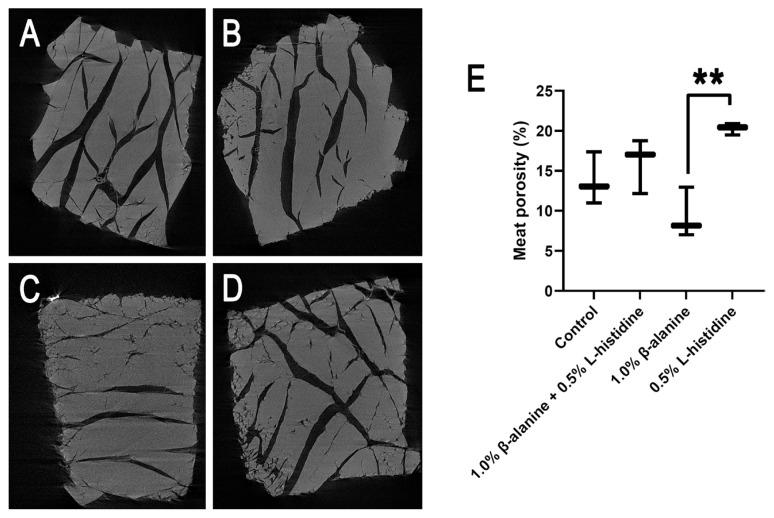
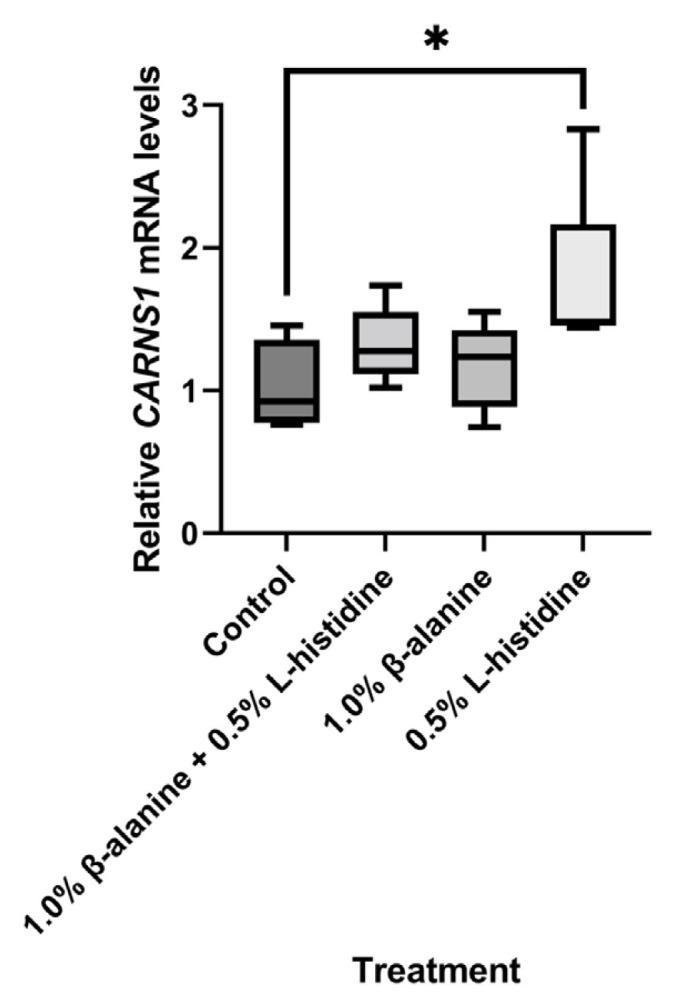
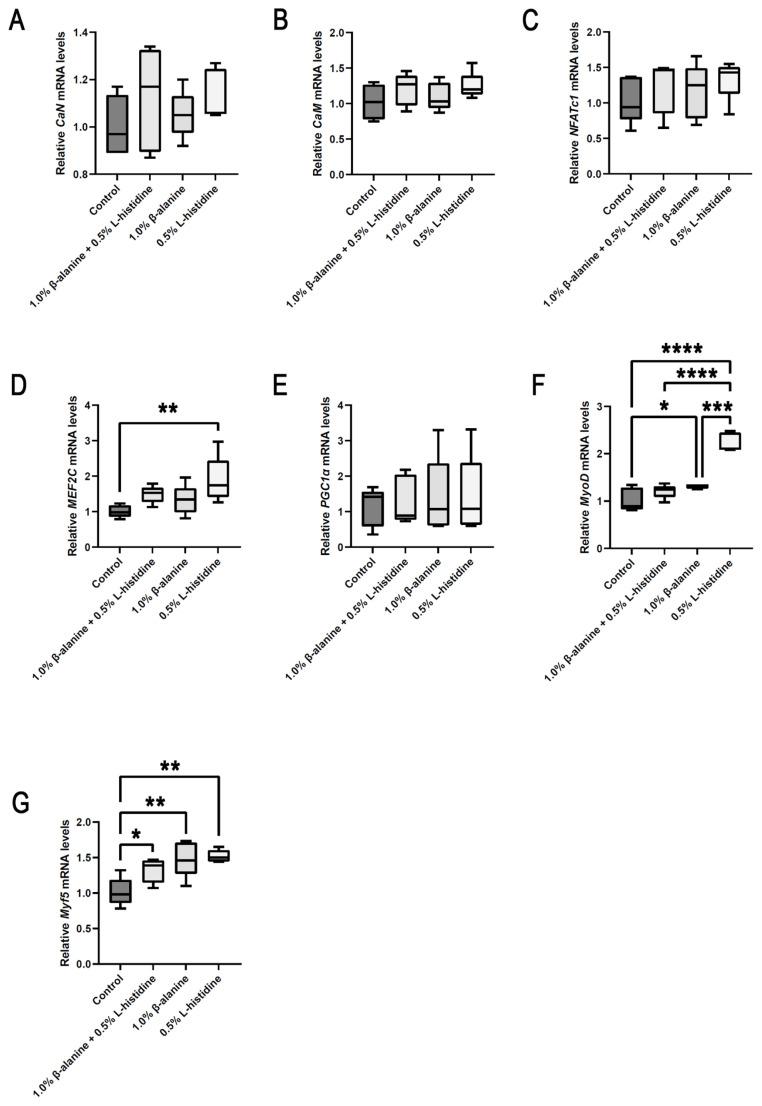
L-histidine supplementation significantly altered myofiber diameter and muscle fiber density and compactness by regulating muscle fiber-type differentiation via carnosine synthase (CARNS1) and myocyte enhancer factor 2C expression, as well as myogenic differentiation antigen and myogenic regulatory factor 5 expression. While excess L-histidine potentially stimulated CARNS1 to modify muscle fiber arrangement and tenderness in breast meat, dietary β-alanine supplementation alone or in combination with L-histidine supplementation induced a relatively less remarkable but not significant (p<0.05) effect on the breast meat characteristics studied.
CONCLUSION
Interestingly, the combination of β-alanine and L-histidine supplementation had no effect on meat microstructure, meat porosity, and fat content in comparison with the control group. Thus, this combination had the best selectivity for improving meat quality. However, further studies are required to clarify the effects of carnosine levels on meat processing.
目的
迄今为止,尚未研究肌肽合成对肉质的结构和微观结构决定因素的影响。因此,本研究旨在探讨补充肌肽合成前体对慢速生长的呵叻鸡(KR)胸肌纤维特性和微观结构的影响。
方法
将慢速生长的KR鸡分为两组,一组喂食不添加任何物质的商业日粮(对照组),另一组喂食添加1.0%β-丙氨酸、0.5%L-组氨酸或1.0%β-丙氨酸与0.5%L-组氨酸组合的商业日粮。在10周龄时,宰杀KR鸡,并采集胸肌。对样本进行固定和提取,使用X射线和扫描电子显微镜研究肉的微观结构、脂肪水平和孔隙率,并进行实时聚合酶链反应以分析与肌纤维分化相关基因的表达。
结果
补充L-组氨酸通过肌肽合酶(CARNS1)和肌细胞增强因子2C的表达,以及生肌分化抗原和成肌调节因子5的表达来调节肌纤维类型分化,从而显著改变肌纤维直径、肌肉纤维密度和紧实度。虽然过量的L-组氨酸可能刺激CARNS1改变胸肉中的肌纤维排列和嫩度,但单独补充膳食β-丙氨酸或与L-组氨酸联合补充对所研究的胸肉特性产生的影响相对较小且不显著(p<0.05)。
结论
有趣的是,与对照组相比,β-丙氨酸和L-组氨酸联合补充对肉的微观结构、肉的孔隙率和脂肪含量没有影响。因此,这种组合在改善肉质方面具有最佳的选择性。然而,需要进一步研究以阐明肌肽水平对肉类加工的影响。

 Zotero 插件