
全民健康覆盖能拯救更多重症 COVID-19 患者的生命:来自韩国个体患者数据的双重差分分析。
Universal health coverage saves more lives among severely ill COVID-19 patients: A difference-in-differences analysis of individual patient data in South Korea.
机构信息
Busan Center for Infectious Disease Control & Prevention, Pusan National University Hospital, Busan, Republic of Korea.
Department of Sociology, Yonsei University, Seoul, Republic of Korea.
出版信息
Health Res Policy Syst. 2024 Aug 21;22(1):116. doi: 10.1186/s12961-024-01212-9.
BACKGROUND
Universal health coverage (UHC) ensures affordability of a variety of essential health services for the general population. Although UHC could mitigate the harmful effects of coronavirus disease 2019 (COVID-19) on patients and their socioeconomic position, the debate on UHC's scope and ability to improve health outcomes is ongoing. This study aimed to identify the impact of UHC policy withdrawal on the health outcomes of South Korea's severely ill COVID-19 patients.
METHODS
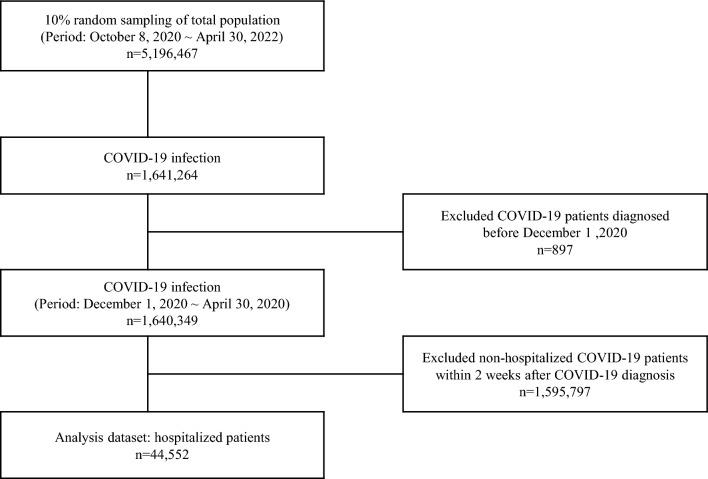
We used a propensity score matching (PSM) and difference-in-differences combined model. This study's subjects were 44,552 hospitalized COVID-19 patients contributing towards health insurance claims data, COVID-19 notifications and vaccination data extracted from the National Health Information Database and the Korea Disease Control and Prevention Agency from 1 December 2020 to 30 April 2022. After PSM, 2460 patients were included. This study's exposures were severity of illness and UHC policy change. The primary outcome was the case fatality rate (CFR) for COVID-19, which was defined as death within 30 days of a COVID-19 diagnosis. There were four secondary outcomes, including time interval between diagnosis and hospitalization (days), length of stay (days), total medical expenses (USD) and the time interval between diagnosis and death (days).
RESULTS
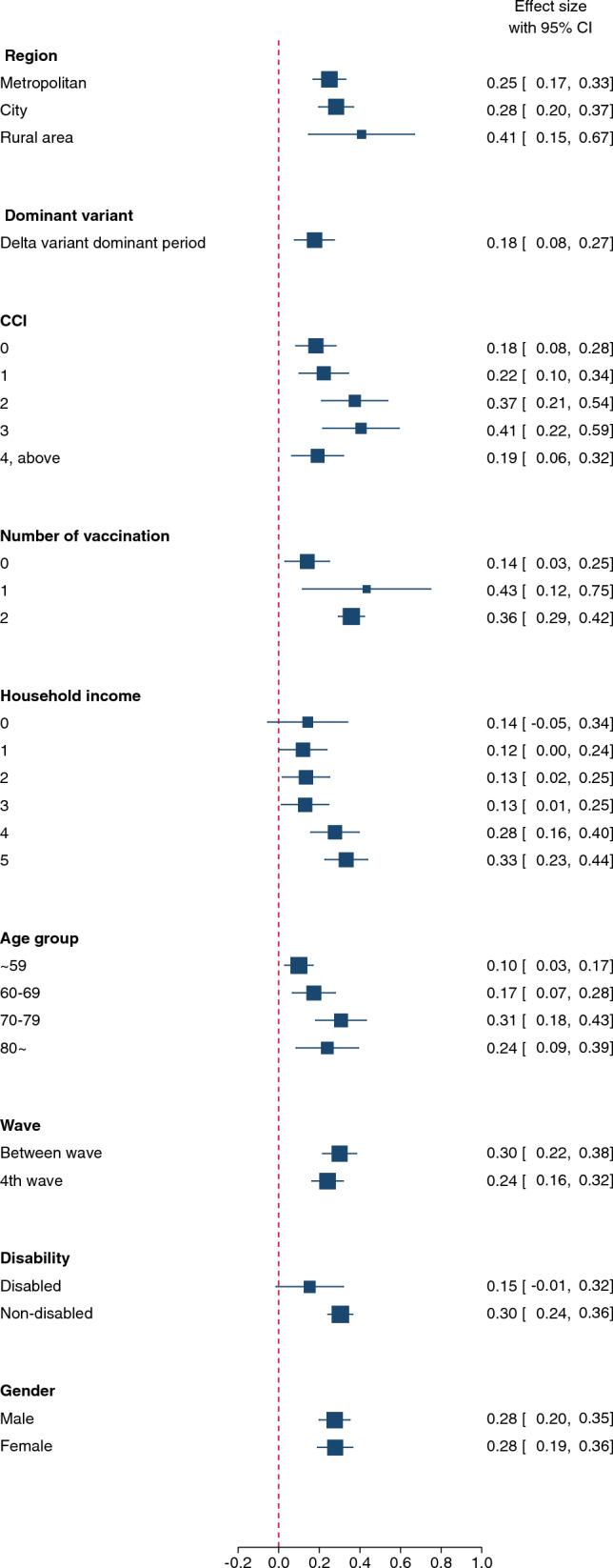
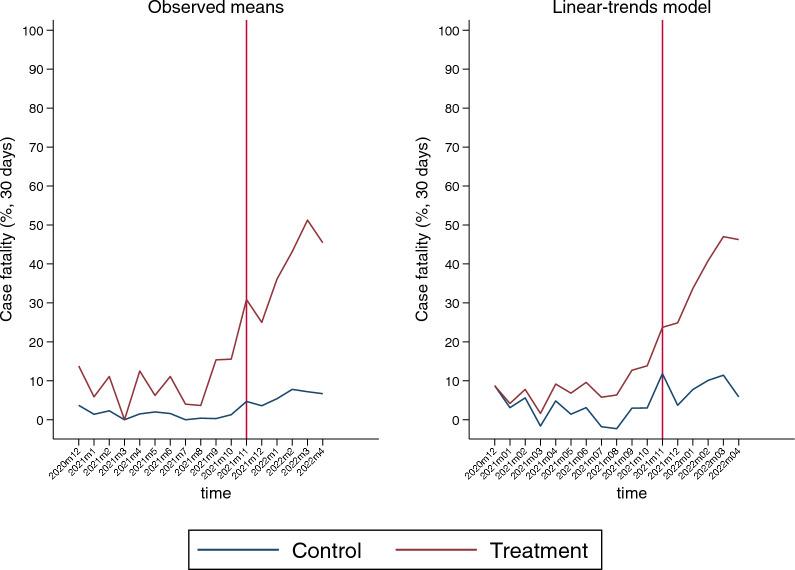
After the UHC policy's withdrawal, the severely ill patients' CFR increased to 284 per 1000 patients [95% confidence interval (CI) 229.1-338.4], hospitalization days decreased to 9.61 days (95% CI -11.20 to -8.03) and total medical expenses decreased to 5702.73 USD (95% CI -7128.41 to -4202.01) compared with those who were not severely ill.
CONCLUSIONS
During the pandemic, UHC may have saved the lives of severely ill COVID-19 patients; therefore, expanding services and financial coverage could be a crucial strategy during public health crises.
背景
全民健康覆盖(UHC)确保了一般人群能够负担得起各种基本的卫生服务。虽然 UHC 可以减轻 2019 年冠状病毒病(COVID-19)对患者及其社会经济地位的有害影响,但关于 UHC 的范围和改善健康结果的能力的争论仍在继续。本研究旨在确定 UHC 政策退出对韩国重症 COVID-19 患者健康结果的影响。
方法
我们使用倾向评分匹配(PSM)和差异中的差异联合模型。本研究的对象是从 2020 年 12 月 1 日至 2022 年 4 月 30 日从国家健康信息数据库和韩国疾病控制与预防机构提取的参与医疗保险索赔数据、COVID-19 通知和疫苗接种数据的 44552 名住院 COVID-19 患者。PSM 后,纳入了 2460 名患者。本研究的暴露因素是疾病严重程度和 UHC 政策变化。主要结果是 COVID-19 的病死率(CFR),定义为 COVID-19 诊断后 30 天内死亡。有四个次要结果,包括诊断与住院之间的时间间隔(天)、住院时间(天)、总医疗费用(美元)和诊断与死亡之间的时间间隔(天)。
结果
UHC 政策退出后,重症患者的 CFR 增加到每 1000 名患者 284 例[95%置信区间(CI)229.1-338.4],住院天数减少到 9.61 天(95%CI-11.20 至-8.03),总医疗费用减少到 5702.73 美元(95%CI-7128.41 至-4202.01),与非重症患者相比。
结论
在大流行期间,UHC 可能挽救了重症 COVID-19 患者的生命;因此,在公共卫生危机期间,扩大服务和财务覆盖范围可能是一项关键战略。
 Zotero 插件