
在波动环境中,两个合作专家的自主性的演变。
The evolution of autonomy from two cooperative specialists in fluctuating environments.
机构信息
College of Engineering, Peking University, Beijing 100871, China.
Institute of Ocean Research, Peking University, Beijing 100871, China.
出版信息
Proc Natl Acad Sci U S A. 2024 Aug 27;121(35):e2317182121. doi: 10.1073/pnas.2317182121. Epub 2024 Aug 22.
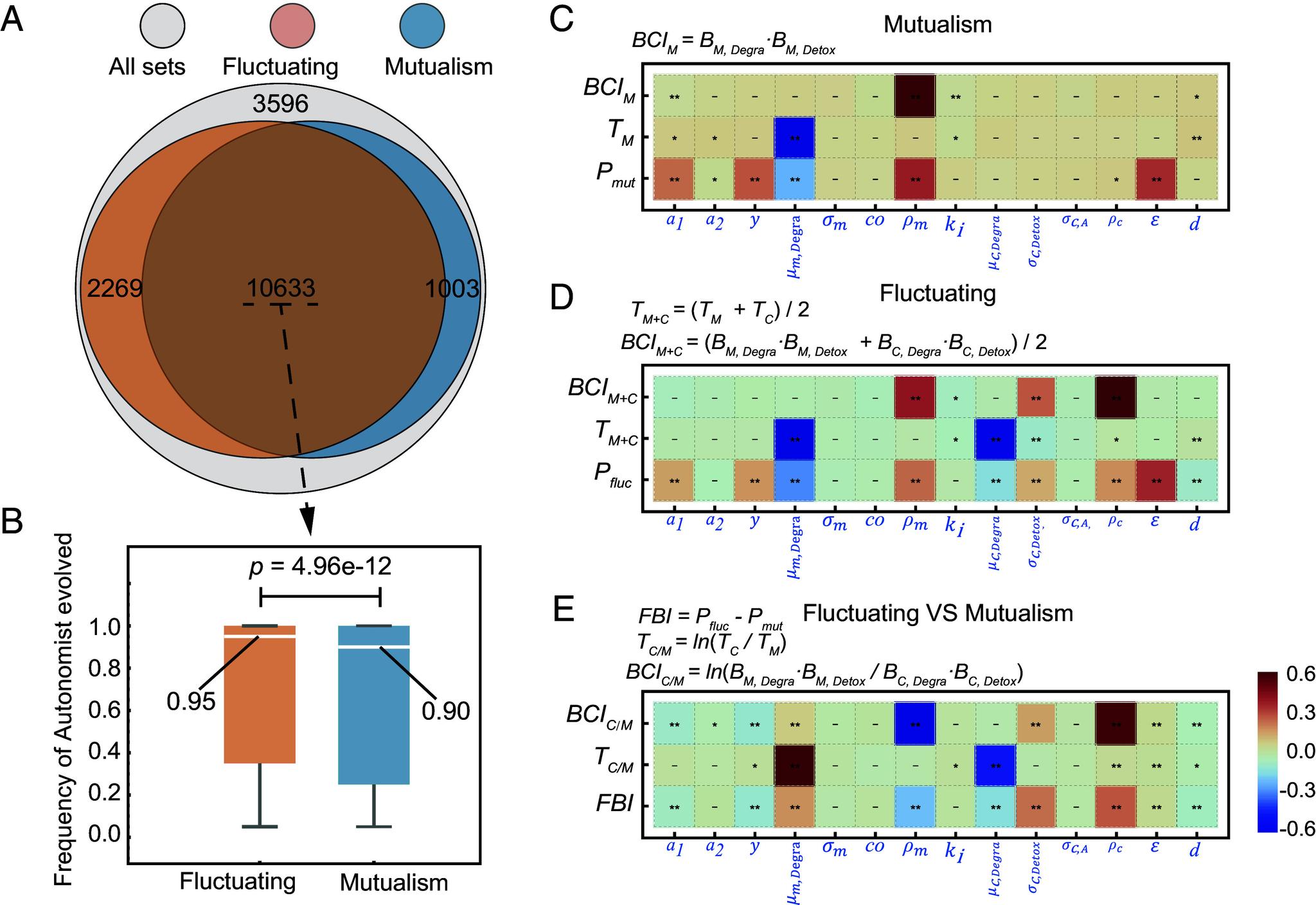
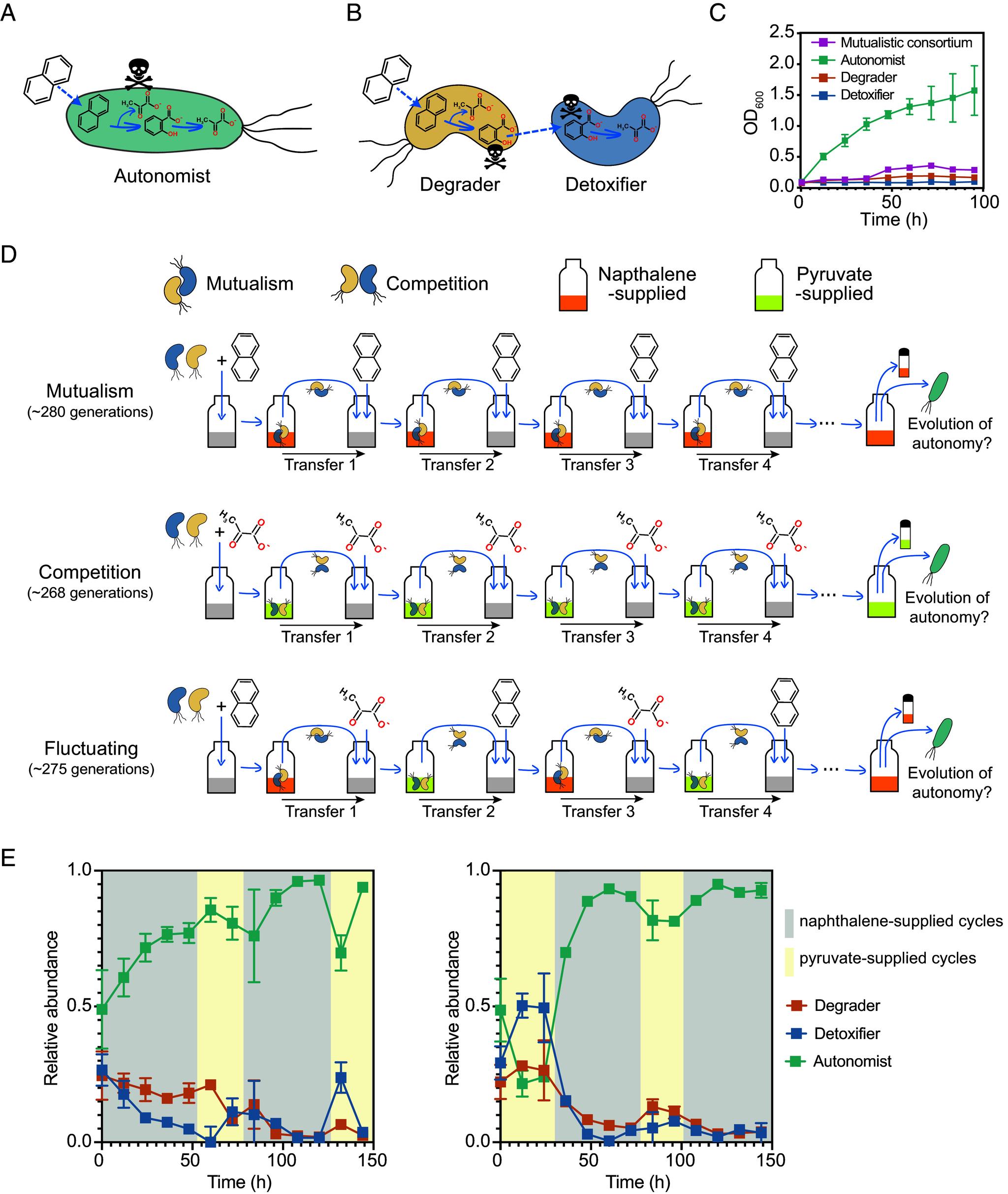
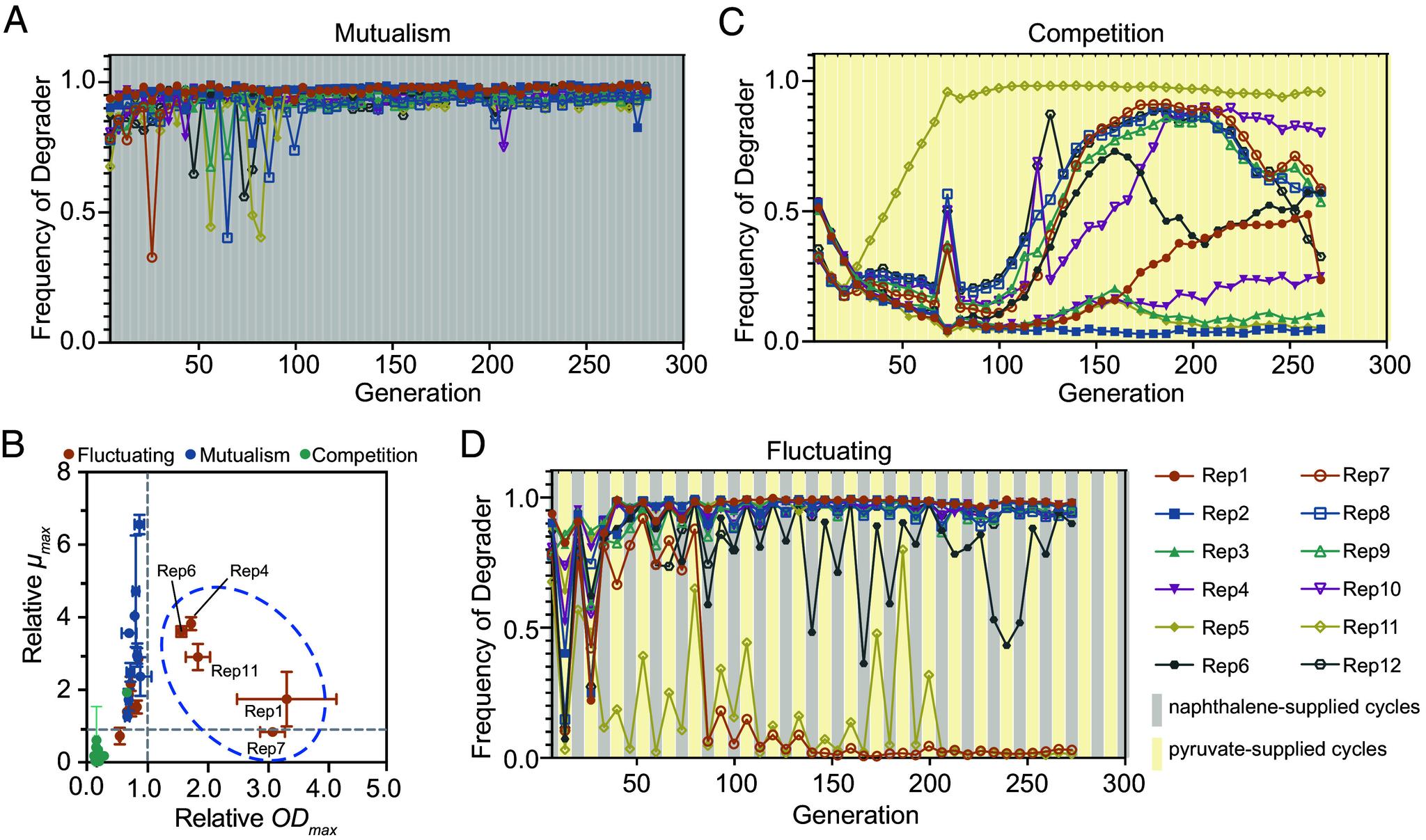
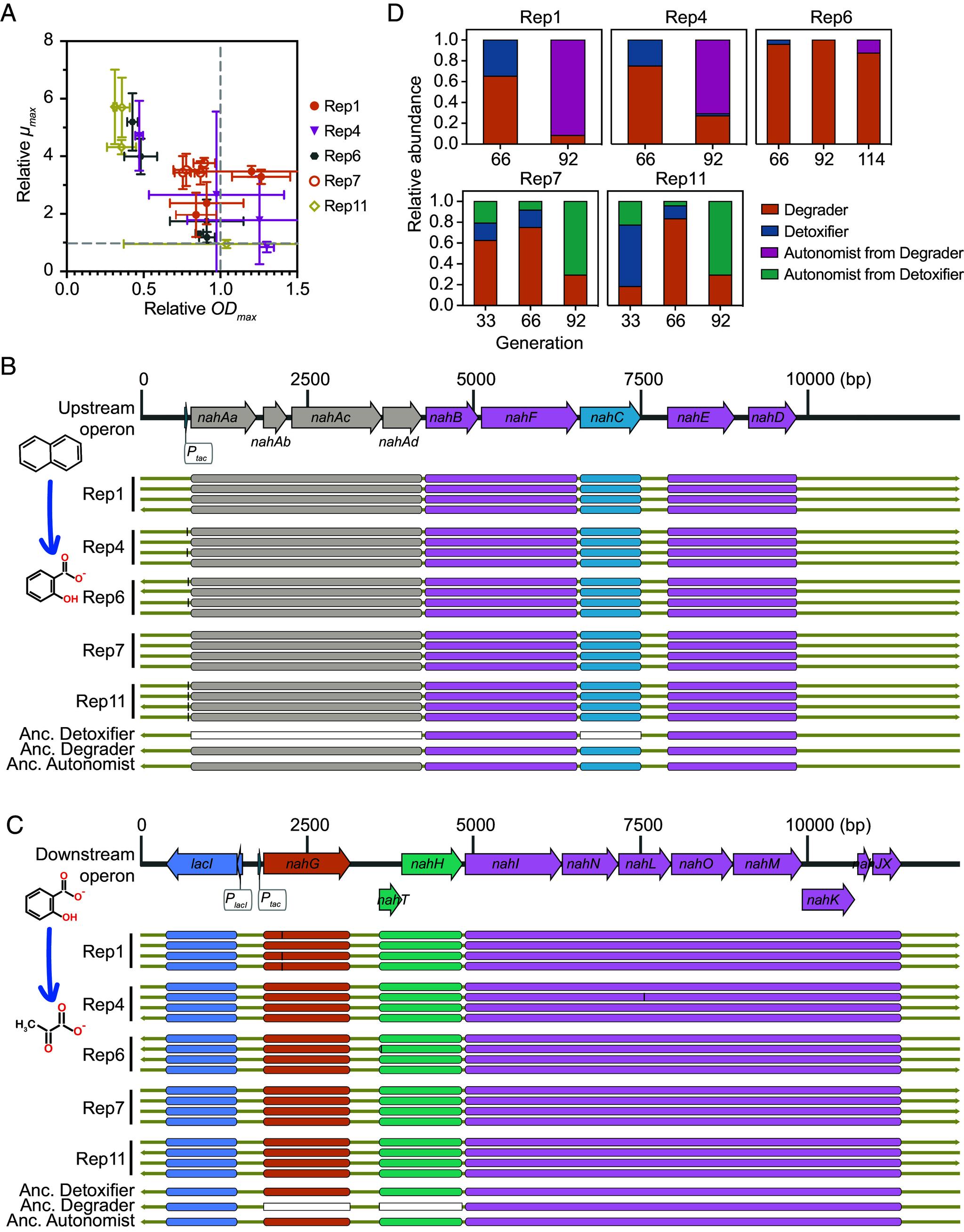
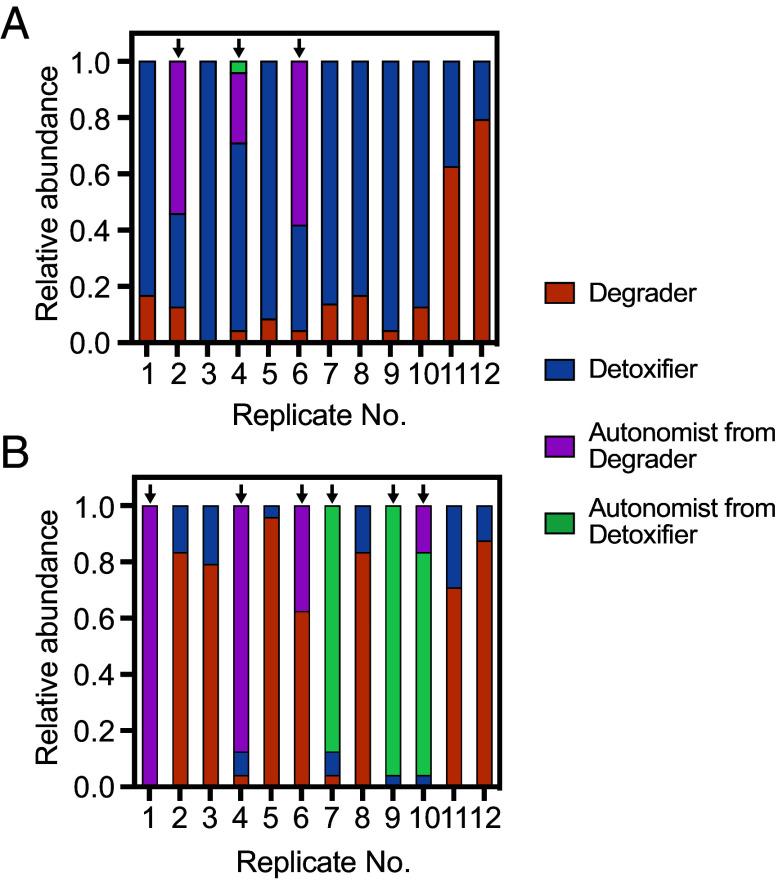
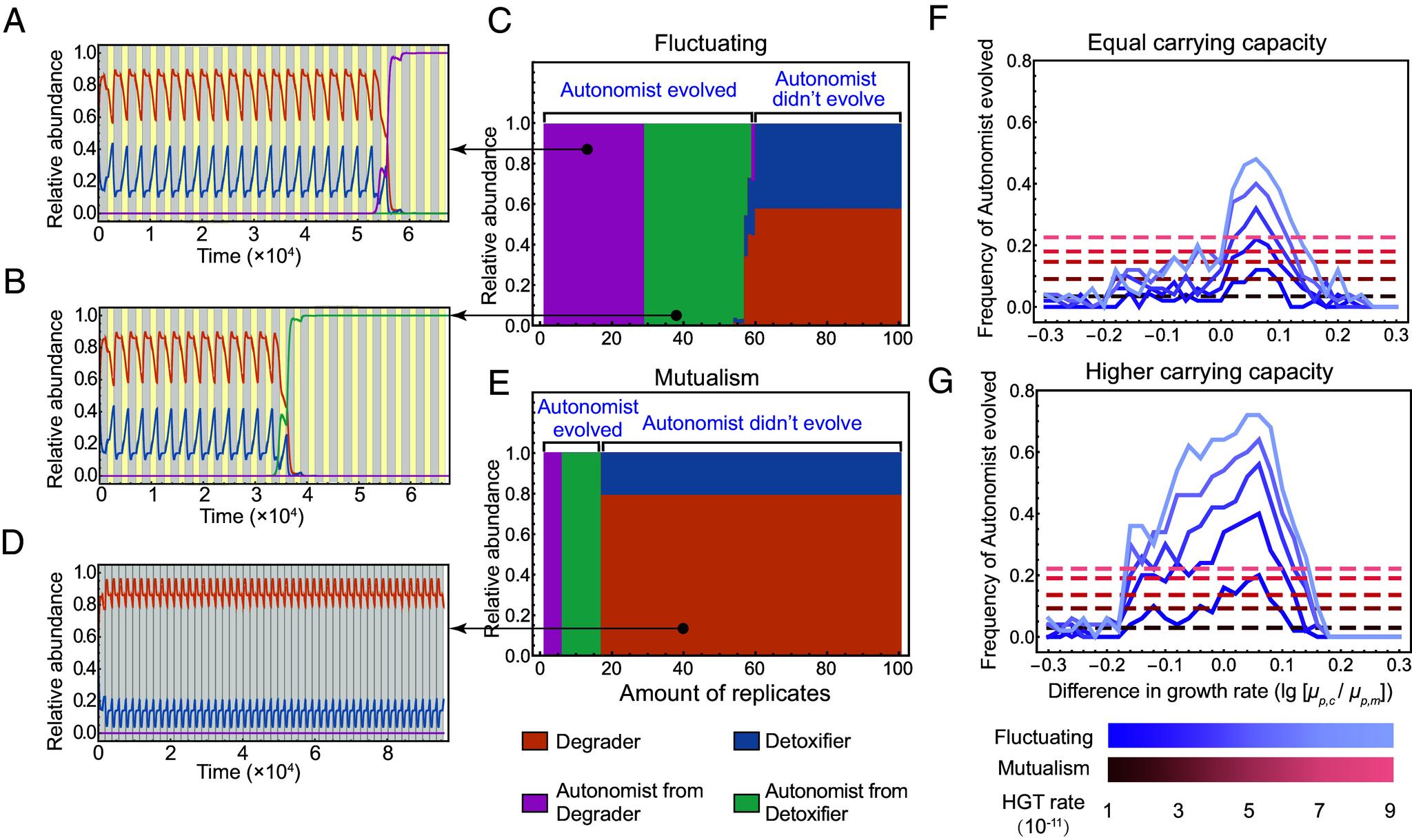
From microbes to humans, organisms perform numerous tasks for their survival, including food acquisition, migration, and reproduction. A complex biological task can be performed by either an autonomous organism or by cooperation among several specialized organisms. However, it remains unclear how autonomy and cooperation evolutionarily switch. Specifically, it remains unclear whether and how cooperative specialists can repair deleted genes through direct genetic exchange, thereby regaining metabolic autonomy. Here, we address this question by experimentally evolving a mutualistic microbial consortium composed of two specialists that cooperatively degrade naphthalene. We observed that autonomous genotypes capable of performing the entire naphthalene degradation pathway evolved from two cooperative specialists and dominated the community. This evolutionary transition was driven by the horizontal gene transfer (HGT) between the two specialists. However, this evolution was exclusively observed in the fluctuating environment alternately supplied with naphthalene and pyruvate, where mutualism and competition between the two specialists alternated. The naphthalene-supplied environment exerted selective pressure that favors the expansion of autonomous genotypes. The pyruvate-supplied environment promoted the coexistence and cell density of the cooperative specialists, thereby increasing the likelihood of HGT. Using a mathematical model, we quantitatively demonstrate that environmental fluctuations facilitate the evolution of autonomy through HGT when the relative growth rate and carrying capacity of the cooperative specialists allow enhanced coexistence and higher cell density in the competitive environment. Together, our results demonstrate that cooperative specialists can repair deleted genes through a direct genetic exchange under specific conditions, thereby regaining metabolic autonomy.
从微生物到人类,生物为了生存执行着许多任务,包括获取食物、迁移和繁殖。一个复杂的生物任务可以由一个自主的生物体或由几个专门化的生物体合作来完成。然而,自主性和合作性是如何进化切换的仍然不清楚。具体来说,合作专家是否以及如何通过直接基因交换来修复缺失的基因,从而恢复代谢自主性,这一点仍不清楚。在这里,我们通过实验进化了一个由两个合作降解萘的专家组成的互惠共生微生物联合体来解决这个问题。我们观察到,能够执行整个萘降解途径的自主基因型从两个合作专家进化而来,并在群落中占据主导地位。这种进化转变是由两个专家之间的水平基因转移(HGT)驱动的。然而,这种进化仅在萘和丙酮酸交替供应的波动环境中观察到,在这种环境中,两个专家之间的互利共生和竞争交替出现。萘供应环境对自主基因型的扩张施加了选择性压力。丙酮酸供应环境促进了合作专家的共存和细胞密度的增加,从而增加了 HGT 的可能性。使用数学模型,我们定量地证明了当合作专家的相对生长率和承载能力允许在竞争环境中增强共存和更高的细胞密度时,环境波动通过 HGT 促进了自主性的进化。总之,我们的结果表明,合作专家可以在特定条件下通过直接基因交换修复缺失的基因,从而恢复代谢自主性。
 Zotero 插件