
基于移动医疗的慢性缺血性心脏病疾病管理方案的可行性及初步影响研究:形成性研究。
Exploring the Feasibility and Initial Impact of an mHealth-Based Disease Management Program for Chronic Ischemic Heart Disease: Formative Study.
机构信息
PREVENT Inc, Aichi, Japan.
Institute of Transdisciplinary Sciences for Innovation, Kanazawa University, Kanazawa, Japan.
出版信息
JMIR Form Res. 2024 Aug 22;8:e56380. doi: 10.2196/56380.
BACKGROUND
Ischemic heart disease (IHD) is a leading cause of morbidity and mortality worldwide, requiring innovative management strategies. Traditional disease management programs often struggle to maintain patient engagement and ensure long-term adherence to lifestyle modifications and treatment plans. Mobile health (mHealth) technologies have emerged as a promising approach to address these challenges by providing continuous, personalized support and monitoring. However, the reported use and effectiveness of mHealth in the management of chronic diseases, such as IHD, have not been fully explored.
OBJECTIVE
The primary aim of this study was to evaluate the feasibility and initial impact of an mHealth-based disease management program on coronary risk factors, specifically focusing on low-density lipoprotein cholesterol (LDL-C) levels, in individuals with chronic IHD. This formative study assessed changes in LDL-C and other metabolic health indicators over a 6-month period to determine the initial impact of the program on promoting cardiovascular health and lifestyle modification.
METHODS
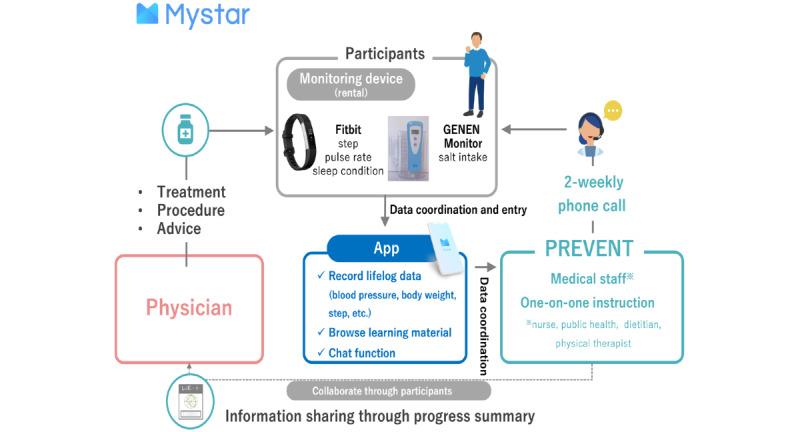
This study was conducted using data from 266 individuals enrolled in an mHealth-based disease management program between December 2018 and October 2022. Eligibility was based on a documented history of IHD, with participants undergoing a comprehensive cardiac risk assessment before enrollment. The program included biweekly telephone sessions, health tracking via a smartphone app, and regular progress reports to physicians. The study measured change in LDL-C levels as the primary outcome, with secondary outcomes including body weight, triglyceride levels, and other metabolic health indicators. Statistical analysis used paired 2-tailed t tests and stratified analyses to assess the impact of the program.
RESULTS
Participants experienced a significant reduction in LDL-C, with LDL-C levels decreasing from a mean of 98.82 (SD 40.92) mg/dL to 86.62 (SD 39.86) mg/dL (P<.001). The intervention was particularly effective in individuals with high baseline LDL-C levels. Additional improvements were seen in body weight and triglyceride levels, suggesting a broader impact on metabolic health. Program adherence and engagement metrics suggested high participant satisfaction and compliance.
CONCLUSIONS
The results of this study suggest that the mHealth-based disease management program is feasible and has an initial positive impact on reducing LDL-C levels and improving metabolic health in individuals with chronic IHD. However, the study design does not allow for a definitive conclusion regarding whether mHealth-based disease management programs are more effective than traditional face-to-face care. Future studies are needed to further validate these findings and to examine the comparative effectiveness of these interventions in more detail.
背景
缺血性心脏病(IHD)是全球发病率和死亡率的主要原因,需要创新的管理策略。传统的疾病管理方案往往难以维持患者的参与度,并确保长期坚持生活方式的改变和治疗计划。移动医疗(mHealth)技术的出现为解决这些挑战提供了一种有前途的方法,它可以提供持续的、个性化的支持和监测。然而,mHealth 在管理慢性疾病(如 IHD)方面的使用和效果尚未得到充分探索。
目的
本研究的主要目的是评估基于移动医疗的疾病管理方案在冠状动脉风险因素方面的可行性和初步影响,特别是关注低密度脂蛋白胆固醇(LDL-C)水平,在患有慢性 IHD 的个体中。这项形成性研究评估了在 6 个月的时间内 LDL-C 和其他代谢健康指标的变化,以确定该方案对促进心血管健康和生活方式改变的初步影响。
方法
本研究使用了 2018 年 12 月至 2022 年 10 月期间参加基于移动医疗的疾病管理方案的 266 名个体的数据。入选标准是有缺血性心脏病病史,并在入组前进行全面的心脏风险评估。该方案包括每两周进行一次电话咨询、通过智能手机应用程序进行健康跟踪以及定期向医生报告进展情况。研究以 LDL-C 水平的变化作为主要结果,次要结果包括体重、甘油三酯水平和其他代谢健康指标。使用配对的 2 尾 t 检验和分层分析来评估方案的影响。
结果
参与者的 LDL-C 水平显著降低,从平均 98.82(SD 40.92)mg/dL 降至 86.62(SD 39.86)mg/dL(P<.001)。该干预措施在基线 LDL-C 水平较高的个体中效果尤为显著。体重和甘油三酯水平也有所改善,表明对代谢健康有更广泛的影响。方案的依从性和参与度指标表明患者满意度和依从性较高。
结论
这项研究的结果表明,基于移动医疗的疾病管理方案是可行的,并且对降低慢性 IHD 患者的 LDL-C 水平和改善代谢健康有初步的积极影响。然而,研究设计不允许得出关于移动医疗疾病管理方案是否比传统的面对面护理更有效的明确结论。需要进一步的研究来进一步验证这些发现,并更详细地研究这些干预措施的比较效果。
 Zotero 插件