
一项针对患有运动认知风险综合征的老年人的社区层面身体活动策略的可行性随机对照试验。
A feasibility randomized controlled trial of a community-level physical activity strategy for older adults with motoric cognitive risk syndrome.
作者信息
Hernon Shannon M, Singh Yashi, Ward Nathan, Kramer Arthur F, Travison Thomas G, Verghese Joe, Fielding Roger A, Kowaleski Christopher, Reid Kieran F
机构信息
Laboratory of Exercise Physiology and Physical Performance, Brigham and Women's Hospital, Harvard Medical School, Boston, MA, United States.
Department of Psychology, Tufts University, Medford, MA, United States.
出版信息
Front Aging. 2024 Aug 8;5:1329177. doi: 10.3389/fragi.2024.1329177. eCollection 2024.
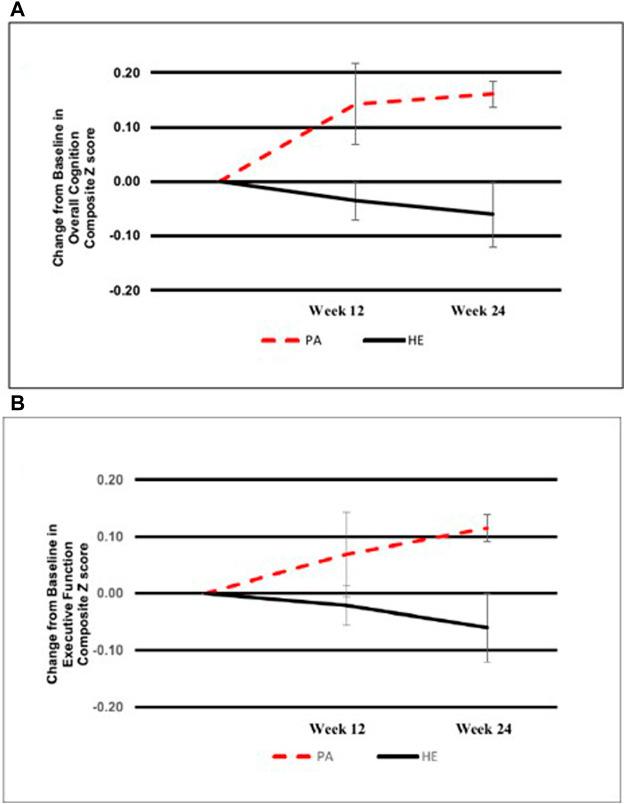
The motoric cognitive risk syndrome (MCR) is a syndrome characterized by subjective memory complaints and slow walking speeds that can identify older adults at increased risk for developing Alzheimer's disease or a related dementia (ADRD). To date, the feasibility of community-based physical activity (PA) programs for improving outcomes in MCR have yet to be examined. To address this knowledge gap, we conducted a translational randomized controlled trial (RCT) comparing 24-weeks of PA to a healthy aging education (HE) control intervention delivered within the infrastructure of an urban senior center in Greater Boston (clincaltrials.gov identifier: NCT03750682). An existing senior center employee was trained to administer the multimodal group-based PA program that included moderate-intensity aerobic walking, strength, flexibility and balance training. A total of 79 older adults attended the senior center for a screening visit, of whom 29 met the MCR criteria and 25 were randomized to PA or HE (mean age: 74.4 ± 7 years; BMI: 32.4 ± 7 kg/m; 85% female; 3MSE score: 92.4 ± 7; gait speed: 0.52 ± 0.1 m/s; SPPB score 4.8 ± 1.9). Due to the Covid-19 pandemic the study was stopped prematurely. Participants could successfully adhere to the study interventions (overall attendance rate: PA: 69% vs. HE:70% at study termination). Participants also successfully completed baseline and follow-up study assessments that included a computerized cognitive testing battery and objective tests of physical performance and functional exercise capacity. No study-related adverse events occurred. Notable trends for improved cognitive performance, gait speed and 6-min walk distance were exhibited in PA compared to HE. Our study provides important preliminary information to aid the design of larger-scale RCTs of PA that may help to preserve the independence of vulnerable older adults at high risk for ADRD in community-based settings.
运动认知风险综合征(MCR)是一种以主观记忆障碍和步行速度缓慢为特征的综合征,可识别出患阿尔茨海默病或相关痴呆症(ADRD)风险增加的老年人。迄今为止,基于社区的体育活动(PA)项目改善MCR患者预后的可行性尚未得到研究。为填补这一知识空白,我们进行了一项转化随机对照试验(RCT),比较了为期24周的PA项目与在大波士顿地区城市老年中心开展的健康老龄化教育(HE)对照干预措施(临床研究.gov标识符:NCT03750682)。一名老年中心的现有员工接受培训,负责实施基于小组的多模式PA项目,该项目包括中等强度的有氧步行、力量、灵活性和平衡训练。共有79名老年人到老年中心参加筛查,其中29人符合MCR标准,25人被随机分配到PA组或HE组(平均年龄:74.4±7岁;体重指数:32.4±7kg/m²;85%为女性;3MSE评分:92.4±7;步速:0.52±0.1m/s;SPPB评分4.8±1.9)。由于新冠疫情,研究提前终止。参与者能够成功坚持研究干预措施(研究结束时的总体出勤率:PA组为69%,HE组为70%)。参与者还成功完成了基线和随访研究评估,包括计算机化认知测试组合以及身体性能和功能运动能力的客观测试。未发生与研究相关的不良事件。与HE组相比,PA组在认知表现、步速和6分钟步行距离方面呈现出改善的显著趋势。我们的研究提供了重要的初步信息,有助于设计更大规模的PA RCT,这可能有助于在社区环境中保持ADRD高风险弱势老年人的独立性。

 Zotero 插件