
瓜氨酸和 ADI-PEG20 可减轻幼猪急性内毒素血症模型的炎症反应。
Citrulline and ADI-PEG20 reduce inflammation in a juvenile porcine model of acute endotoxemia.
机构信息
USDA-ARS Children's Nutrition Research Center, Department of Pediatrics, Baylor College of Medicine, Houston, TX, United States.
Pediatric Critical Care Medicine, Department of Pediatrics, Baylor College of Medicine, Houston, TX, United States.
出版信息
Front Immunol. 2024 Aug 8;15:1400574. doi: 10.3389/fimmu.2024.1400574. eCollection 2024.
BACKGROUND
Arginine is a conditionally essential amino acid that is depleted in critically ill or surgical patients. In pediatric and adult patients, sepsis results in an arginine-deficient state, and the depletion of plasma arginine is associated with greater mortality. However, direct supplementation of arginine can result in the excessive production of nitric oxide (NO), which can contribute to the hypotension and macrovascular hypo-reactivity observed in septic shock. Pegylated arginine deiminase (ADI-PEG20, pegargiminase) reduces plasma arginine and generates citrulline that can be transported intracellularly to generate local arginine and NO, without resulting in hypotension, while maintaining microvascular patency. The objective of this study was to assess the efficacy of ADI-PEG20 with and without supplemental intravenous citrulline in mitigating hypovolemic shock, maintaining tissue levels of arginine, and reducing systemic inflammation in an endotoxemic pediatric pig model.
METHODS
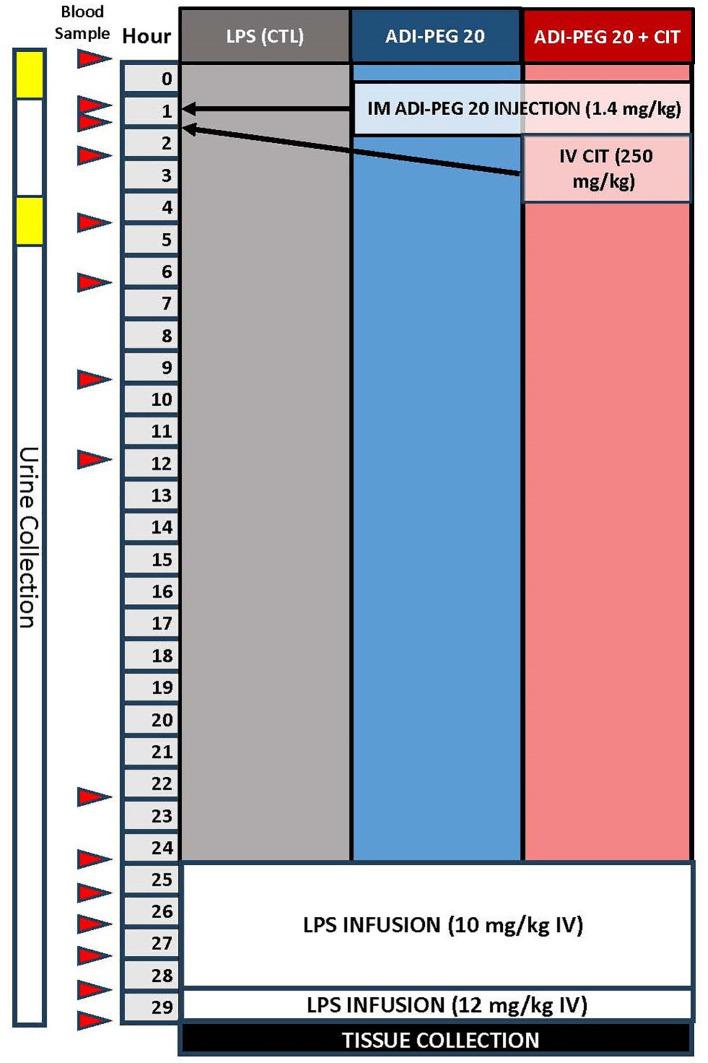
Twenty 3-week-old crossbred piglets were implanted with jugular and carotid catheters as well as telemetry devices in the femoral artery to measure blood pressure, body temperature, heart rate, and respiration rate. The piglets were assigned to one of three treatments before undergoing a 5 h lipopolysaccharide (LPS) infusion protocol. Twenty-four hours before LPS infusion, control pigs (LPS; n=6) received saline, ADI-PEG20 pigs (n=7) received an injection of ADI-PEG20, and seven pigs (ADI-PEG20 + CIT pigs [n=7]) received ADI-PEG20 and 250 mg/kg citrulline intravenously. Pigs were monitored throughout LPS infusion and tissue was harvested at the end of the protocol.
RESULTS
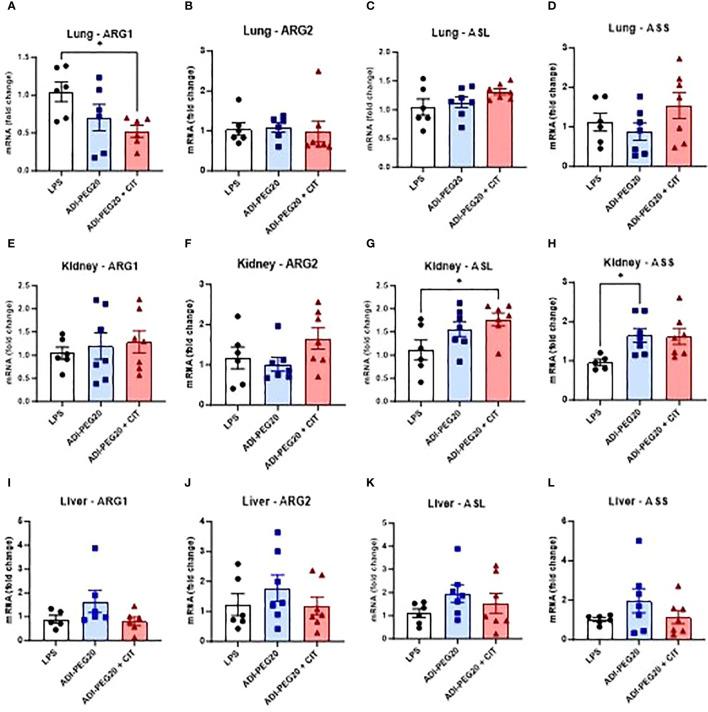
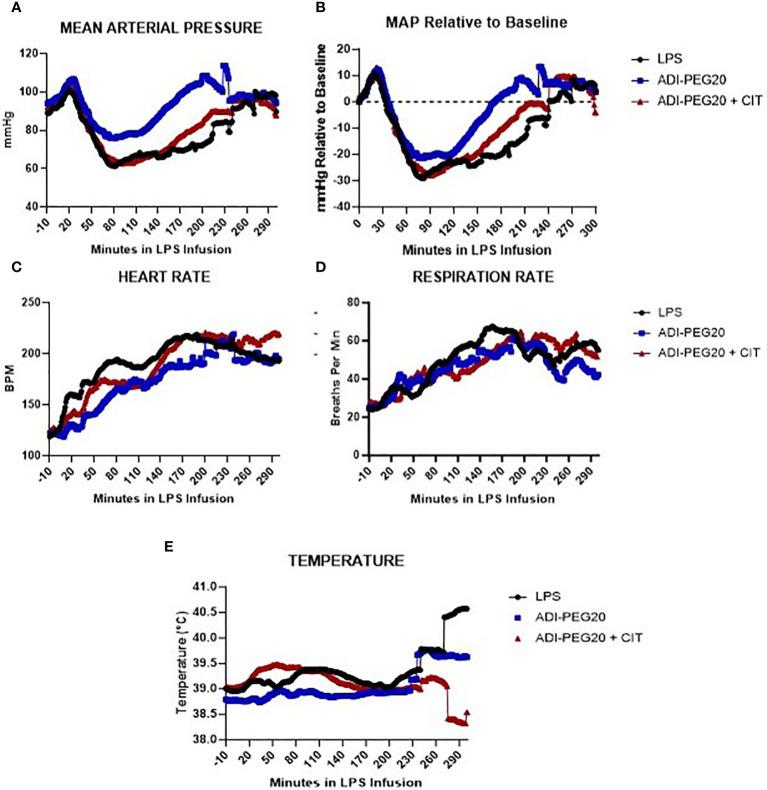
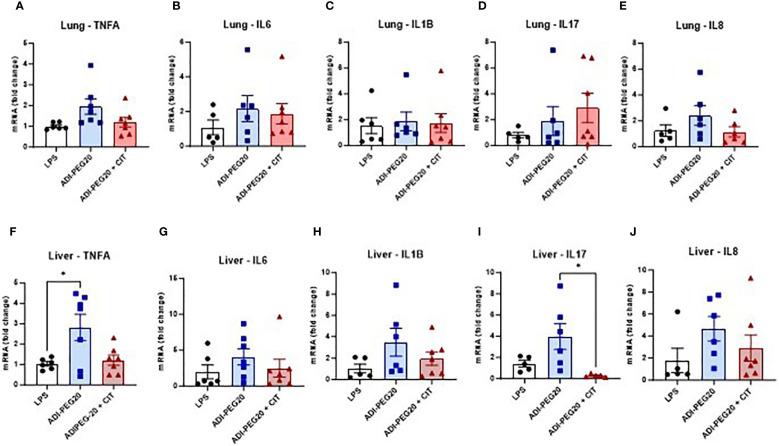
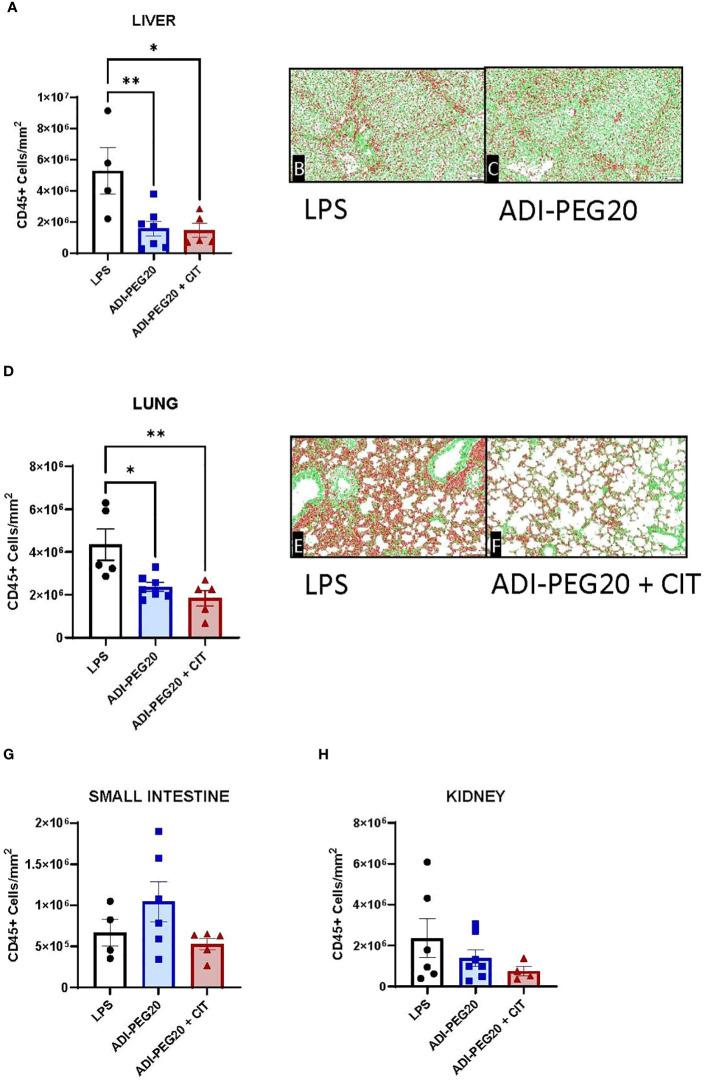
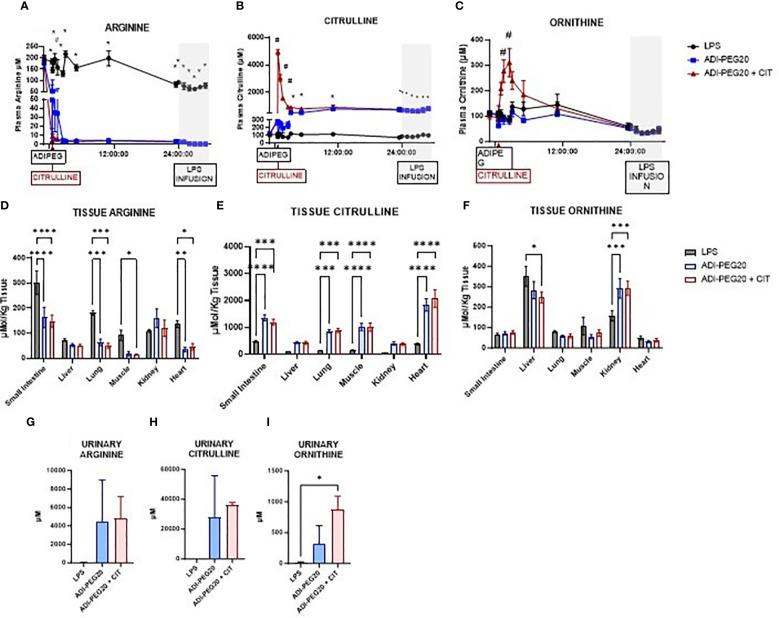
Plasma arginine levels decreased and remained low in ADI-PEG20 + CIT and ADI-PEG20 pigs compared with LPS pigs but tissue arginine levels in the liver and kidney were similar across all treatments. Mean arterial pressure in all groups decreased from 90 mmHg to 60 mmHg within 1 h of LPS infusion but there were no significant differences between treatment groups. ADI-PEG20 and ADI-PEG20 + CIT pigs had less CD45+ infiltrate in the liver and lung and lower levels of pro-inflammatory cytokines in the plasma.
CONCLUSION
ADI-PEG20 and citrulline supplementation failed to ameliorate the hypotension associated with acute endotoxic sepsis in pigs but reduced systemic and local inflammation in the lung and liver.
背景
精氨酸是一种条件必需氨基酸,在危重病或外科患者中会被消耗殆尽。在儿科和成年患者中,败血症会导致精氨酸缺乏状态,而血浆精氨酸的消耗与更高的死亡率相关。然而,直接补充精氨酸会导致一氧化氮(NO)的过度产生,这可能导致败血症性休克中观察到的低血压和大血管低反应性。聚乙二醇化精氨酸脱亚氨酶(ADI-PEG20,聚乙二醇化精氨酸酶)可降低血浆精氨酸并产生瓜氨酸,瓜氨酸可被转运到细胞内,生成局部精氨酸和 NO,而不会导致低血压,同时保持微血管通畅。本研究的目的是评估 ADI-PEG20 联合或不联合静脉补充瓜氨酸在减轻低血容量性休克、维持组织精氨酸水平和减少内毒素性小儿猪模型全身炎症中的疗效。
方法
20 只 3 周龄杂交小猪植入颈内和颈外导管以及股动脉遥测设备,以测量血压、体温、心率和呼吸频率。小猪在接受 5 小时脂多糖(LPS)输注方案前被分配到三种治疗之一。在 LPS 输注前 24 小时,对照猪(LPS;n=6)接受生理盐水,ADI-PEG20 猪(n=7)接受 ADI-PEG20 注射,7 只猪(ADI-PEG20 + CIT 猪[n=7])接受 ADI-PEG20 和 250 mg/kg 瓜氨酸静脉注射。猪在 LPS 输注过程中进行监测,并在方案结束时采集组织。
结果
与 LPS 组相比,ADI-PEG20 + CIT 和 ADI-PEG20 猪的血浆精氨酸水平降低且持续较低,但所有治疗组的肝和肾组织精氨酸水平相似。所有组的平均动脉压在 LPS 输注后 1 小时内从 90 mmHg 降至 60 mmHg,但治疗组之间无显著差异。ADI-PEG20 和 ADI-PEG20 + CIT 猪的肝和肺中 CD45+浸润减少,血浆中促炎细胞因子水平降低。
结论
ADI-PEG20 和瓜氨酸补充未能改善猪急性内毒素性败血症相关的低血压,但减少了肺和肝的全身和局部炎症。



 Zotero 插件