
NOX4-活性氧轴:骨骼健康与代谢的关键调节因子。
NOX4-reactive oxygen species axis: critical regulators of bone health and metabolism.
作者信息
Dzubanova Martina, Bond Jacob M, Craige Siobhan M, Tencerova Michaela
机构信息
Laboratory of Molecular Physiology of Bone, Institute of Physiology of the Czech Academy of Sciences, Prague, Czechia.
Faculty of Science, Charles University, Prague, Czechia.
出版信息
Front Cell Dev Biol. 2024 Aug 12;12:1432668. doi: 10.3389/fcell.2024.1432668. eCollection 2024.
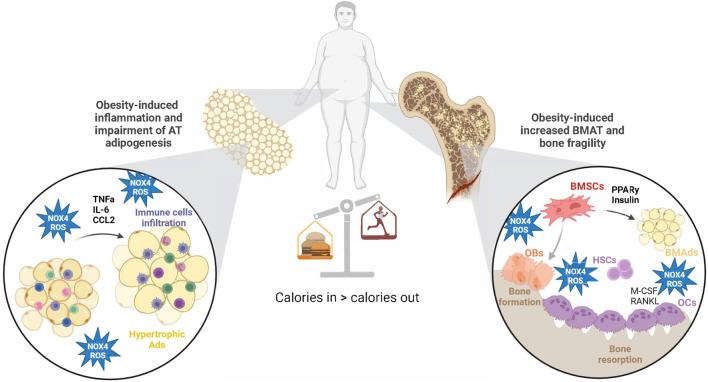
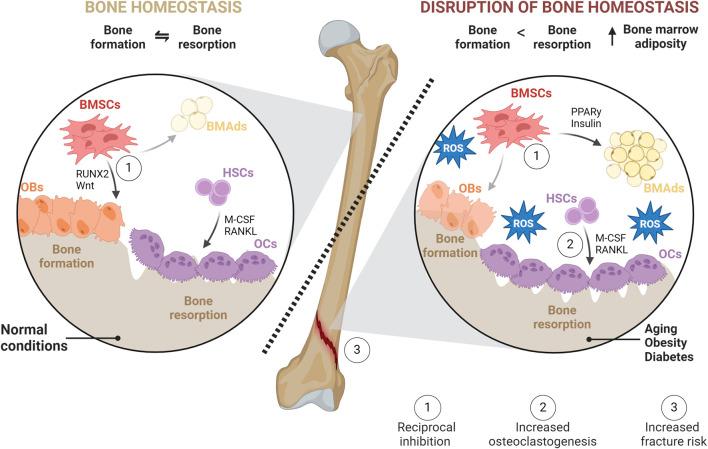
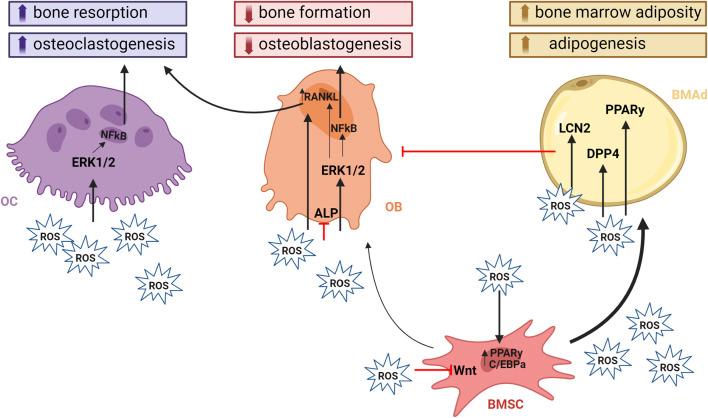
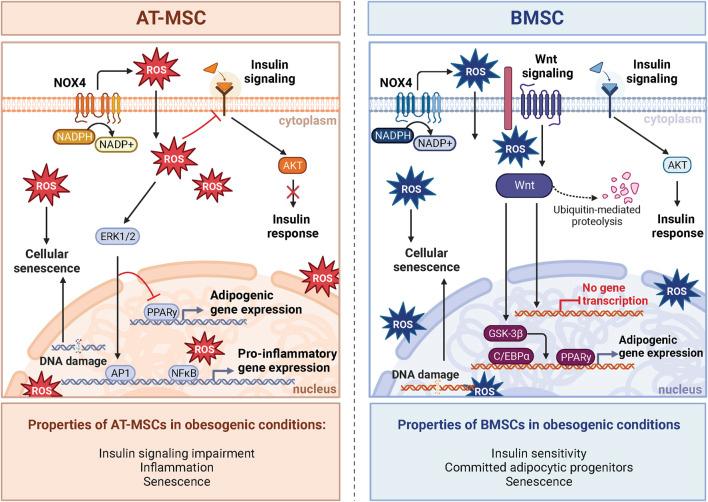
Bone marrow stromal cells (BMSCs) play a significant role in bone metabolism as they can differentiate into osteoblasts, bone marrow adipocytes (BMAds), and chondrocytes. BMSCs chronically exposed to nutrient overload undergo adipogenic programming, resulting in bone marrow adipose tissue (BMAT) formation. BMAT is a fat depot transcriptionally, metabolically, and morphologically distinct from peripheral adipose depots. Reactive oxygen species (ROS) are elevated in obesity and serve as important signals directing BMSC fate. ROS produced by the NADPH oxidase (NOX) family of enzymes, such as NOX4, may be responsible for driving BMSC adipogenesis at the expense of osteogenic differentiation. The dual nature of ROS as both cellular signaling mediators and contributors to oxidative stress complicates their effects on bone metabolism. This review discusses the complex interplay between ROS and BMSC differentiation in the context of metabolic bone diseases.Special attention is paid to the role of NOX4-ROS in regulating cellular processes within the bone marrow microenvironment and potential target in metabolic bone diseases.
骨髓基质细胞(BMSCs)在骨代谢中发挥着重要作用,因为它们可以分化为成骨细胞、骨髓脂肪细胞(BMAds)和软骨细胞。长期暴露于营养过剩的BMSCs会经历脂肪生成编程,导致骨髓脂肪组织(BMAT)形成。BMAT是一种在转录、代谢和形态上与外周脂肪库不同的脂肪储存库。活性氧(ROS)在肥胖症中升高,并作为指导BMSC命运的重要信号。由NADPH氧化酶(NOX)家族的酶(如NOX4)产生的ROS可能是驱动BMSC脂肪生成而牺牲成骨分化的原因。ROS作为细胞信号传导介质和氧化应激贡献者的双重性质使其对骨代谢的影响变得复杂。本综述讨论了在代谢性骨病背景下ROS与BMSC分化之间的复杂相互作用。特别关注NOX4-ROS在调节骨髓微环境内细胞过程中的作用以及在代谢性骨病中的潜在靶点。
 Zotero 插件