
通过跨轮状病毒 A 至 J 种共同表达 NSP5 和 NSP2 来描绘类病毒质样结构。
Characterization of viroplasm-like structures by co-expression of NSP5 and NSP2 across rotavirus species A to J.
机构信息
Institute of Virology, University of Zurich, Zurich, Switzerland.
出版信息
J Virol. 2024 Sep 17;98(9):e0097524. doi: 10.1128/jvi.00975-24. Epub 2024 Aug 28.
UNLABELLED
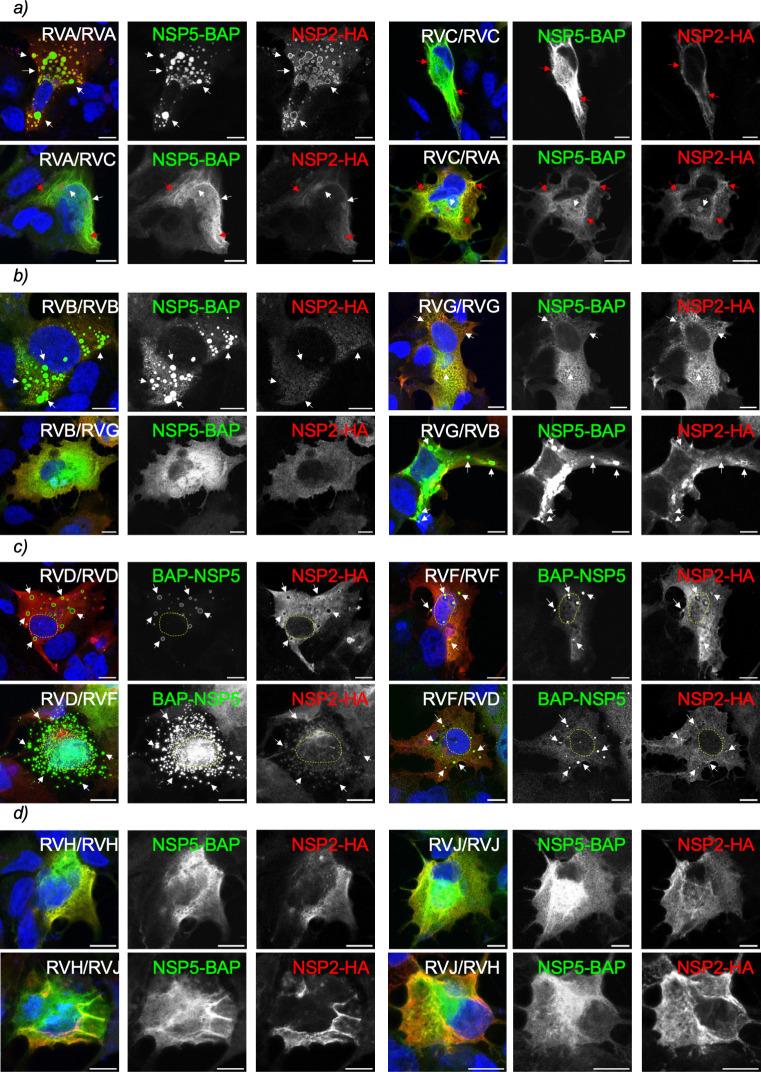
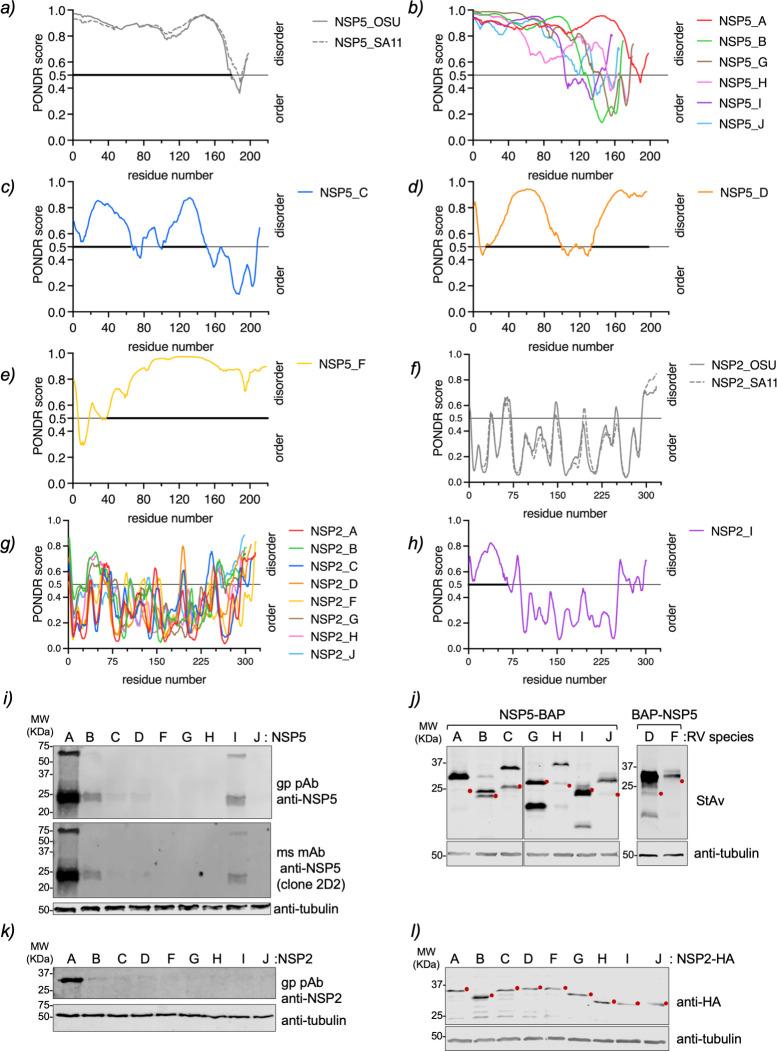
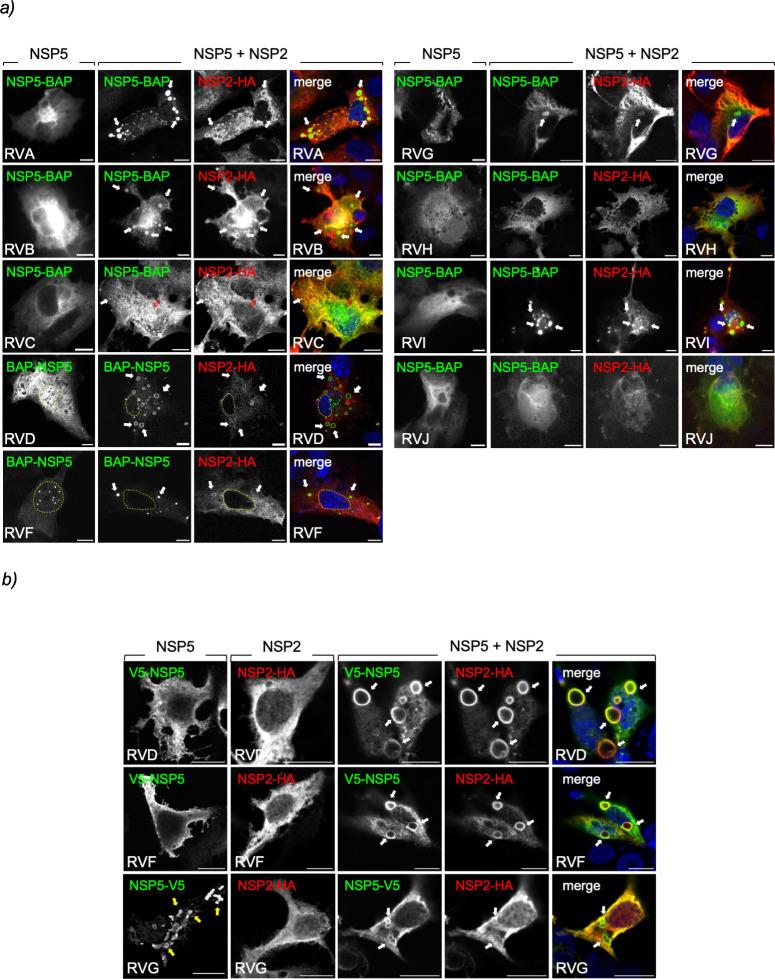
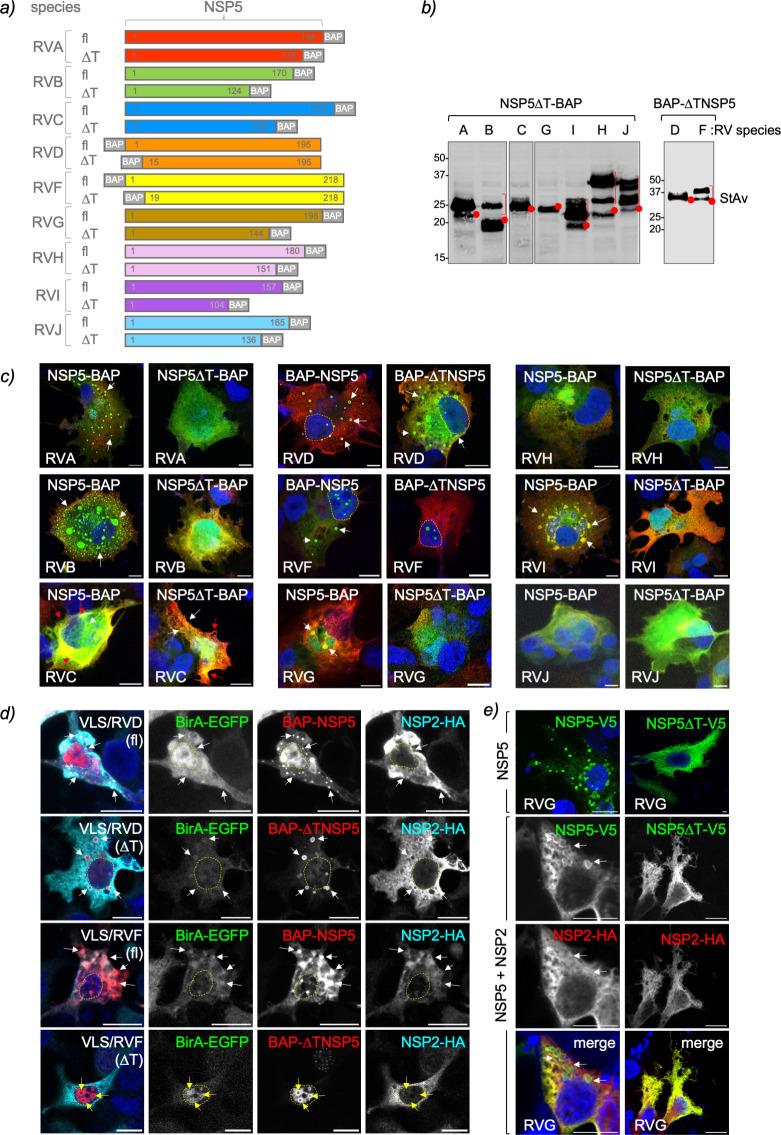
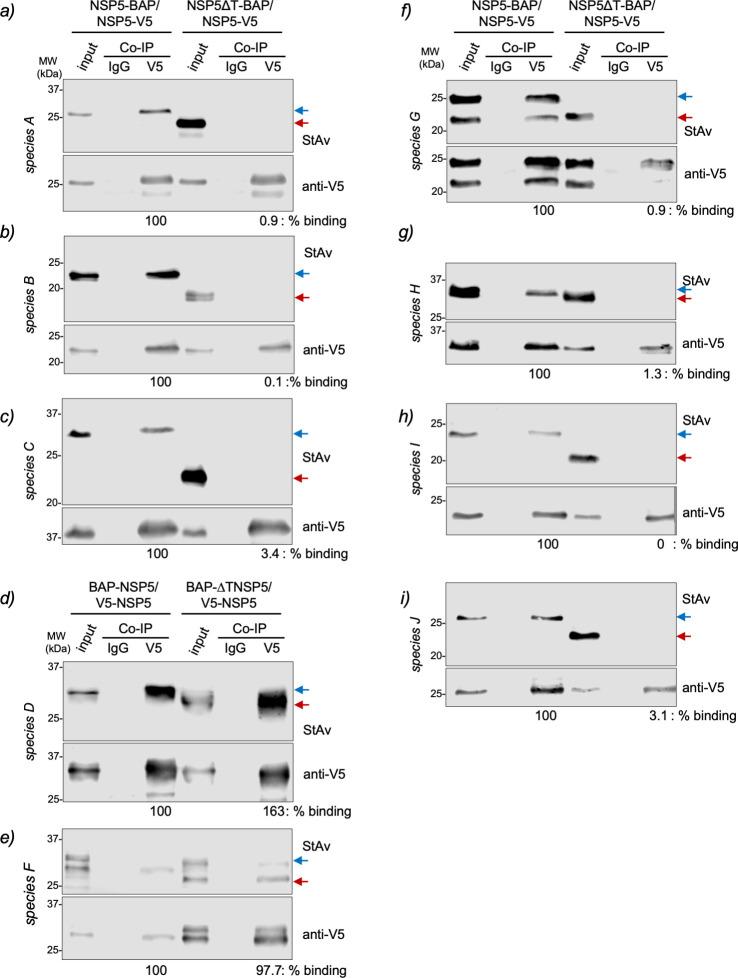
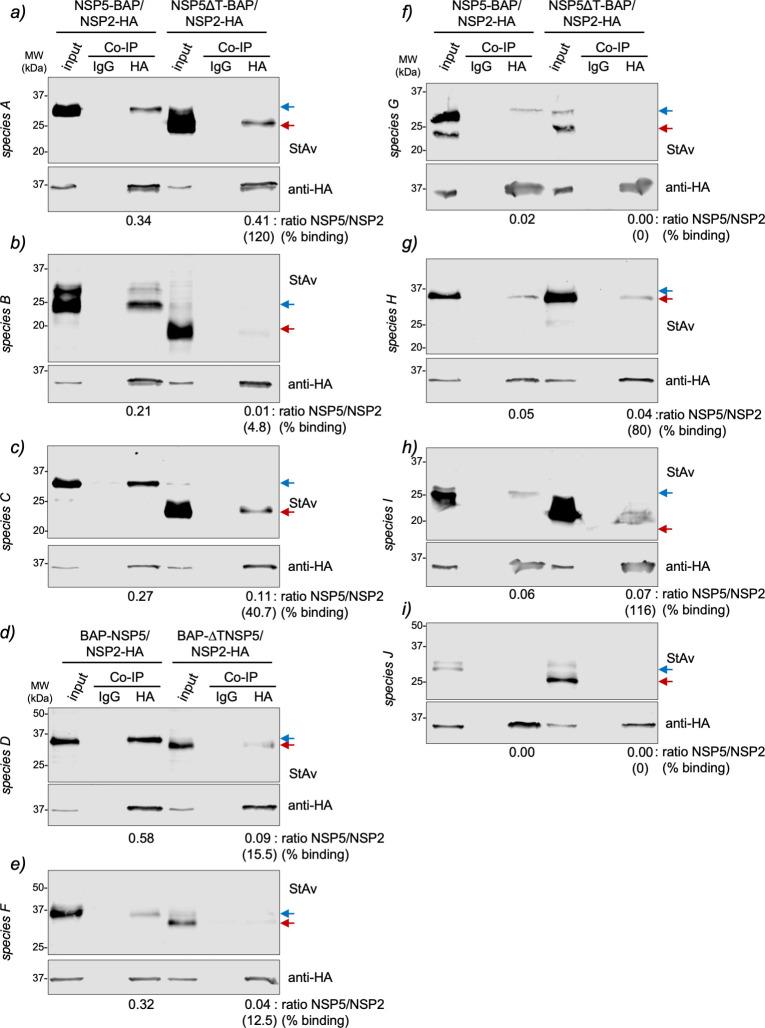
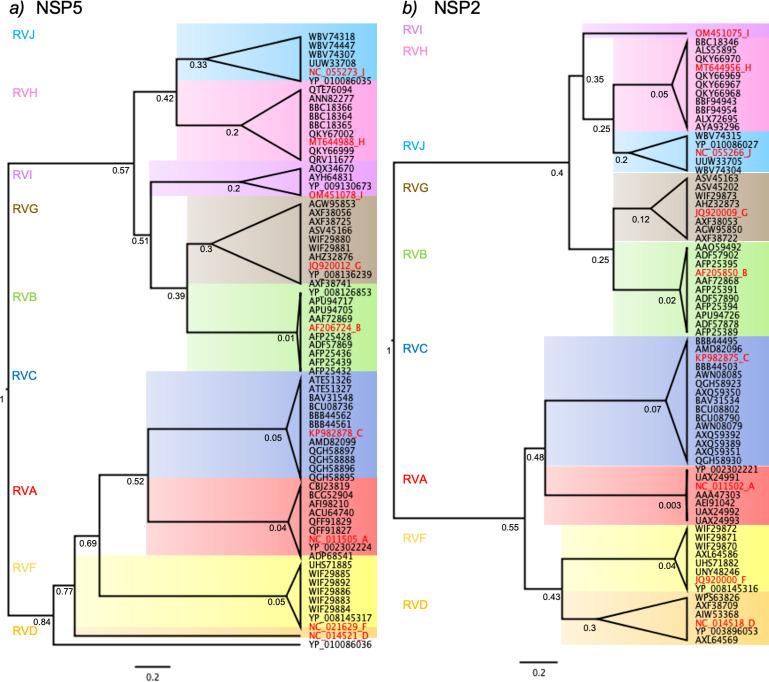
Rotaviruses (RVs) are classified into nine species, A-D and F-J, with species A being the most studied. In rotavirus of species A (RVA), replication occurs in viroplasms, which are cytosolic globular inclusions composed of main building block proteins NSP5, NSP2, and VP2. The co-expression of NSP5 with either NSP2 or VP2 in uninfected cells leads to the formation of viroplasm-like structures (VLSs). Although morphologically identical to viroplasms, VLSs do not produce viral progeny but serve as excellent tools for studying complex viroplasms. A knowledge gap exists regarding non-RVA viroplasms due to the lack of specific antibodies and suitable cell culture systems. In this study, we explored the ability of NSP5 and NSP2 from non-RVA species to form VLSs. The co-expression of these two proteins led to globular VLSs in RV species A, B, D, F, G, and I, while RVC formed filamentous VLSs. The co-expression of NSP5 and NSP2 of RV species H and J did not result in VLS formation. Interestingly, NSP5 of all RV species self-oligomerizes, with the ordered C-terminal region, termed the tail, being necessary for self-oligomerization of RV species A-C and G-J. Except for NSP5 from RVJ, all NSP5 interacted with their cognate NSP2. We also found that interspecies VLS are formed between closely related RV species B with G and D with F. Additionally, VLS from RVH and RVJ formed when the tail of NSP5 RVH and RVJ was replaced by the tail of NSP5 from RVA and co-expressed with their respective NSP2.
IMPORTANCE
Rotaviruses (RVs) are classified into nine species, A-D and F-J, infecting mammals and birds. Due to the lack of research tools, all cumulative knowledge on RV replication is based on RV species A (RVA). The RV replication compartments are globular cytosolic structures named viroplasms, which have only been identified in RV species A. In this study, we examined the formation of viroplasm-like structures (VLSs) by the co-expression of NSP5 with NSP2 across RV species A to J. Globular VLSs formed for RV species A, B, D, F, G, and I, while RV species C formed filamentous structures. The RV species H and J did not form VLS with their cognates NSP5 and NSP2. Similar to RVA, NSP5 self-oligomerizes in all RV species, which is required for VLS formation. This study provides basic knowledge of the non-RVA replication mechanisms, which could help develop strategies to halt virus infection across RV species.
目的
轮状病毒(RV)分为 9 个种,A-D 和 F-J,其中 A 种研究最多。在 A 种轮状病毒(RVA)中,复制发生在 viroplasms 中,viroplasms 是由主要结构蛋白 NSP5、NSP2 和 VP2 组成的胞质球状内含物。未感染细胞中 NSP5 与 NSP2 或 VP2 的共表达导致形成类 viroplasm 结构(VLSs)。尽管 VLSs 在形态上与 viroplasms 相同,但它们不能产生病毒后代,而是作为研究复杂 viroplasms 的极好工具。由于缺乏特异性抗体和合适的细胞培养系统,非 RVA viroplasms 的知识空白仍然存在。在这项研究中,我们探讨了非 RVA 种的 NSP5 和 NSP2 形成 VLS 的能力。这两种蛋白的共表达导致 RV 种 A、B、D、F、G 和 I 形成球状 VLS,而 RVC 形成丝状 VLS。NSP5 和 NSP2 的共表达并未导致 RV 种 H 和 J 形成 VLS。有趣的是,所有 RV 种的 NSP5 都能自我寡聚化,其有序的 C 端区域,称为尾部,对于 RV 种 A-C 和 G-J 的自我寡聚化是必需的。除了 RVJ 的 NSP5 外,所有的 NSP5 都与它们的同源 NSP2 相互作用。我们还发现,密切相关的 RV 种 B 与 G 和 D 与 F 之间形成了种间 VLS。此外,当用来自 RVA 的 NSP5 的尾部替换 RVH 和 RVJ 的 NSP5 的尾部并与各自的 NSP2 共表达时,来自 RVH 和 RVJ 的 VLS 也会形成。
重要性
轮状病毒(RV)分为 9 个种,A-D 和 F-J,感染哺乳动物和鸟类。由于缺乏研究工具,所有关于 RV 复制的累积知识都基于 RV 种 A(RVA)。RV 的复制隔室是球状胞质结构,称为 viroplasms,仅在 RV 种 A 中被识别。在这项研究中,我们通过 NSP5 与 NSP2 在 RV 种 A 至 J 之间的共表达,检查了类 viroplasm 结构(VLSs)的形成。对于 RV 种 A、B、D、F、G 和 I,形成了球状 VLS,而 RV 种 C 则形成了丝状结构。RV 种 H 和 J 与其同源 NSP5 和 NSP2 未形成 VLS。与 RVA 相似,所有 RV 种的 NSP5 都能自我寡聚化,这是 VLS 形成所必需的。本研究为非 RVA 复制机制提供了基础知识,这有助于开发阻止 RV 种间病毒感染的策略。
 Zotero 插件