
基于生物启发的双功能氧化锌纳米颗粒的合成与表征:探索抗菌和抗癌活性
Bioinspired Synthesis and Characterization of Dual-Function Zinc Oxide Nanoparticles from : Exploring Antimicrobial and Anticancer Activities.
作者信息
Sholkamy Essam N, Abdelhamid Mohamed A A, Khalifa Hazim O, Ki Mi-Ran, Pack Seung Pil
机构信息
Department of Botany and Microbiology, College of Science, King Saud University, P.O. Box 2455, Riyadh 11451, Saudi Arabia.
Department of Biotechnology and Bioinformatics, Korea University, Sejong-ro 2511, Sejong 30019, Republic of Korea.
出版信息
Biomimetics (Basel). 2024 Jul 25;9(8):456. doi: 10.3390/biomimetics9080456.
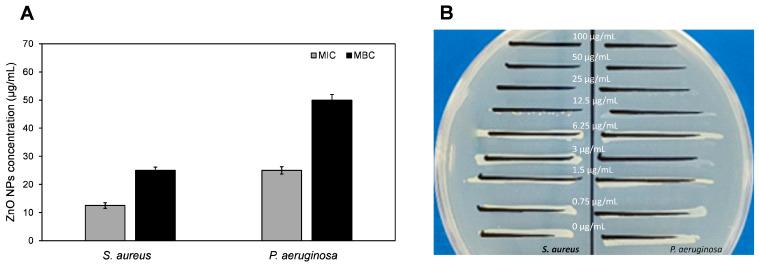
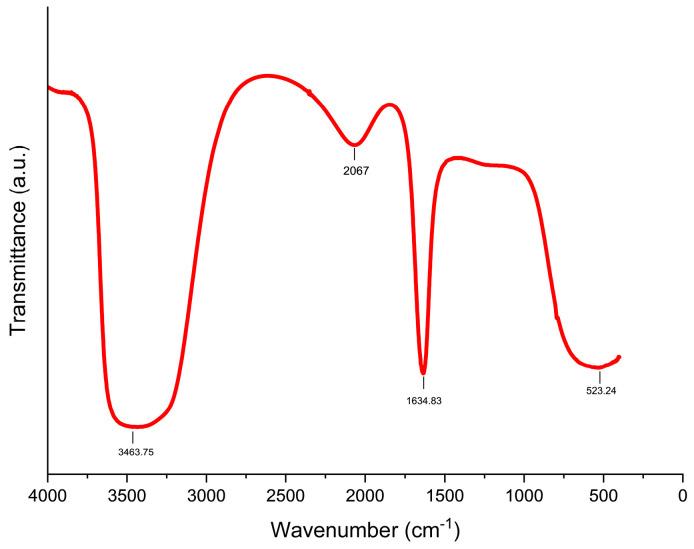
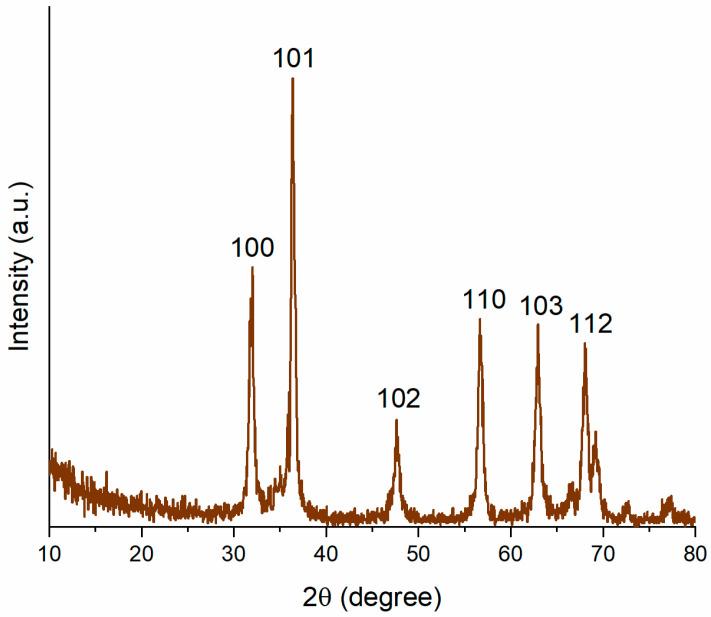
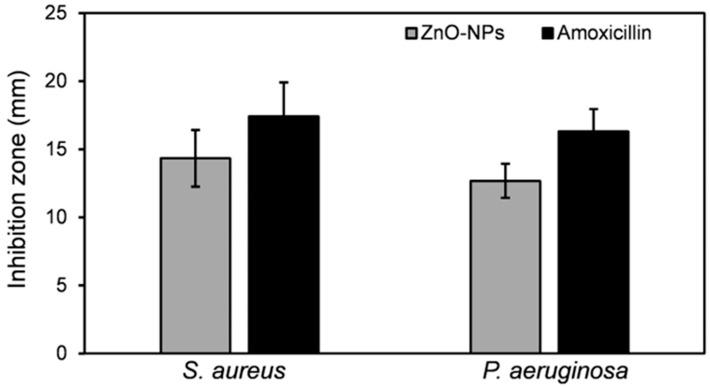
Microbial synthesis offers a sustainable and eco-friendly approach for nanoparticle production. This study explores the biogenic synthesis of zinc oxide nanoparticles (ZnO-NPs) utilizing the actinomycete (Ess_amA6) isolated from . The biosynthesized ZnO-NPs were characterized using various techniques to confirm their formation and properties. UV-visible spectroscopy revealed a characteristic peak at 372 nm, indicative of ZnO-NPs. X-ray diffraction (XRD) analysis confirmed the crystalline structure of the ZnO-NPs as hexagonal wurtzite with a crystallite size of approximately 37.5 ± 13.60 nm. Transmission electron microscopy (TEM) analysis showed the presence of both spherical and roughly hexagonal ZnO nanoparticles in an agglomerated state with a diameter of approximately 44 nm. The biogenic ZnO-NPs exhibited promising biomedical potential. They demonstrated selective cytotoxic activity against human cancer cell lines, demonstrating higher efficacy against Hep-2 cells (IC50 = 73.01 µg/mL) compared to MCF-7 cells (IC50 = 112.74 µg/mL). Furthermore, the biosynthesized ZnO-NPs displayed broad-spectrum antimicrobial activity against both and with clear zones of inhibition of 12.67 mm and 14.33 mm, respectively. The MIC and MBC values against and ranged between 12.5 and 50 µg/mL. These findings suggest the potential of -mediated ZnO-NPs as promising biocompatible nanomaterials with dual applications as antimicrobial and anticancer agents.
微生物合成提供了一种可持续且环保的纳米颗粒生产方法。本研究探索了利用从……分离出的放线菌(Ess_amA6)生物合成氧化锌纳米颗粒(ZnO-NPs)。使用各种技术对生物合成的ZnO-NPs进行了表征,以确认其形成和性质。紫外可见光谱显示在372nm处有一个特征峰,表明存在ZnO-NPs。X射线衍射(XRD)分析证实ZnO-NPs的晶体结构为六方纤锌矿,微晶尺寸约为37.5±13.60nm。透射电子显微镜(TEM)分析表明,存在球形和大致六边形的ZnO纳米颗粒,呈团聚状态,直径约为44nm。生物合成的ZnO-NPs展现出有前景的生物医学潜力。它们对人类癌细胞系表现出选择性细胞毒性活性,与MCF-7细胞(IC50 = 112.74µg/mL)相比,对Hep-2细胞(IC50 = 73.01µg/mL)显示出更高的功效。此外,生物合成的ZnO-NPs对……和……均表现出广谱抗菌活性,抑菌圈清晰,分别为12.67mm和14.33mm。对……和……的MIC和MBC值在12.5至50µg/mL之间。这些发现表明……介导的ZnO-NPs作为有前景的生物相容性纳米材料具有作为抗菌和抗癌剂的双重应用潜力。



 Zotero 插件