
通过非靶向代谢组学解析血流限制训练对肥胖大学生降血脂的作用
Deciphering Blood Flow Restriction Training to Aid Lipid Lowering in Obese College Students through Untargeted Metabolomics.
作者信息
Cui Xianyou, Anatolevna Sidorenko Tatiana, Wang Yu
机构信息
Zhejiang Guang Sha Vocational and Technical University of Construction, No.1 Guangfu East Street, Dongyang 322103, China.
Moscow State Academy of Physical Education, Liubertsy District, Malakhovka, Shosseynaya St. 33, 140030 Moscow, Russia.
出版信息
Metabolites. 2024 Aug 5;14(8):433. doi: 10.3390/metabo14080433.
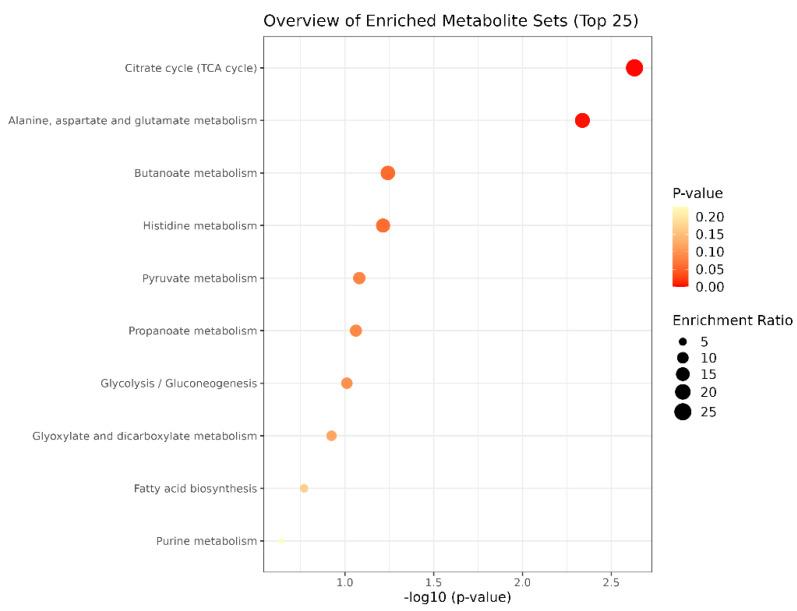
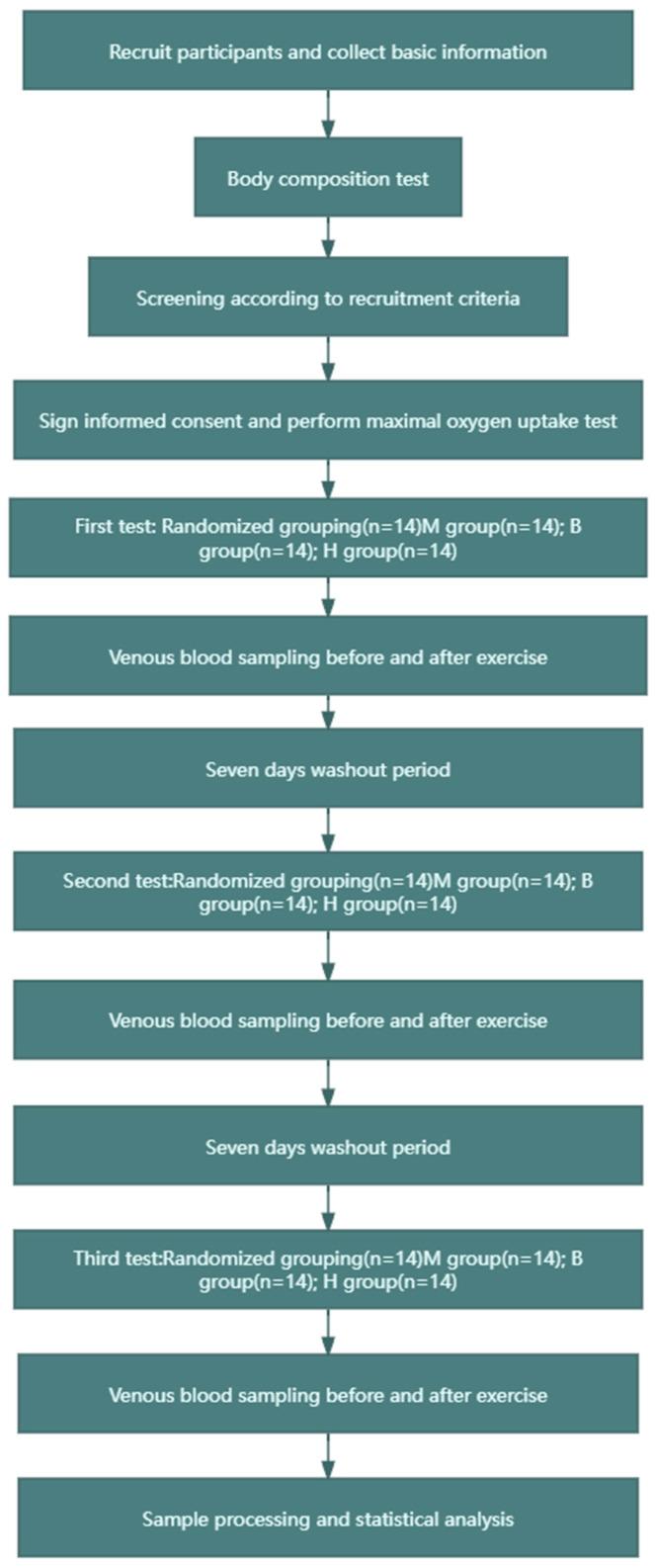
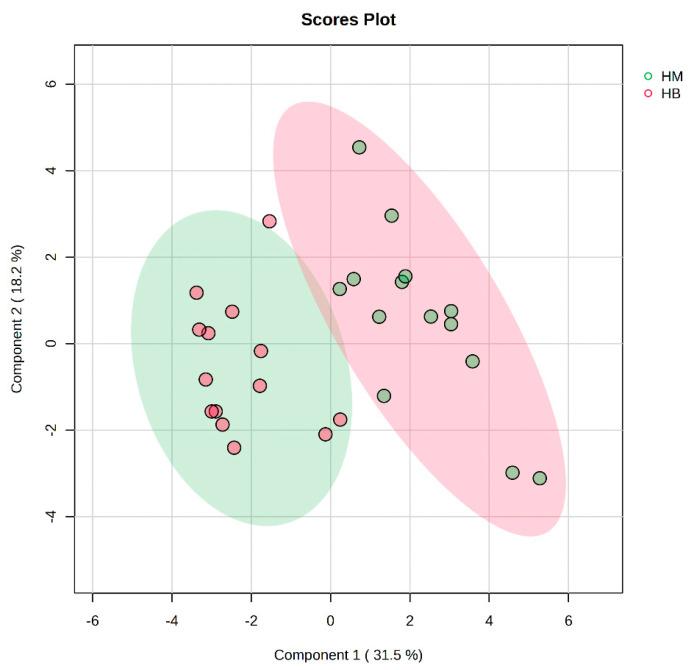
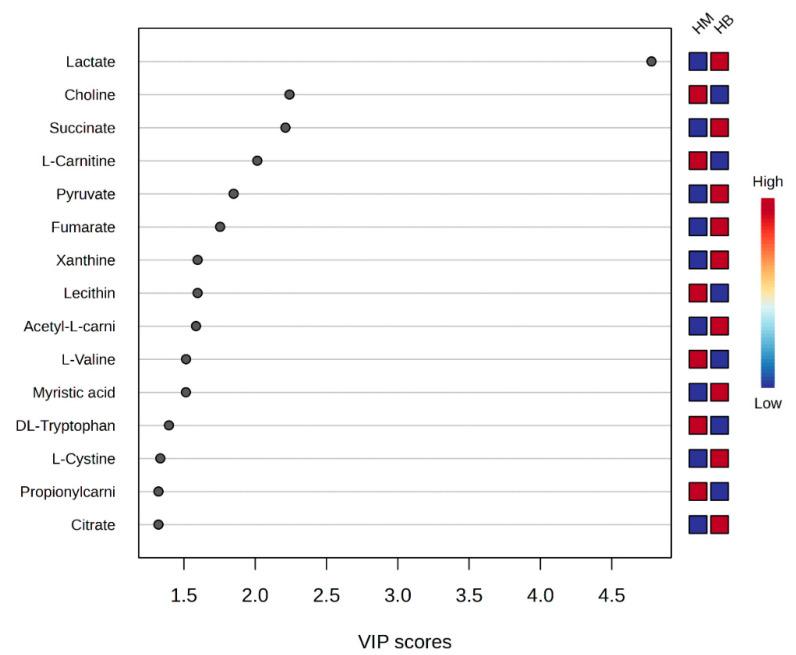
(1) Objective: The aim of this study was to observe the lipid-lowering effects of blood flow restriction training (BFR) combined with moderate-intensity continuous training (MICT) in obese college students by observing lipid-lowering hormones and untargeted metabolomics. (2) Methods: In this study, 14 obese college students were convened into three groups-MICT, MICT+BFR, and high-intensity interval training (HIIT)-for a crossover experiment. Blood was drawn before and after exercise for the analysis of lipolytic agents and untargeted metabolomics. The study used a paired -test and ANOVA for statistical analyses. (3) Results: The lipolytic agent results showed that MICT+BFR was superior to the other two groups in terms of two agents ( = 0.000 and = 0.003), namely, GH and IL-6 (difference between before and after testing: 10,986.51 ± 5601.84 and 2.42 ± 2.49, respectively), and HIIT was superior to the other two groups in terms of one agent ( = 0.000), i.e., EPI (22.81 ± 16.12). No advantage was observed for MICT. The metabolomics results showed that, compared to MICT, MICT+BFR was associated with the upregulated expression of xanthine, succinate, lactate, N-lactoylphenylalanine, citrate, ureido acid, and myristic acid after exercise, with the possibility of the involvement of the citric acid cycle, alanine, aspartic acid, glutamate metabolism, butyric acid metabolism, and the histidylate metabolism pathway. (4) Conclusions: The superior lipid-lowering effect of MICT+BFR over MICT in a group of obese college students may be due to the stronger activation of GH and IL-6 agents, with the citric acid cycle and alanine, aspartate, and glutamate metabolic pathways being associated with this type of exercise.
(1)目的:本研究旨在通过观察降脂激素和非靶向代谢组学,探讨血流限制训练(BFR)联合中等强度持续训练(MICT)对肥胖大学生的降脂效果。(2)方法:本研究招募了14名肥胖大学生,分为三组——MICT组、MICT+BFR组和高强度间歇训练(HIIT)组——进行交叉实验。运动前后采集血液,用于分析脂解剂和非靶向代谢组学。本研究采用配对检验和方差分析进行统计分析。(3)结果:脂解剂结果显示,MICT+BFR组在两种脂解剂(P = 0.000和P = 0.003)方面优于其他两组,即生长激素(GH)和白细胞介素-6(IL-6)(测试前后差异分别为:10986.51±5601.84和2.42±2.49),HIIT组在一种脂解剂(P = 0.000)方面优于其他两组,即肾上腺素(EPI)(22.81±16.12)。未观察到MICT组有优势。代谢组学结果显示,与MICT组相比,MICT+BFR组运动后黄嘌呤、琥珀酸、乳酸、N-乳酰苯丙氨酸、柠檬酸、脲酸和肉豆蔻酸的表达上调,可能涉及柠檬酸循环、丙氨酸、天冬氨酸、谷氨酸代谢、丁酸代谢和组氨酸代谢途径。(4)结论:在一组肥胖大学生中,MICT+BFR组比MICT组具有更好的降脂效果,可能是由于更强地激活了GH和IL-6脂解剂,柠檬酸循环以及丙氨酸、天冬氨酸和谷氨酸代谢途径与这种运动类型有关。




 Zotero 插件