
脑小血管病的发病机制:糖酵解系统功能障碍的作用。
Pathogenesis of Cerebral Small Vessel Disease: Role of the Glymphatic System Dysfunction.
机构信息
Industry-Academic Cooperation Foundation, The Catholic University of Korea, 222, Banpo-daro, Seocho-gu, Seoul 06591, Republic of Korea.
Department of Medical Life Sciences, College of Medicine, The Catholic University of Korea, Seoul 06591, Republic of Korea.
出版信息
Int J Mol Sci. 2024 Aug 11;25(16):8752. doi: 10.3390/ijms25168752.
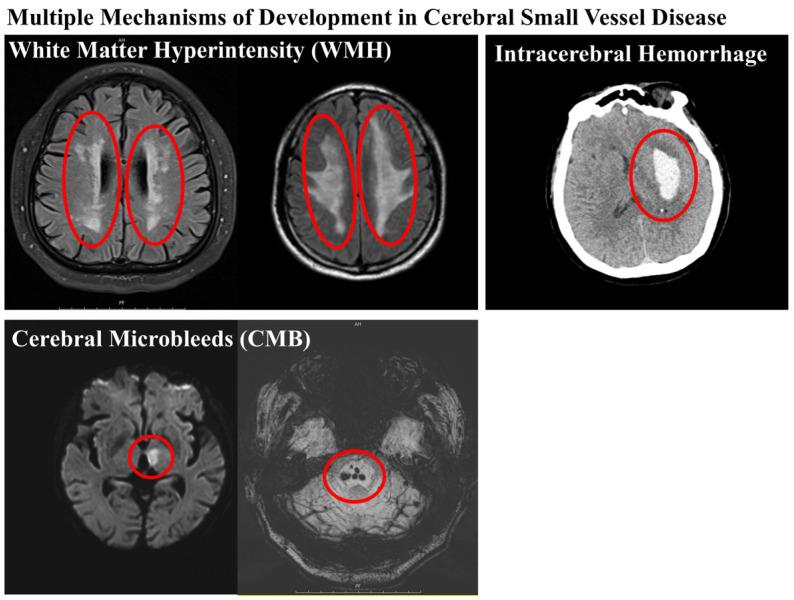
Cerebral small vessel disease (CSVD) is a group of pathologies that affect the cerebral blood vessels. CSVD accounts for 25% of strokes and contributes to 45% of dementia. However, the pathogenesis of CSVD remains unclear, involving a variety of complex mechanisms. CSVD may result from dysfunction in the glymphatic system (GS). The GS contains aquaporin-4 (AQP-4), which is in the perivascular space, at the endfeet of the astrocyte. The GS contributes to the removal of waste products from the central nervous system, occupying perivascular spaces and regulating the exchange and movement of cerebrospinal fluid and interstitial fluid. The GS involves astrocytes and aquaporin channels, which are components of the blood-brain barrier, and problems with them may constitute the pathogenesis of CSVD. Vascular risk factors, including diabetes, dilate the perivascular space, disrupting the glymphatic system and the active regulation of AQP-4. CSVD exacerbation due to disorders of the GS is associated with multiple vasculopathies. Dysfunction of the glymphatic system and AQP-4 interferes with the functioning of the blood-brain barrier, which exacerbates CSVD. In a long-term follow-up of CSVD patients with microbleeds, lacunar infarcts, and white matter hyperintensity, several vascular risk factors, including hypertension, increased the risk of ischemic stroke. Dysfunction of the GS may be the cause of CSVD; however, the underlying treatment needs to be studied further.
脑小血管病 (CSVD) 是一组影响脑血管的病理学。CSVD 占中风的 25%,导致 45%的痴呆。然而,CSVD 的发病机制仍不清楚,涉及多种复杂的机制。CSVD 可能源于脑淋巴系统 (GS) 的功能障碍。GS 包含水通道蛋白-4 (AQP-4),位于血管周围空间,在星形胶质细胞的终足处。GS 有助于清除中枢神经系统的废物,占据血管周围空间,并调节脑脊液和间质液的交换和流动。GS 涉及星形胶质细胞和水通道蛋白通道,它们是血脑屏障的组成部分,它们的问题可能构成 CSVD 的发病机制。血管危险因素,包括糖尿病,会使血管周围空间扩张,破坏脑淋巴系统和 AQP-4 的主动调节。GS 紊乱导致的 CSVD 恶化与多种血管病变有关。GS 的功能障碍和 AQP-4 干扰了血脑屏障的功能,从而加重了 CSVD。在对有微出血、腔隙性梗死和脑白质高信号的 CSVD 患者进行的长期随访中,包括高血压在内的几种血管危险因素增加了缺血性中风的风险。GS 的功能障碍可能是 CSVD 的原因,但潜在的治疗方法需要进一步研究。

 Zotero 插件