
从韩国禽肉中分离出的多重耐药菌的遗传特征
Genetic Characteristics of Multidrug-Resistant Isolated from Poultry Meat in South Korea.
作者信息
Kang Haiseong, Kim Hansol, Lee Jonghoon, Jeon Ji Hye, Kim Seokhwan, Park Yongchjun, Joo Insun, Kim Hyochin
机构信息
Food Microbiology Division, Food Safety Evaluation Department, National Institute of Food and Drug Safety Evaluation, Cheongju 28159, Republic of Korea.
Food Standard Division, Ministry of Food and Drug Safety, Cheongju 28159, Republic of Korea.
出版信息
Microorganisms. 2024 Aug 11;12(8):1646. doi: 10.3390/microorganisms12081646.
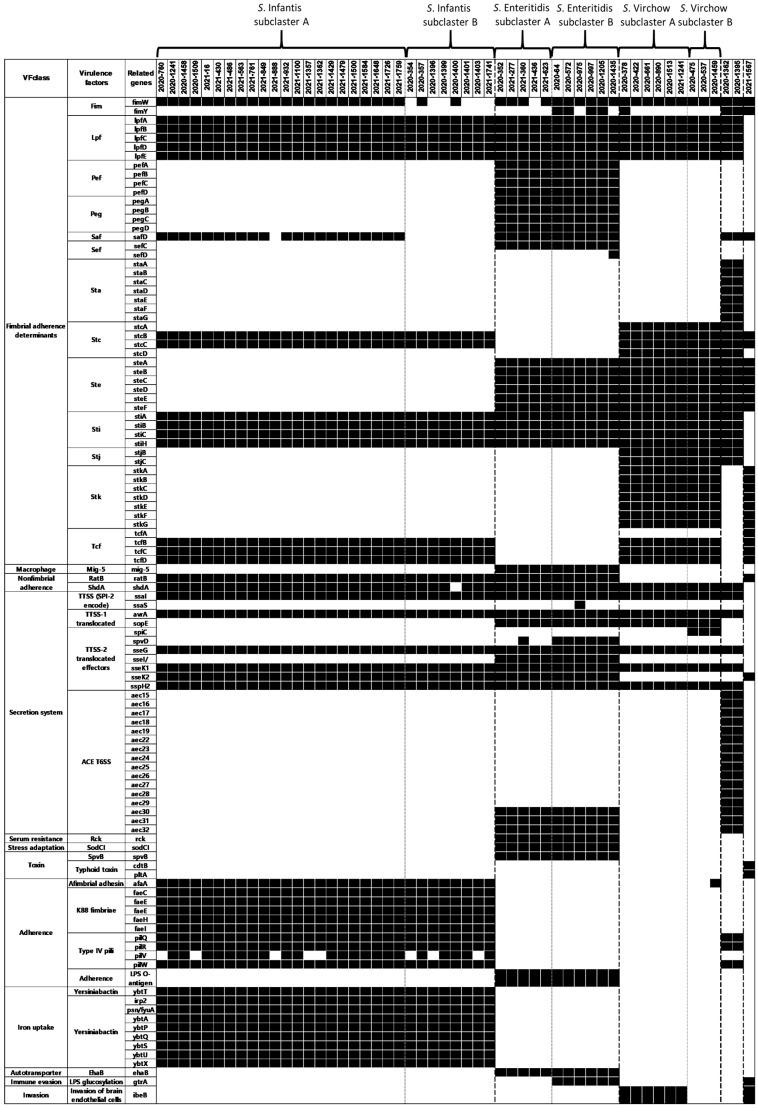
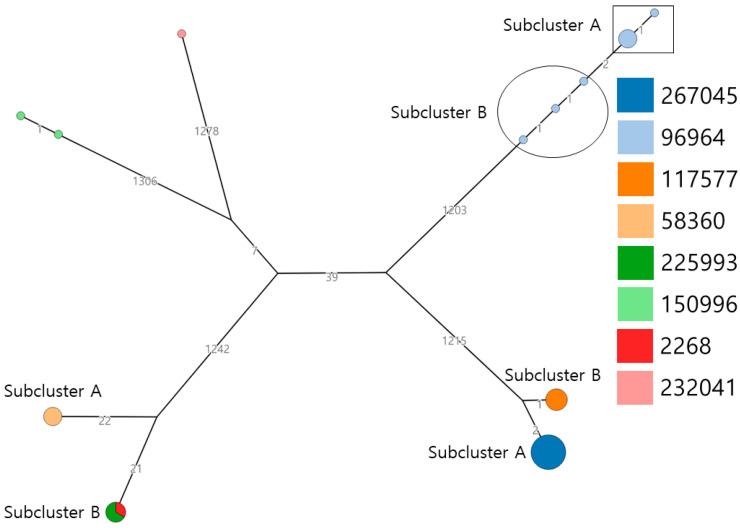
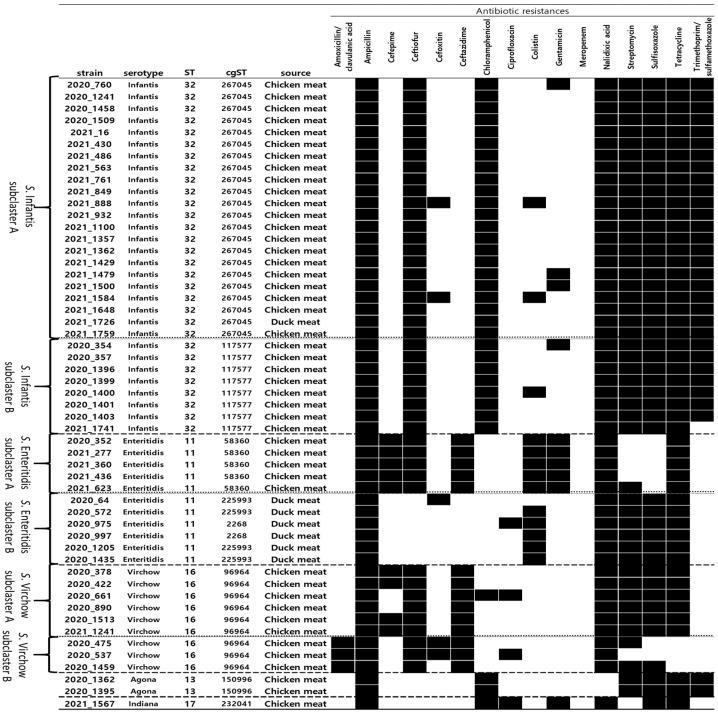
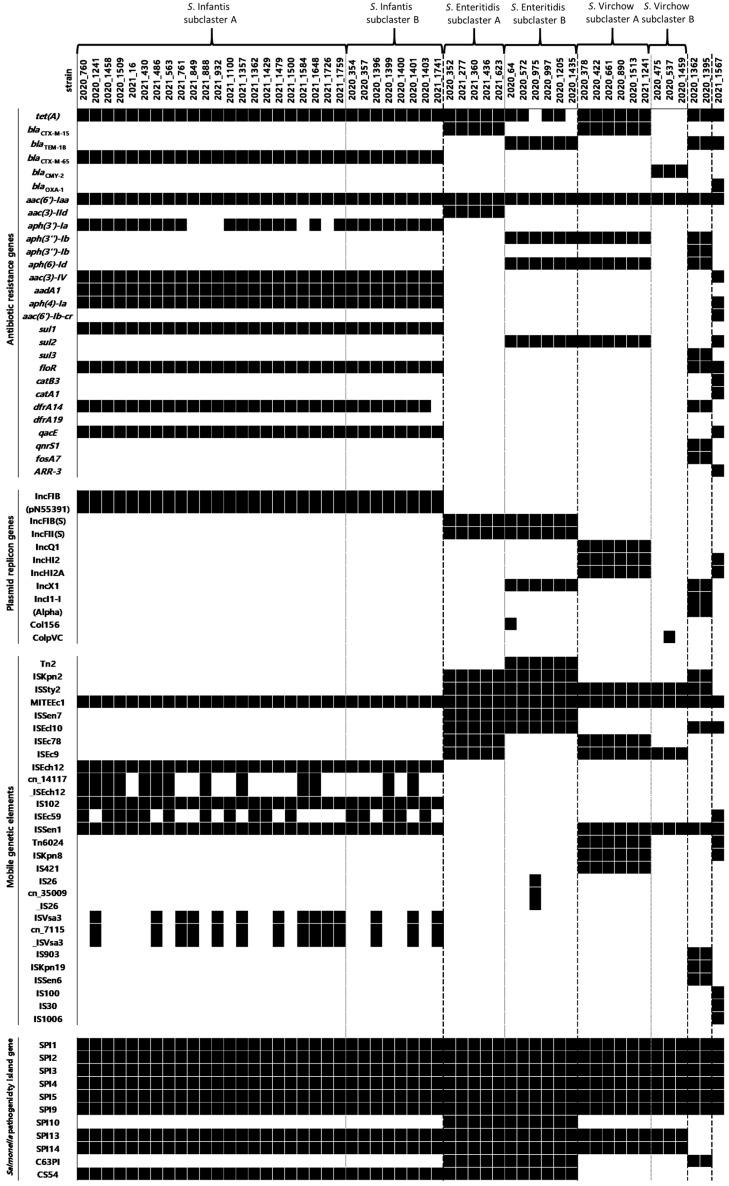
Given the lack of genetic characterization data for multidrug-resistant (MDR) in South Korean poultry, we analyzed 53 MDR strains from 1232 poultry meat samples (723 chicken, 509 duck) using whole-genome sequencing. Five serotypes were identified: Infantis (30/53, 56.6%), Enteritidis (11/53, 20.8%), Virchow (9/53, 17.0%), Agona (2/53, 3.8%), and Indiana (1/53, 1.9%). Sequence types (STs) included ST32, ST11, ST16, ST13, and ST17, with three major clusters, each having two subclusters. Eight core genome sequence types (cgSTs) were identified: 225993, 2268, 58360, 150996, 232041, 96964, 117577, and 267045. Infantis and Enteritidis had two (117577, 267045) and three (225993, 2268, 58360) cgSTs, respectively, whereas Virchow showed allelic differences in identical cgSTs. The Enteritidis subcluster was classified as chicken or duck. Twenty-eight antimicrobial resistance genes (ARGs), 10 plasmid replicons, 11 pathogenicity islands (SPIs), and 230 virulence genes were identified, showing distinct profiles by cluster and subcluster. Infantis, the primary MDR , carried the IncFIB (pN55391) plasmid, 10-11 ARGs, nine SPIs, and approximately 163 virulence genes. Three major MDR serotypes ( Infantis, Enteritidis, and Virchow) had specific genetic profiles that can inform epidemiological surveillance.
鉴于韩国家禽中多重耐药(MDR)缺乏基因特征数据,我们使用全基因组测序分析了来自1232份家禽肉样本(723份鸡肉、509份鸭肉)的53株MDR菌株。鉴定出五种血清型:婴儿沙门氏菌(30/53,56.6%)、肠炎沙门氏菌(11/53,20.8%)、维尔肖沙门氏菌(9/53,17.0%)、阿哥纳沙门氏菌(2/53,3.8%)和印第安纳沙门氏菌(1/53,1.9%)。序列类型(STs)包括ST32、ST11、ST16、ST13和ST17,有三个主要簇,每个簇有两个子簇。鉴定出八种核心基因组序列类型(cgSTs):225993、2268、58360、150996、232041、96964、117577和267045。婴儿沙门氏菌和肠炎沙门氏菌分别有两种(117577、267045)和三种(225993、2268、58360)cgSTs,而维尔肖沙门氏菌在相同的cgSTs中显示出等位基因差异。肠炎沙门氏菌的子簇被分类为鸡肉或鸭肉来源。鉴定出28个抗菌抗性基因(ARGs)、10个质粒复制子、11个致病岛(SPIs)和230个毒力基因,按簇和子簇显示出不同的特征。主要的MDR血清型婴儿沙门氏菌携带IncFIB(pN55391)质粒、10 - 11个ARGs、9个SPIs和约163个毒力基因。三种主要的MDR血清型(婴儿沙门氏菌、肠炎沙门氏菌和维尔肖沙门氏菌)具有特定的基因特征,可为流行病学监测提供信息。
 Zotero 插件