
益生菌 1917 号菌株的细胞外囊泡通过上调 miR-193a-3p 降低 IL-1β 处理的 Caco-2 细胞中 PepT1 的水平。
Extracellular Vesicles of the Probiotic Nissle 1917 Reduce PepT1 Levels in IL-1β-Treated Caco-2 Cells via Upregulation of miR-193a-3p.
机构信息
Departament de Bioquímica i Fisiologia, Facultat de Farmàcia i Ciències de l'Alimentació, Universitat de Barcelona, 08028 Barcelona, Spain.
Biochemistry and Diseases Research Group, Facultad de Medicina, Universidad de Cartagena, Cartagena 130015, Colombia.
出版信息
Nutrients. 2024 Aug 15;16(16):2719. doi: 10.3390/nu16162719.
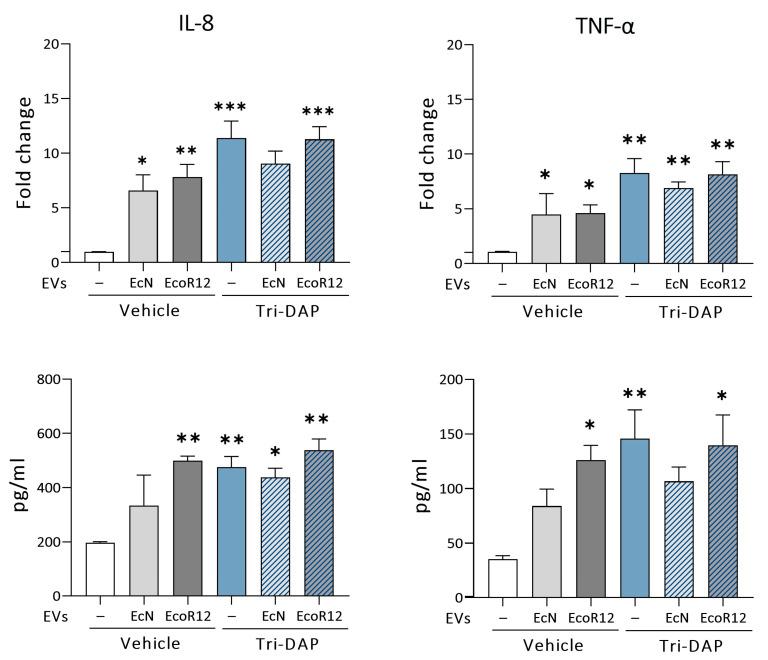
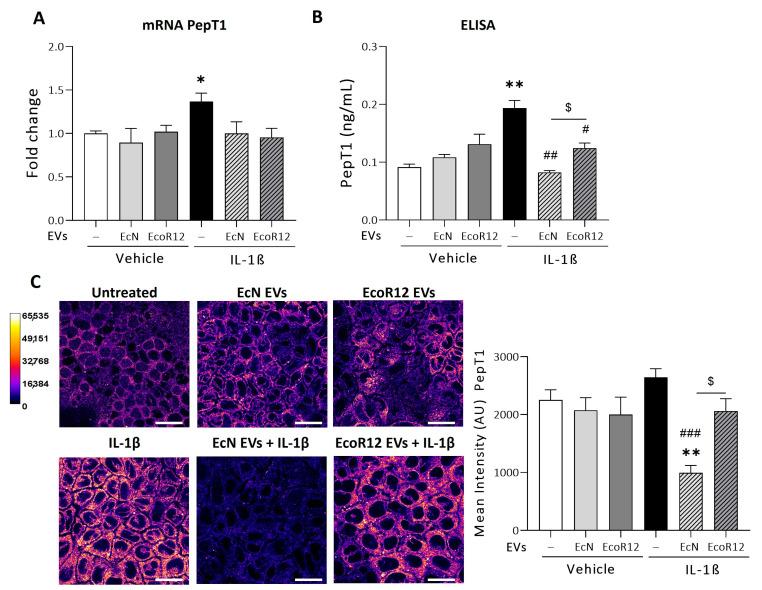
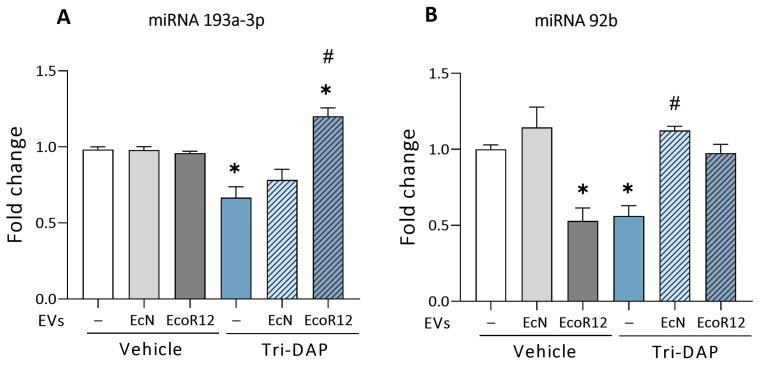
PepT1, a proton-coupled oligopeptide transporter, is crucial for intestinal homeostasis. It is mainly expressed in small intestine enterocytes, facilitating the absorption of di/tri-peptides from dietary proteins. In the colon, PepT1 expression is minimal to prevent excessive responses to proinflammatory peptides from the gut microbiota. However, increased colonic PepT1 is linked to chronic inflammatory diseases and colitis-associated cancer. Despite promising results from animal studies on the benefits of extracellular vesicles (EVs) from beneficial gut commensals in treating IBD, applying probiotic EVs as a postbiotic strategy in humans requires a thorough understanding of their mechanisms. Here, we investigate the potential of EVs of the probiotic Nissle 1917 (EcN) and the commensal EcoR12 in preventing altered PepT1 expression under inflammatory conditions, using an interleukin (IL)-1-induced inflammation model in Caco-2 cells. The effects are evaluated by analyzing the expression of PepT1 (mRNA and protein) and miR-193a-3p and miR-92b, which regulate, respectively, PepT1 mRNA translation and degradation. The influence of microbiota EVs on PepT1 expression is also analyzed in the presence of bacterial peptides that are natural substrates of colonic PepT1 to clarify how the regulatory mechanisms function under both physiological and pathological conditions. The main finding is that EcN EVs significantly decreases PepT1 protein via upregulation of miR-193a-3p. Importantly, this regulatory effect is strain-specific and only activates in cells exposed to IL-1β, suggesting that EcN EVs does not control PepT1 expression under basal conditions but can play a pivotal role in response to inflammation as a stressor. By this mechanism, EcN EVs may reduce inflammation in response to microbiota in chronic intestinal disorders by limiting the uptake of bacterial proinflammatory peptides.
PepT1 是一种质子偶联寡肽转运体,对肠道内稳态至关重要。它主要在小肠肠细胞中表达,促进膳食蛋白中二肽/三肽的吸收。在结肠中,PepT1 的表达很少,以防止对来自肠道微生物群的促炎肽产生过度反应。然而,结肠中 PepT1 的增加与慢性炎症性疾病和炎症性肠病相关的癌症有关。尽管有益肠道共生菌的细胞外囊泡 (EVs) 在治疗 IBD 方面的动物研究结果令人鼓舞,但将益生菌 EVs 作为后生元策略应用于人类需要对其机制有透彻的了解。在这里,我们研究了益生菌 Nissle 1917 (EcN) 和共生菌 EcoR12 的 EVs 在炎症条件下防止 PepT1 表达改变的潜力,使用 IL-1 诱导的 Caco-2 细胞炎症模型进行研究。通过分析 PepT1(mRNA 和蛋白质)和 miR-193a-3p 和 miR-92b 的表达来评估效果,这两种 miRNA 分别调节 PepT1 mRNA 的翻译和降解。还分析了微生物群 EVs 在存在天然作为 colonic PepT1 底物的细菌肽的情况下对 PepT1 表达的影响,以阐明在生理和病理条件下这些调节机制的功能。主要发现是 EcN EVs 通过上调 miR-193a-3p 显著降低 PepT1 蛋白。重要的是,这种调节作用是菌株特异性的,仅在暴露于 IL-1β 的细胞中激活,这表明 EcN EVs 在基础条件下不控制 PepT1 表达,但可以作为一种应激源在炎症反应中发挥关键作用。通过这种机制,EcN EVs 可以通过限制细菌促炎肽的摄取来减少慢性肠道疾病中对微生物群的炎症反应。


 Zotero 插件