
通过Wnt/β-连环蛋白信号通路调控抑制EZH2以对抗口腔癌进展
EZH2 Inhibition to Counteract Oral Cancer Progression through Wnt/β-Catenin Pathway Modulation.
作者信息
Campolo Michela, Scuderi Sarah Adriana, Filippone Alessia, Bova Valentina, Lombardo Sofia Paola, Colarossi Lorenzo, Sava Serena, Capra Anna Paola, De Gaetano Federica, Portelli Marco, Militi Angela, Esposito Emanuela, Paterniti Irene
机构信息
Department of Chemical, Biological, Pharmaceutical and Environmental Sciences, University of Messina, Viale Ferdinando Stagno D'Alcontres, 31, 98166 Messina, ME, Italy.
Istituto Oncologico del Mediterraneo, Via Penninazzo 7, 95029 Viagrande, CT, Italy.
出版信息
Pharmaceuticals (Basel). 2024 Aug 22;17(8):1102. doi: 10.3390/ph17081102.
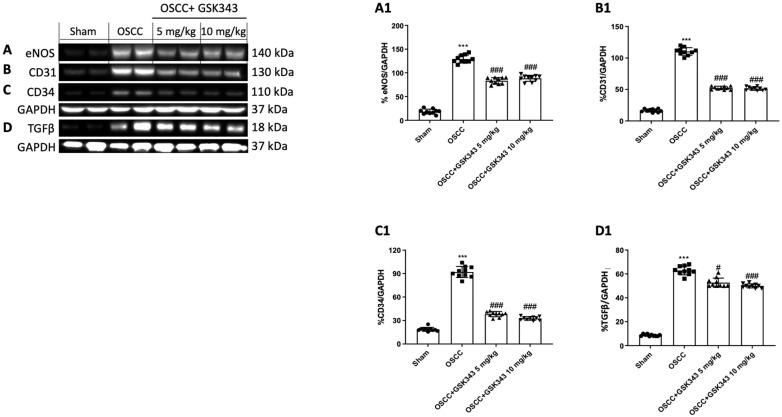
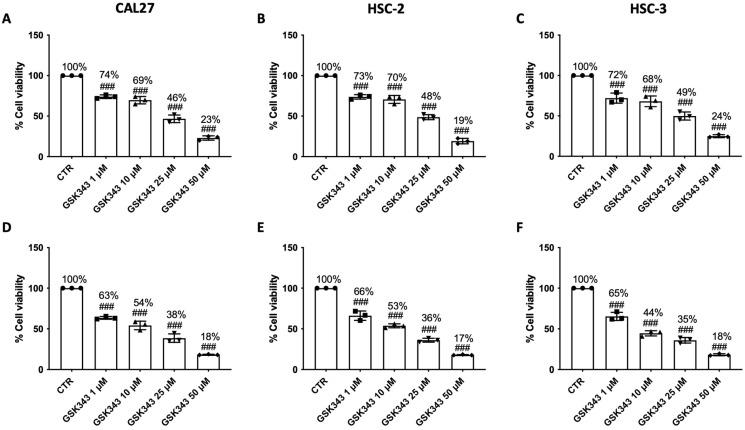
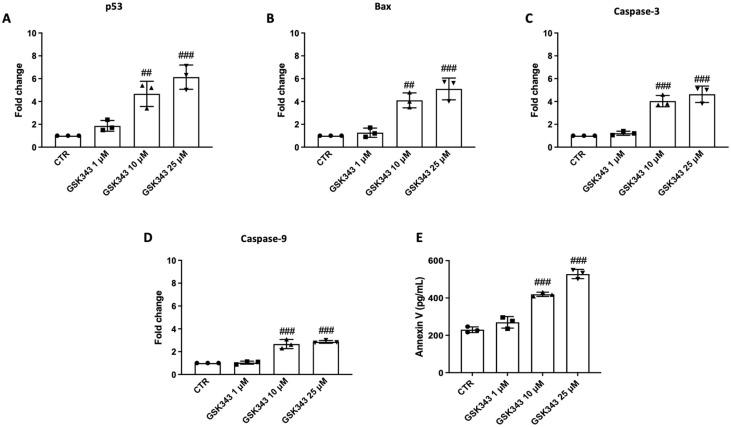
Oral squamous cell carcinoma (OSCC) is one of the most common human malignancies worldwide. The molecular mechanisms of OSCC pathogenesis are still unknown; however, in recent years, several reports have focused on the role of enhancer of zeste homolog 2 (EZH2) in OSCC. Therefore, in this study we aimed to investigate the effects of GSK343, a selective EZH2 inhibitor, and its impact on the signaling pathways in OSCC, using an in vitro and in vivo orthotopic model. In the in vitro model, GSK343 (1, 10, and 25 μM) significantly decreased OSCC cell viability and cell migration through EZH2 inhibition, modulating NF-κB/IκBα pathway activation and eNOS, VEGF, and TGFβ expression, important markers of angiogenesis. In the in vivo model, GSK343 (5 mg/kg and 10 mg/kg) restored tongue tissue architecture and reduced tumor progression through EZH2 inhibition and Wnt/β-catenin signaling pathway modulation. Moreover, GSK343 reduced the expression of inflammatory mediators; eNOS and TGFβ, markers of angiogenesis; and CD31 and CD34, markers of micro vessel density, respectively. In conclusion, our data demonstrate that GSK343 counteracts oral cancer progression through EZH2/Wnt/β-catenin pathway modulation, suggesting that it could be a promising therapeutic approach for OSCC management.
口腔鳞状细胞癌(OSCC)是全球最常见的人类恶性肿瘤之一。OSCC发病机制的分子机制仍不清楚;然而,近年来,一些报告聚焦于zeste同源物2增强子(EZH2)在OSCC中的作用。因此,在本研究中,我们旨在使用体外和体内原位模型研究选择性EZH2抑制剂GSK343的作用及其对OSCC信号通路的影响。在体外模型中,GSK343(1、10和25μM)通过抑制EZH2显著降低OSCC细胞活力和细胞迁移,调节NF-κB/IκBα通路激活以及eNOS、VEGF和TGFβ表达,这些都是血管生成的重要标志物。在体内模型中,GSK343(5mg/kg和10mg/kg)通过抑制EZH2和调节Wnt/β-连环蛋白信号通路恢复舌组织结构并减少肿瘤进展。此外,GSK343分别降低了炎症介质、血管生成标志物eNOS和TGFβ以及微血管密度标志物CD31和CD34的表达。总之,我们的数据表明,GSK343通过调节EZH2/Wnt/β-连环蛋白通路对抗口腔癌进展,表明它可能是一种有前景的OSCC治疗方法。




 Zotero 插件