
18千道尔顿转位蛋白(TSPO)在大鼠外周神经损伤后于大脑中上调,并被富马酸二罗昔米下调。
18 kDa Translocator protein (TSPO) is upregulated in rat brain after peripheral nerve injury and downregulated by diroximel fumarate.
作者信息
Cazuza Rafael A, Zagrai Sever M, Grieco Anamaria R, Avery Thomas D, Abell Andrew D, Wey Hsiao-Ying, Loggia Marco L, Grace Peter M
机构信息
Laboratories of Neuroimmunology, Department of Symptom Research, University of Texas MD Anderson Cancer Center, Houston, USA.
ARC Centre of Excellence for Nanoscale BioPhotonics (CNBP), Institute for Photonics and Advanced Sensing (IPAS), Department of Chemistry, University of Adelaide, Adelaide, Australia.
出版信息
Brain Behav Immun. 2025 Jan;123:11-27. doi: 10.1016/j.bbi.2024.08.057. Epub 2024 Aug 31.
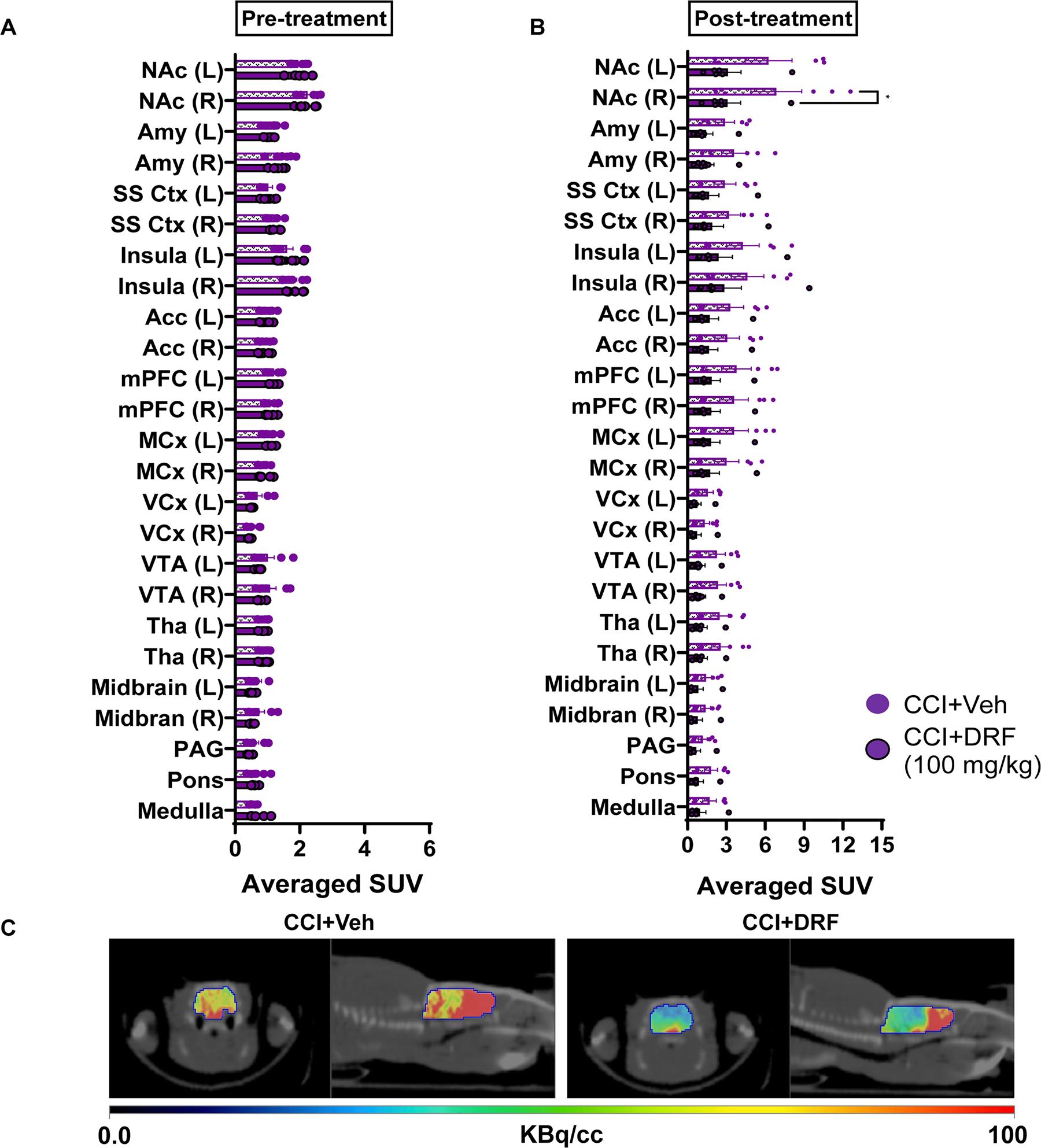
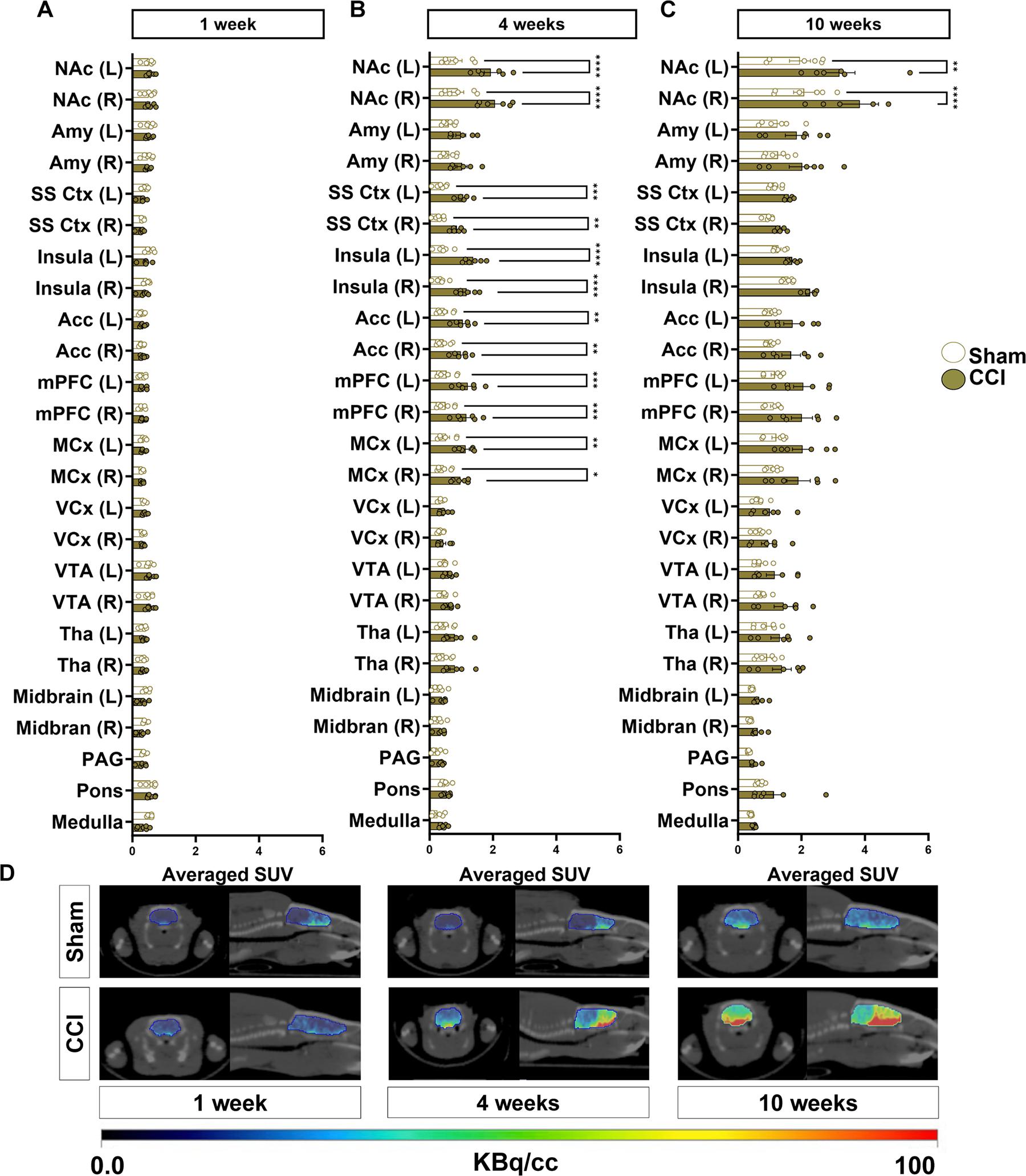
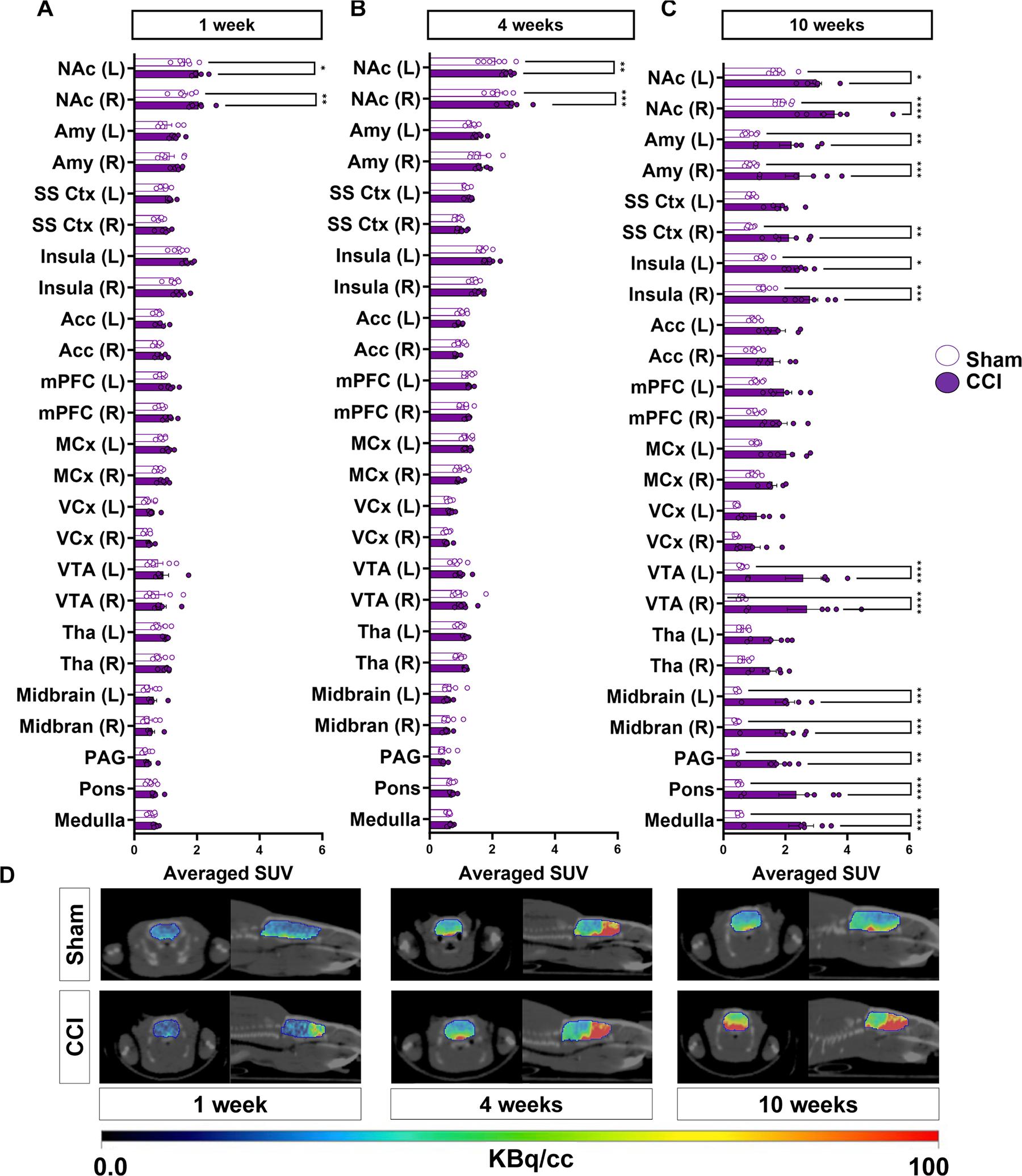
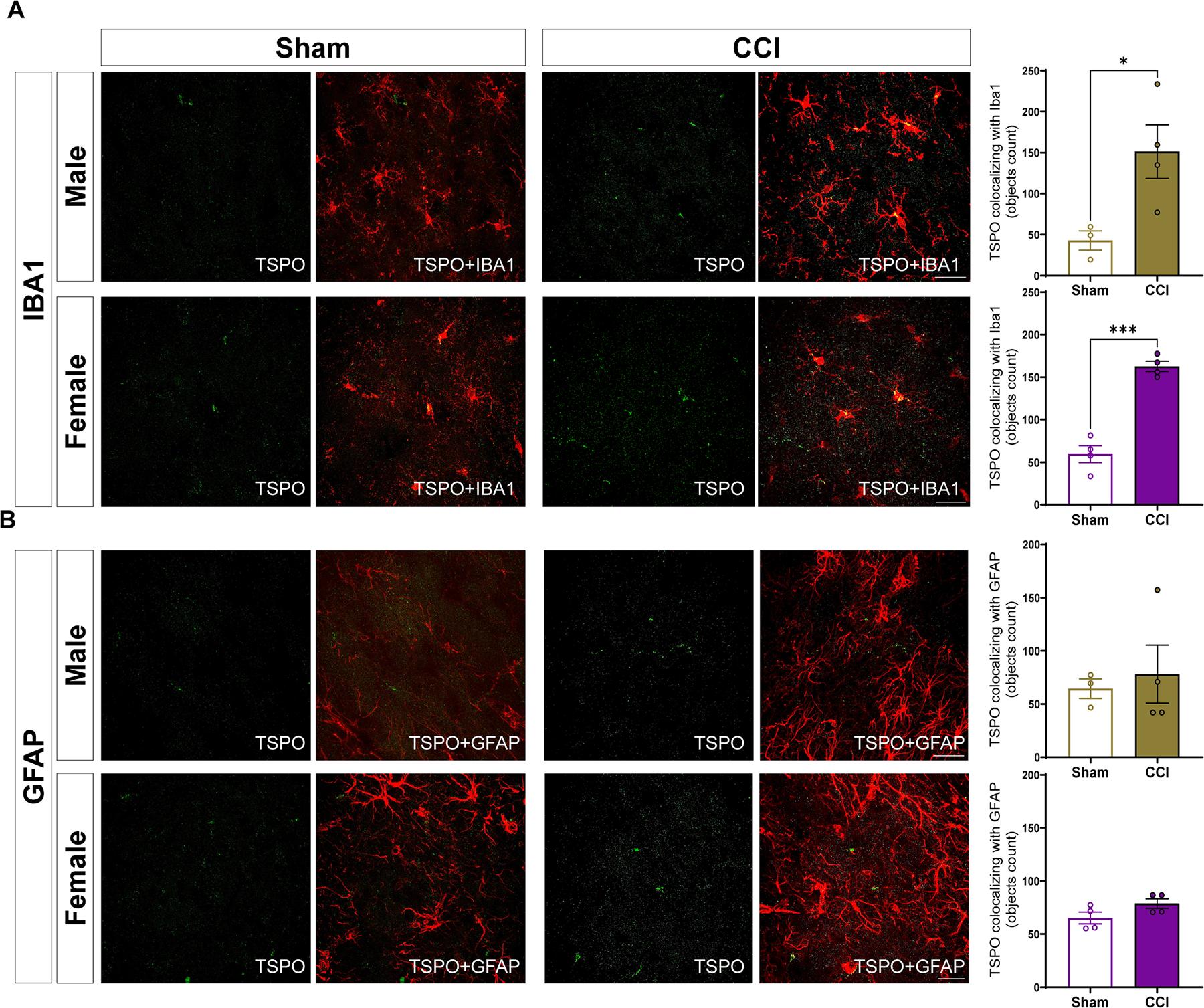
Neuroimmune signaling is a key process underlying neuropathic pain. Clinical studies have demonstrated that 18 kDa translocator protein (TSPO), a putative marker of neuroinflammation, is upregulated in discrete brain regions of patients with chronic pain. However, no preclinical studies have investigated TSPO dynamics in the brain in the context of neuropathic pain and in response to analgesic treatments. We used positron emission tomography-computed tomography (PET-CT) and [F]-PBR06 radioligand to measure TSPO levels in the brain across time after chronic constriction injury (CCI) of the sciatic nerve in both male and female rats. Up to 10 weeks post-CCI, TSPO expression was increased in discrete brain regions, including medial prefrontal cortex, somatosensory cortex, insular cortex, anterior cingulate cortex, motor cortex, ventral tegmental area, amygdala, midbrain, pons, medulla, and nucleus accumbens. TSPO was broadly upregulated across these regions at 4 weeks post CCI in males, and 10 weeks in females, though there were regional differences between the sexes. Using immunohistochemistry, we confirmed TSPO expression in these regions. We further demonstrated that TSPO was upregulated principally in microglia in the nucleus accumbens core, and astrocytes and endothelial cells in the nucleus accumbens shell. Finally, we tested whether TSPO upregulation was sensitive to diroximel fumarate, a drug that induces endogenous antioxidants via nuclear factor E2-related factor 2 (Nrf2). Diroximel fumarate alleviated neuropathic pain and reduced TSPO upregulation. Our findings indicate that TSPO is upregulated over the course of neuropathic pain development and is resolved by an antinociceptive intervention in animals with peripheral nerve injury.
神经免疫信号传导是神经性疼痛的关键过程。临床研究表明,18 kDa转位蛋白(TSPO)作为神经炎症的一种假定标志物,在慢性疼痛患者的特定脑区中上调。然而,尚无临床前研究在神经性疼痛背景下以及对镇痛治疗的反应中研究大脑中的TSPO动态变化。我们使用正电子发射断层扫描-计算机断层扫描(PET-CT)和[F]-PBR06放射性配体来测量雄性和雌性大鼠坐骨神经慢性缩窄损伤(CCI)后不同时间点大脑中的TSPO水平。CCI后长达10周,TSPO表达在包括内侧前额叶皮质、体感皮质、岛叶皮质、前扣带回皮质、运动皮质、腹侧被盖区、杏仁核、中脑、脑桥、延髓和伏隔核在内的特定脑区增加。CCI后4周雄性大鼠以及10周雌性大鼠的这些区域中TSPO广泛上调,尽管两性之间存在区域差异。通过免疫组织化学,我们证实了这些区域中TSPO的表达。我们进一步证明,TSPO主要在伏隔核核心的小胶质细胞以及伏隔核壳的星形胶质细胞和内皮细胞中上调。最后,我们测试了TSPO上调是否对富马酸二罗昔迈敏感,富马酸二罗昔迈是一种通过核因子E2相关因子2(Nrf2)诱导内源性抗氧化剂的药物。富马酸二罗昔迈减轻了神经性疼痛并降低了TSPO上调。我们的研究结果表明,TSPO在神经性疼痛发展过程中上调,并通过对周围神经损伤动物的抗伤害性干预得以缓解。




 Zotero 插件