
伊马替尼和帕纳替尼介导的斑马鱼胚胎和 H9c2 心肌细胞的心脏毒性。
Imatinib‑ and ponatinib‑mediated cardiotoxicity in zebrafish embryos and H9c2 cardiomyoblasts.
机构信息
Vice President of Health and Medical Sciences Office, QU Health, Qatar University, Doha 2713, Qatar.
Department of Pharmaceutical Sciences, College of Pharmacy, QU Health, Qatar University, Doha 2713, Qatar.
出版信息
Mol Med Rep. 2024 Oct;30(4). doi: 10.3892/mmr.2024.13311. Epub 2024 Sep 2.
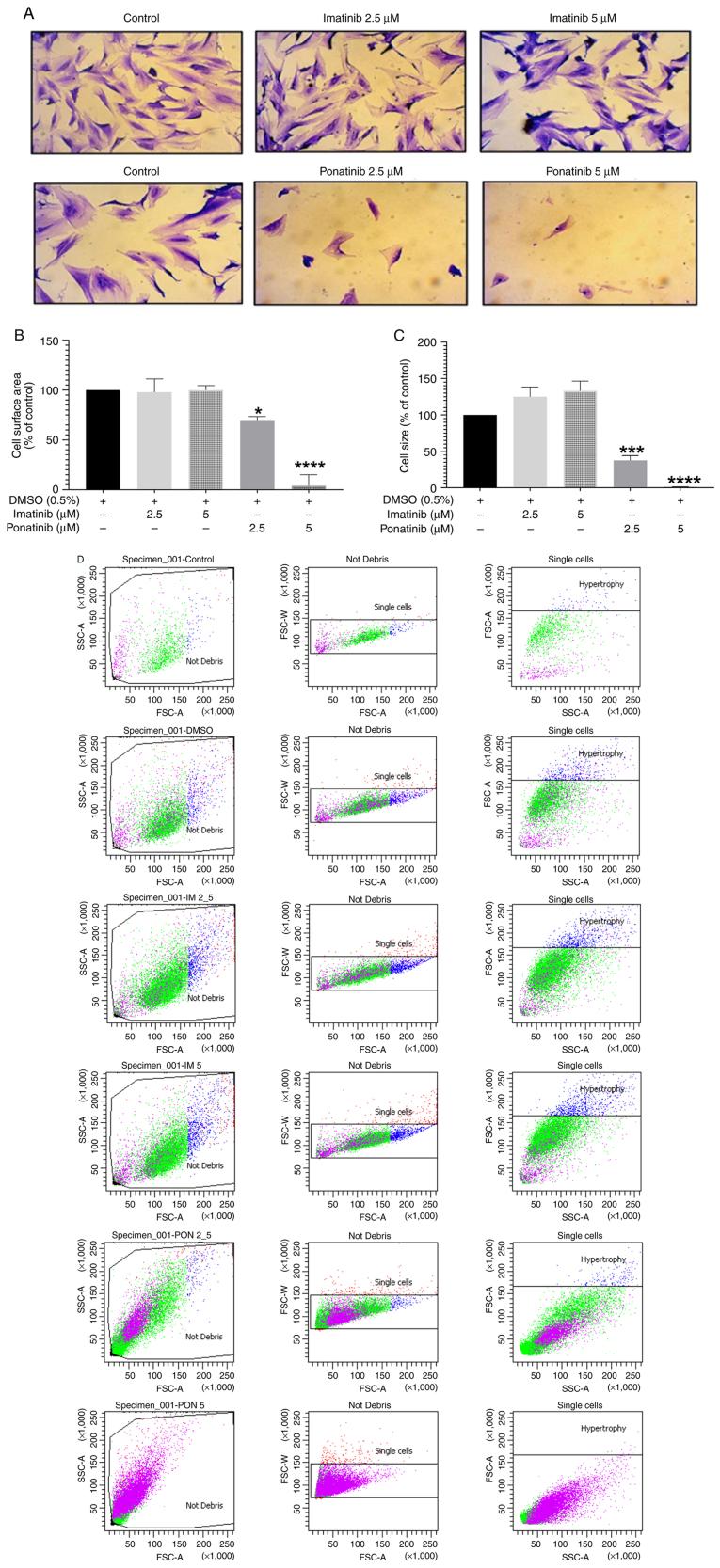
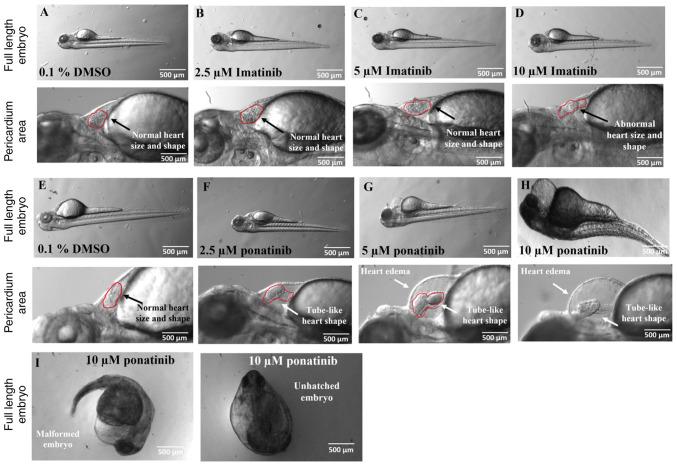
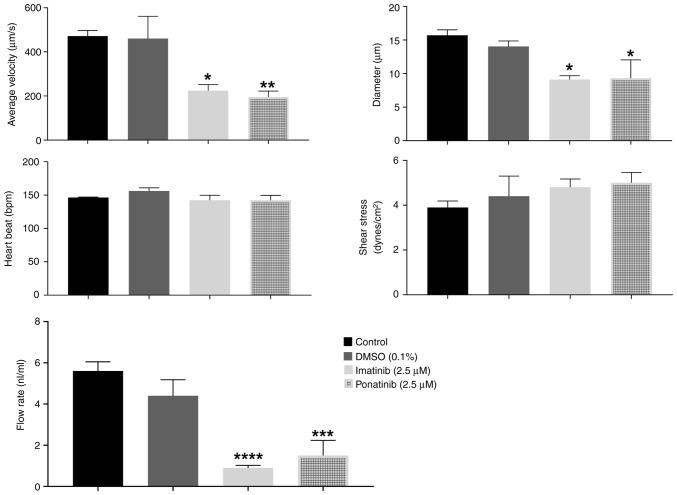
Tyrosine kinase inhibitors (TKIs) offer targeted therapy for cancers but can cause severe cardiotoxicities. Determining their dose‑dependent impact on cardiac function is required to optimize therapy and minimize adverse effects. The dose‑dependent cardiotoxic effects of two TKIs, imatinib and ponatinib, were assessed using H9c2 cardiomyoblasts and using zebrafish embryos. , H9c2 cardiomyocyte viability, apoptosis, size, and surface area were evaluated to assess the impact on cellular health. , zebrafish embryos were analyzed for heart rate, blood flow velocity, and morphological malformations to determine functional and structural changes. Additionally, reverse transcription‑quantitative PCR (RT‑qPCR) was employed to measure the gene expression of atrial natriuretic peptide (ANP) and brain natriuretic peptide (BNP), established markers of cardiac injury. This comprehensive approach, utilizing both and models alongside functional and molecular analyses, provides a robust assessment of the potential cardiotoxic effects. TKI exposure decreased viability and surface area in H9c2 cells in a dose‑dependent manner. Similarly, zebrafish embryos exposed to TKIs exhibited dose‑dependent heart malformation. Both TKIs upregulated ANP and BNP expression, indicating heart injury. The present study demonstrated dose‑dependent cardiotoxic effects of imatinib and ponatinib in H9c2 cells and zebrafish models. These findings emphasize the importance of tailoring TKI dosage to minimize cardiac risks while maintaining therapeutic efficacy. Future research should explore the underlying mechanisms and potential mitigation strategies of TKI‑induced cardiotoxicities.
酪氨酸激酶抑制剂 (TKI) 为癌症提供了靶向治疗,但可导致严重的心脏毒性。需要确定其对心脏功能的剂量依赖性影响,以优化治疗并最小化不良反应。使用 H9c2 心肌细胞和斑马鱼胚胎评估了两种 TKI(伊马替尼和泊那替尼)的剂量依赖性心脏毒性作用。使用 H9c2 心肌细胞评估细胞活力、凋亡、大小和表面积,以评估对细胞健康的影响。使用斑马鱼胚胎分析心率、血流速度和形态畸形,以确定功能和结构变化。此外,还采用逆转录定量 PCR(RT-qPCR)测量心钠肽 (ANP) 和脑钠肽 (BNP) 的基因表达,这是心脏损伤的既定标志物。这种综合方法结合了和模型以及功能和分子分析,为潜在的心脏毒性作用提供了稳健的评估。TKI 暴露以剂量依赖性方式降低 H9c2 细胞的活力和表面积。同样,暴露于 TKI 的斑马鱼胚胎表现出剂量依赖性的心脏畸形。两种 TKI 均上调 ANP 和 BNP 的表达,表明心脏损伤。本研究表明伊马替尼和泊那替尼在 H9c2 细胞和斑马鱼模型中具有剂量依赖性的心脏毒性作用。这些发现强调了调整 TKI 剂量以最小化心脏风险同时保持治疗效果的重要性。未来的研究应探讨 TKI 诱导的心脏毒性的潜在机制和潜在缓解策略。



 Zotero 插件