
类风湿关节炎中铁死亡相关诊断标志物的分析与鉴定。
Analysis and identification of ferroptosis-related diagnostic markers in rheumatoid arthritis.
机构信息
Department of Bone and Joint Surgery, The First Affiliated Hospital of Guangxi Medical University, Nanning, China.
出版信息
Ann Med. 2024 Dec;56(1):2397572. doi: 10.1080/07853890.2024.2397572. Epub 2024 Sep 2.
BACKGROUND
Rheumatoid arthritis (RA) is an autoimmune, inflammatory joint disease. There is growing evidence that ferroptosis is involved in the pathogenesis of RA. This study aimed to search for diagnostic markers of ferroptosis in RA and to analyse the potential mechanisms and clinical value.
MATERIALS AND METHODS
RA-associated datasets were used from the publicly available GEO database. Three methods of machine learning were applied to screen biomarkers. The diagnostic efficacy of the results was also verified by receiver operating characteristic (ROC) curve, external dataset, qRT-PCR and Western blot. Enrichment analysis was performed in this process, while protein-protein interaction (PPI) analysis and immune infiltration correlation analysis were performed using biomarkers, and competing endogenous RNA (ceRNA) networks were constructed to search for prospective therapeutic targets.
RESULTS
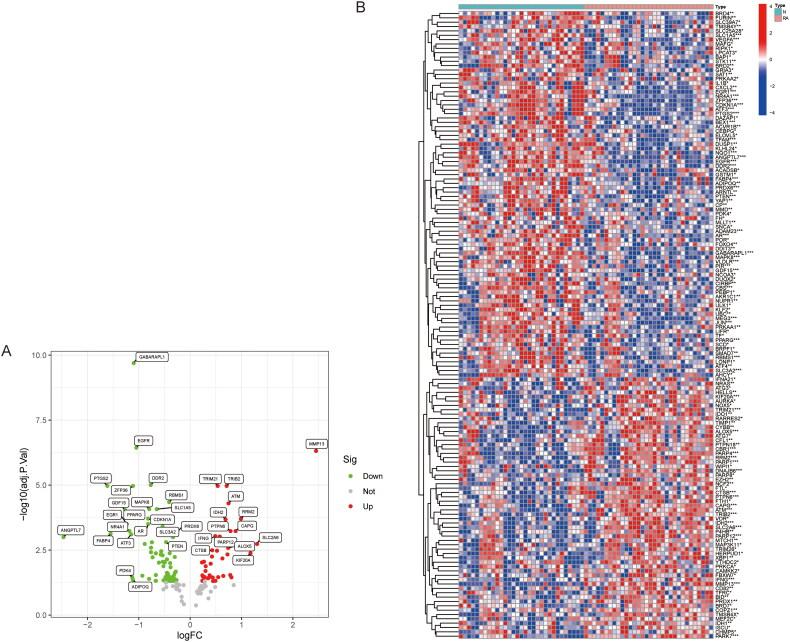
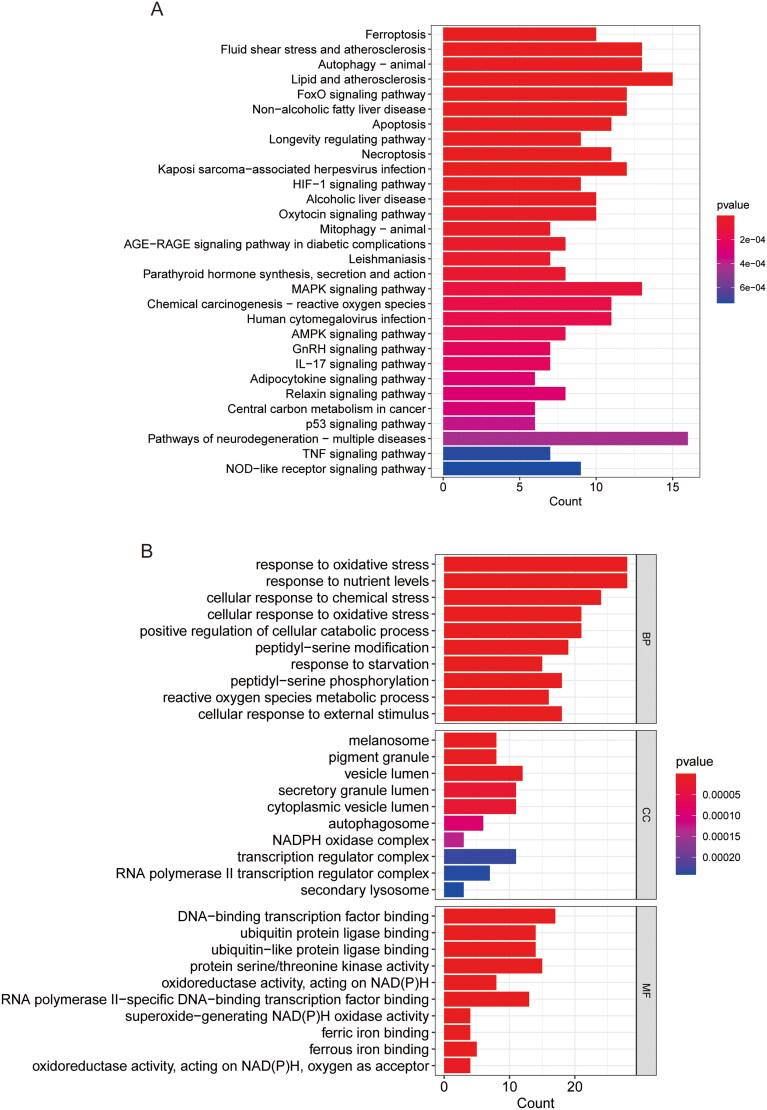
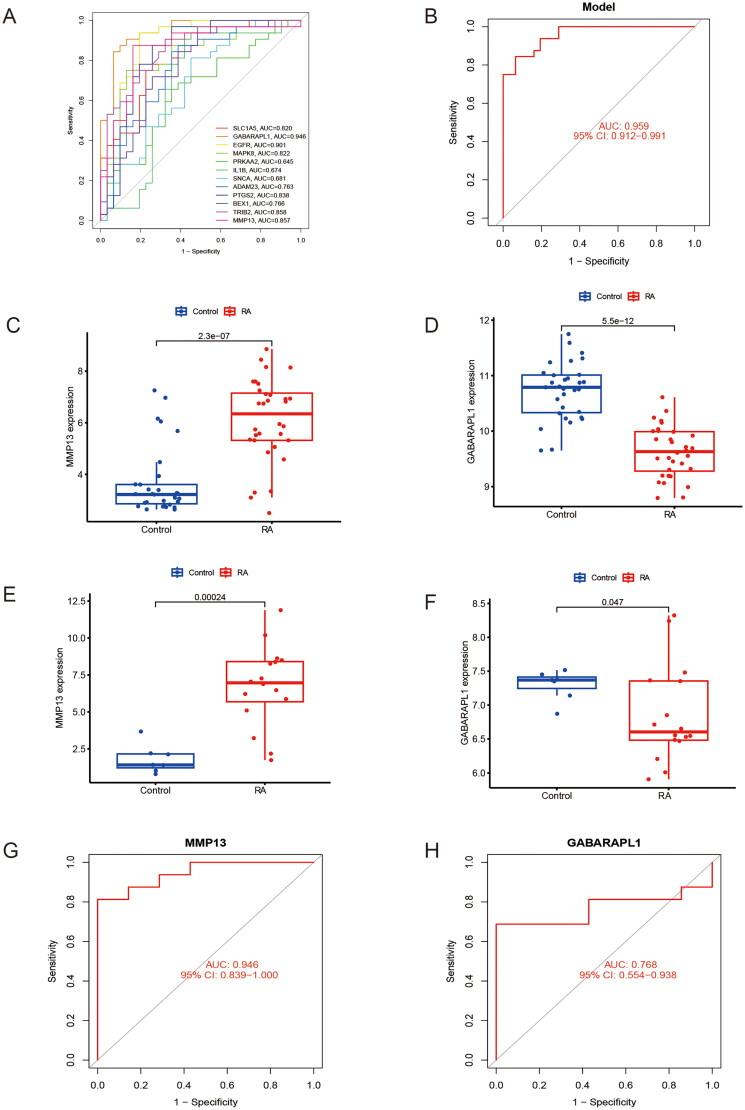
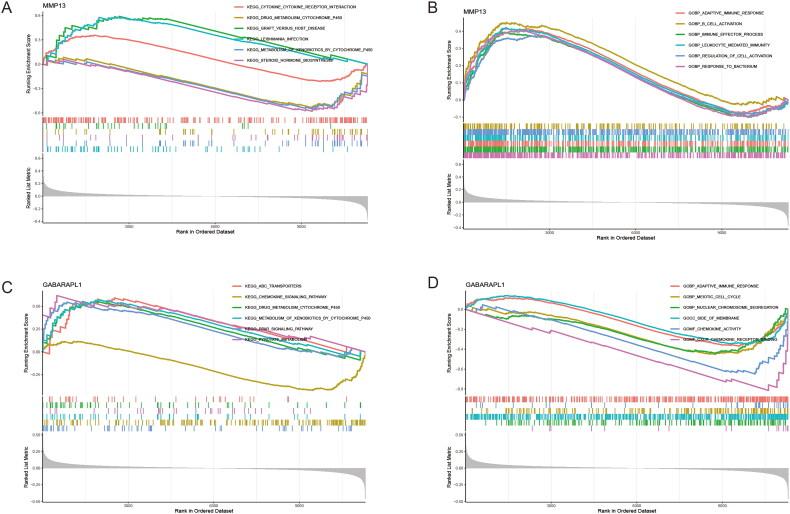
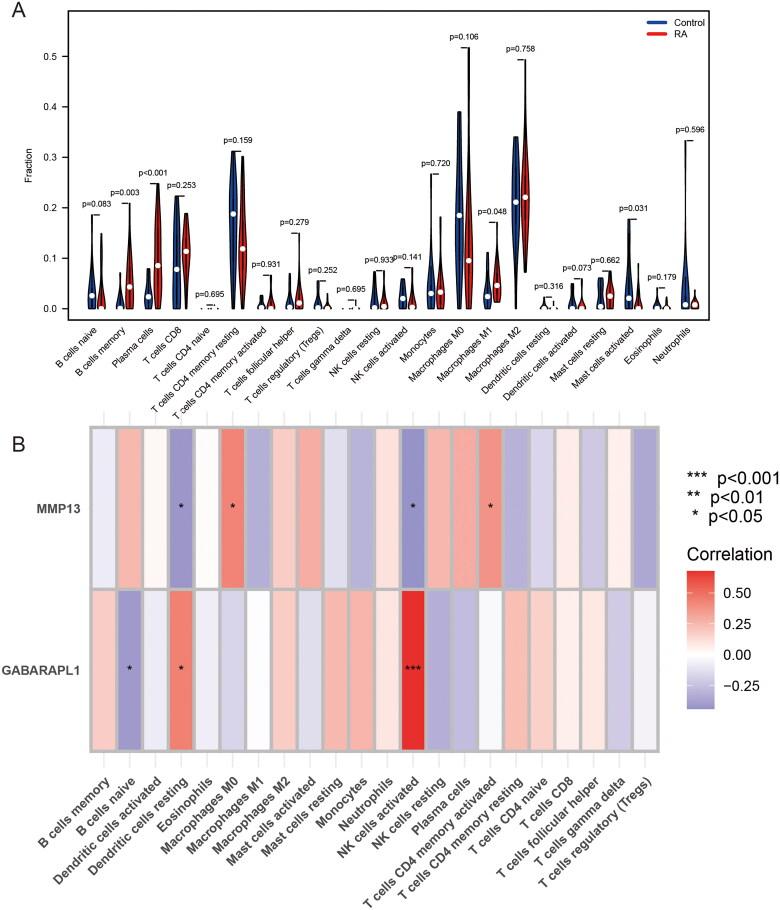
MMP13 and GABARAPL1 can be used as ferroptosis diagnostic genes in RA. The ROC curve and PPI result demonstrated that MMP13 and GABARAPL1 had an excellent diagnostic value. The results of signature genes in the external dataset, qRT-PCR and Western blot further confirm our findings. The enrichment analysis showed that p53, MAPK and NOD-like receptor signalling pathways may be involved in the process of ferroptosis in RA. In addition, two ferroptosis diagnostic genes in RA participate in the occurrence of ferroptosis in RA via oxidative stress, metabolism and immune response. Immune infiltration analysis showed that RA extensively infiltrated B cells, T cells, macrophages and other immune cells. Persistent immune activation may be an essential reason for the progression of ferroptosis in RA. We also obtained five potential therapeutic agents for RA and some long non-coding RNAs (lncRNAs) and microRNAs (miRNAs) regulating ferroptosis diagnostic genes.
CONCLUSIONS
Our study suggests that MMP13 and GABARAPL1, which are closely linked with oxidative stress and immunological modulation, can be used as ferroptosis-related potential diagnostic markers in RA and provide new clues regarding the diagnostic and therapeutic targets of ferroptosis in RA.
背景
类风湿关节炎(RA)是一种自身免疫性、炎症性关节疾病。越来越多的证据表明铁死亡参与了 RA 的发病机制。本研究旨在寻找 RA 中与铁死亡相关的诊断标志物,并分析其潜在机制和临床价值。
材料和方法
使用公共可用的 GEO 数据库中的 RA 相关数据集。应用三种机器学习方法筛选生物标志物。还通过接收者操作特征(ROC)曲线、外部数据集、qRT-PCR 和 Western blot 验证结果的诊断效果。在此过程中进行了富集分析,同时使用生物标志物进行了蛋白质-蛋白质相互作用(PPI)分析和免疫浸润相关性分析,并构建了竞争性内源性 RNA(ceRNA)网络以寻找潜在的治疗靶点。
结果
MMP13 和 GABARAPL1 可作为 RA 中铁死亡的诊断基因。ROC 曲线和 PPI 结果表明 MMP13 和 GABARAPL1 具有出色的诊断价值。外部数据集、qRT-PCR 和 Western blot 结果进一步证实了我们的发现。基因签名的富集分析表明,p53、MAPK 和 NOD 样受体信号通路可能参与 RA 中铁死亡的发生。此外,RA 中的两个铁死亡诊断基因通过氧化应激、代谢和免疫反应参与 RA 中铁死亡的发生。免疫浸润分析表明,RA 广泛浸润 B 细胞、T 细胞、巨噬细胞等免疫细胞。持续的免疫激活可能是 RA 中铁死亡进展的一个重要原因。我们还获得了五个潜在的 RA 治疗药物和一些调节铁死亡诊断基因的长链非编码 RNA(lncRNA)和 microRNA(miRNA)。
结论
本研究表明,与氧化应激和免疫调节密切相关的 MMP13 和 GABARAPL1 可以作为 RA 中与铁死亡相关的潜在诊断标志物,并为 RA 中与铁死亡相关的诊断和治疗靶点提供新的线索。




 Zotero 插件