
神经精神障碍与非酒精性脂肪性肝病之间的因果关系:一项双向孟德尔随机化研究。
Causal relationships between neuropsychiatric disorders and nonalcoholic fatty liver disease: A bidirectional Mendelian randomization study.
机构信息
Health Science Center, Ningbo University, Ningbo, Zhejiang, 315211, China.
Department of Gastroenterology, The First Affiliated Hospital of Ningbo University, Ningbo, Zhejiang, 315010, China.
出版信息
BMC Gastroenterol. 2024 Sep 4;24(1):299. doi: 10.1186/s12876-024-03386-6.
BACKGROUND
Increasing evidences suggest that nonalcoholic fatty liver disease (NAFLD) is associated with neuropsychiatric disorders. Nevertheless, whether there were causal associations between them remained vague. A causal association between neuropsychiatric disorders and NAFLD was investigated in this study.
METHODS
We assessed the published genome-wide association study summary statistics for NAFLD, seven mental disorder-related diseases and six central nervous system dysfunction-related diseases. The causal relationships were first assessed using two-sample and multivariable Mendelian randomization (MR). Then, sensitivity analyses were performed, followed by a reverse MR analysis to determine whether reverse causality is possible. Finally, we performed replication analyses and combined the findings from the above studies.
RESULTS
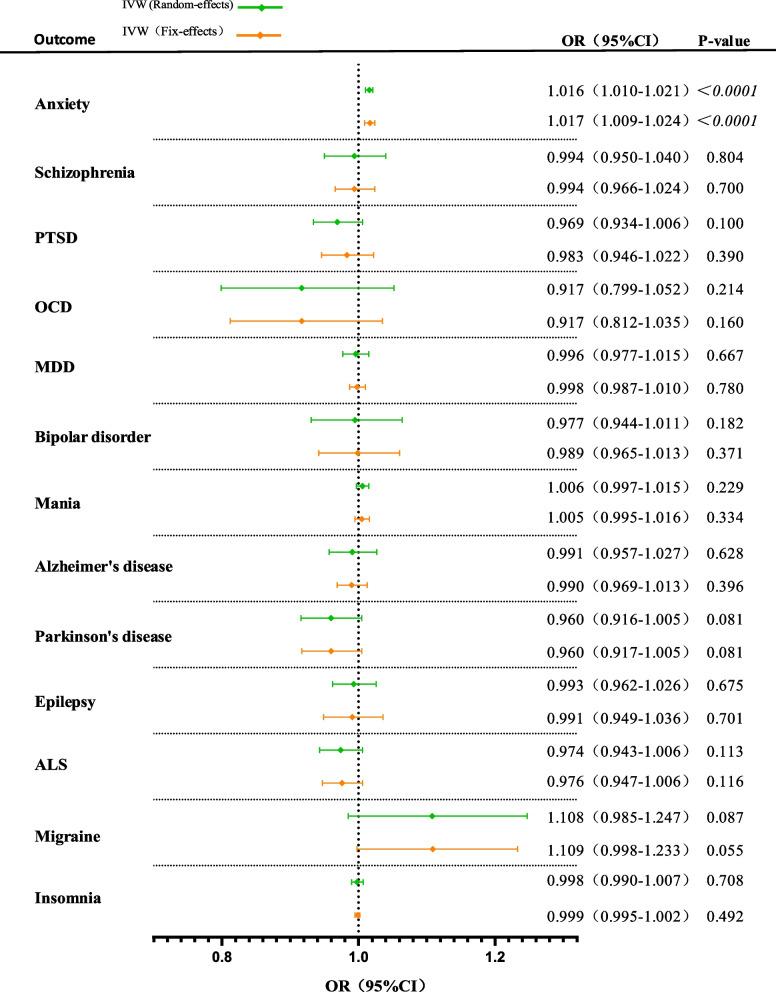
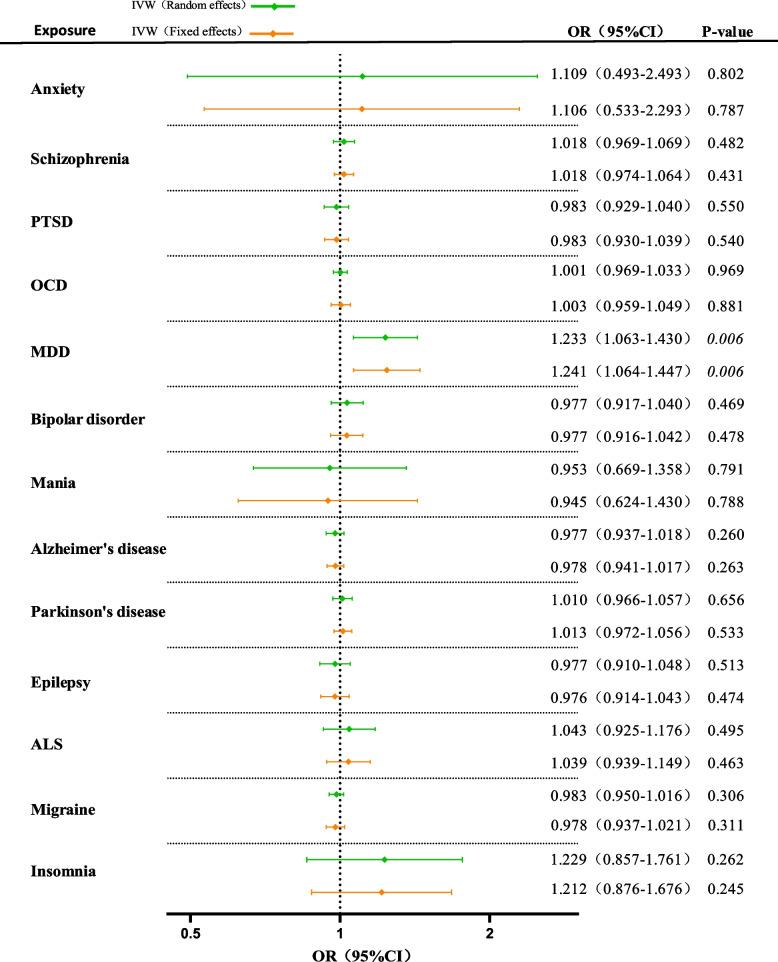
Our meta-analysis results showed NAFLD significantly increased the risk of anxiety disorders (OR = 1.016, 95% CI = 1.010-1.021, P value < 0.0001). In addition, major depressive disorder was the potential risk factor for NAFLD (OR = 1.233, 95% CI = 1.063-1.430, P value = 0.006). Multivariable MR analysis showed that the causal effect of major depressive disorder on NAFLD remained significant after considering body mass index, but the association disappeared after adjusting for the effect of waist circumference. Furthermore, other neuropsychiatric disorders and NAFLD were not found to be causally related.
CONCLUSIONS
These results implied causal relationships of NAFLD with anxiety disorders and Major Depressive Disorder. This study highlighted the need to recognize and understand the connection between neuropsychiatric disorders and NAFLD to prevent the development of related diseases.
背景
越来越多的证据表明,非酒精性脂肪性肝病(NAFLD)与神经精神障碍有关。然而,它们之间是否存在因果关系仍不清楚。本研究旨在探讨神经精神障碍与 NAFLD 之间是否存在因果关系。
方法
我们评估了 NAFLD、七种精神障碍相关疾病和六种中枢神经系统功能障碍相关疾病的已发表全基因组关联研究汇总统计数据。首先使用两样本和多变量 Mendelian 随机化(MR)评估因果关系。然后进行敏感性分析,接着进行反向 MR 分析以确定是否存在反向因果关系。最后进行复制分析,并结合上述研究的结果。
结果
我们的荟萃分析结果表明,NAFLD 显著增加了焦虑障碍的风险(OR=1.016,95%CI=1.010-1.021,P 值<0.0001)。此外,重度抑郁症是 NAFLD 的潜在危险因素(OR=1.233,95%CI=1.063-1.430,P 值=0.006)。多变量 MR 分析表明,重度抑郁症对 NAFLD 的因果效应在考虑体重指数后仍然显著,但在调整腰围效应后关联消失。此外,没有发现其他神经精神障碍与 NAFLD 之间存在因果关系。
结论
这些结果表明 NAFLD 与焦虑障碍和重度抑郁症之间存在因果关系。本研究强调需要认识和理解神经精神障碍与 NAFLD 之间的联系,以预防相关疾病的发生。

 Zotero 插件