
栀子苷通过抑制 TGF-β/Smad 和 p38MAPK 信号通路改善博来霉素诱导的小鼠肺纤维化。
Geniposide ameliorates bleomycin-induced pulmonary fibrosis in mice by inhibiting TGF-β/Smad and p38MAPK signaling pathways.
机构信息
The People's Hospital of ChuXiong Yi Autonomous Prefecture, ChuXiong, China.
School of Pharmaceutical Sciences & Yunnan Key Laboratory of Pharmacology for Natural Products, College of Modern Biomedical Industry, Kunming Medical University, Kunming, China.
出版信息
PLoS One. 2024 Sep 6;19(9):e0309833. doi: 10.1371/journal.pone.0309833. eCollection 2024.
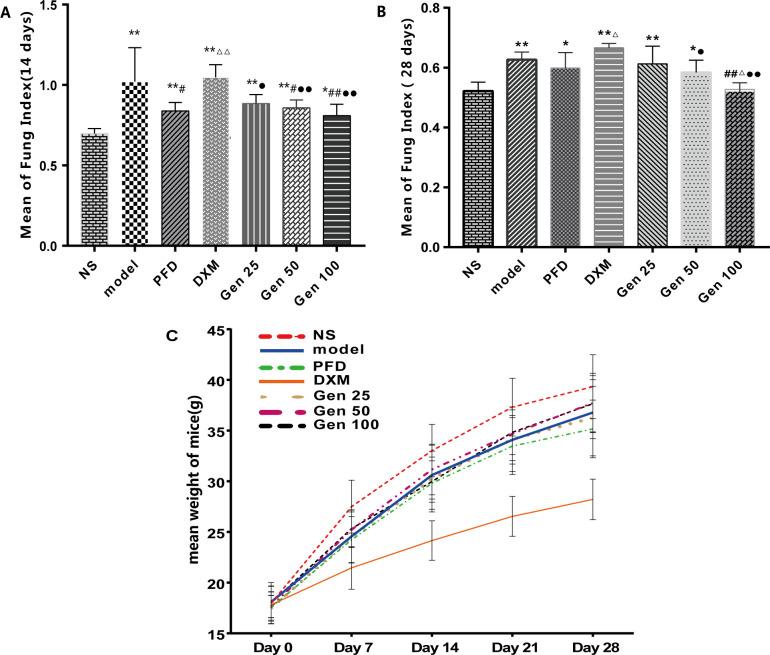
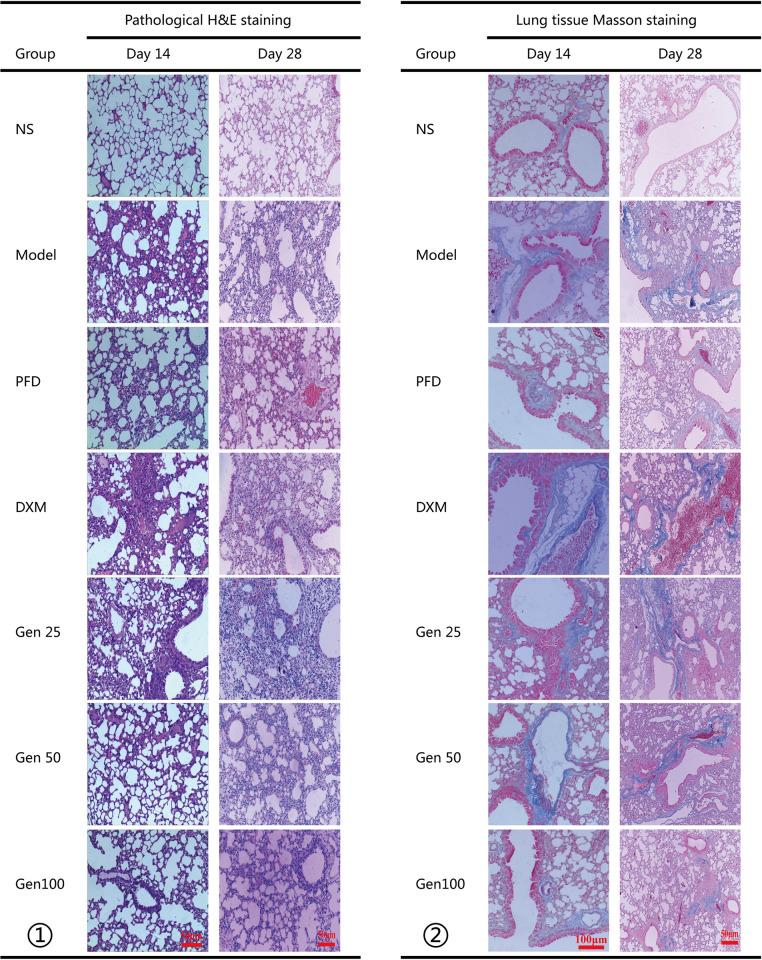
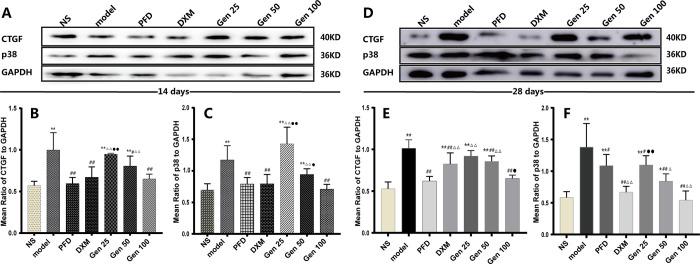
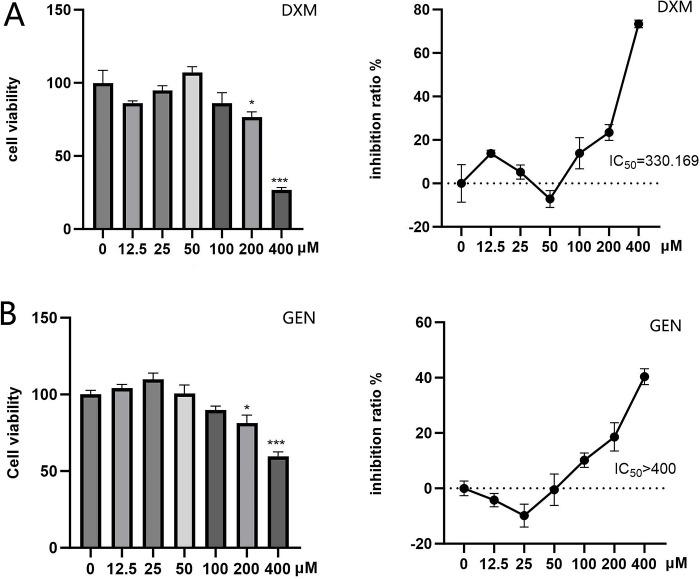
Pulmonary fibrosis (PF) is an interstitial lung disease characterized by inflammation and fibrotic changes, with an unknown cause. In the early stages of PF, severe inflammation leads to the destruction of lung tissue, followed by upregulation of fibrotic factors like Transforming growth factor-β (TGF-β) and connective tissue growth factor (CTGF), which disrupt normal tissue repair. Geniposide, a natural iridoid glycoside primarily derived from the fruits of Gardenia jasminoides Ellis, possesses various pharmacological activities, including liver protection, choleretic effects, and anti-inflammatory properties. In this study, we investigated the effects of Geniposide on chronic inflammation and fibrosis induced by bleomycin (BLM) in mice with pulmonary fibrosis (PF). PF was induced by intratracheal instillation of bleomycin, and Geniposide(100/50/25mg•kg-1) was orally administered to the mice once a day until euthanasia(14 day/28 day). The Raw264.7 cell inflammation induced by LPS was used to evaluate the effect of Geniposide on the activation of macrophage. Our results demonstrated that Geniposide reduced lung coefficients, decreased the content of Hydroxyproline, and improved pathological changes in lung tissue. It also reduced the number of inflammatory cells and levels of pro-inflammatory cytokines in bronchoalveolar lavage fluid (BALF) of bleomycin-induced PF mice. At the molecular level, Geniposide significantly down-regulated the expression of TGF-β1, Smad2/3, p38, and CTGF in lung tissues of PF mice induced by bleomycin. Molecular docking results revealed that Geniposide exhibited good binding activity with TGF-β1, Smad2, Smad3, and p38. In vitro study showed Geniposide directly inhibited the activation of macrophage induced by LPS. In conclusion, our findings suggest that Geniposide can ameliorate bleomycin-induced pulmonary fibrosis in mice by inhibiting the TGF-β/Smad and p38MAPK signaling pathways.
肺纤维化(PF)是一种以炎症和纤维化改变为特征的间质性肺疾病,其病因不明。在 PF 的早期阶段,严重的炎症导致肺组织破坏,随后纤维化因子如转化生长因子-β(TGF-β)和结缔组织生长因子(CTGF)上调,破坏正常的组织修复。栀子苷是一种天然环烯醚萜糖苷,主要来源于栀子(Gardenia jasminoides Ellis)的果实,具有多种药理活性,包括保肝、利胆和抗炎作用。本研究旨在探讨栀子苷对博莱霉素(BLM)诱导的肺纤维化(PF)小鼠慢性炎症和纤维化的影响。通过气管内滴注博莱霉素诱导 PF,栀子苷(100/50/25mg•kg-1)每天口服一次,直至处死(14 天/28 天)。用 LPS 诱导 Raw264.7 细胞炎症,评估栀子苷对巨噬细胞活化的影响。结果表明,栀子苷降低肺系数,降低羟脯氨酸含量,改善肺组织病理变化。还减少博莱霉素诱导 PF 小鼠支气管肺泡灌洗液(BALF)中炎症细胞数量和促炎细胞因子水平。分子水平上,栀子苷显著下调博莱霉素诱导的 PF 小鼠肺组织中 TGF-β1、Smad2/3、p38 和 CTGF 的表达。分子对接结果表明,栀子苷与 TGF-β1、Smad2、Smad3 和 p38 具有良好的结合活性。体外研究表明,栀子苷直接抑制 LPS 诱导的巨噬细胞活化。综上所述,栀子苷通过抑制 TGF-β/Smad 和 p38MAPK 信号通路,可改善博莱霉素诱导的小鼠肺纤维化。




 Zotero 插件