
基于深度迁移学习技术的 DenseNet-201 阿尔茨海默病分类。
Classification of Alzheimer disease using DenseNet-201 based on deep transfer learning technique.
机构信息
Faculty of Informatics and Computing, Universiti Sultan Zainal Abidin (UniSZA), Terengganu, Malaysia.
Information Technology Services, University of Okara, Okara, Pakistan.
出版信息
PLoS One. 2024 Sep 6;19(9):e0304995. doi: 10.1371/journal.pone.0304995. eCollection 2024.
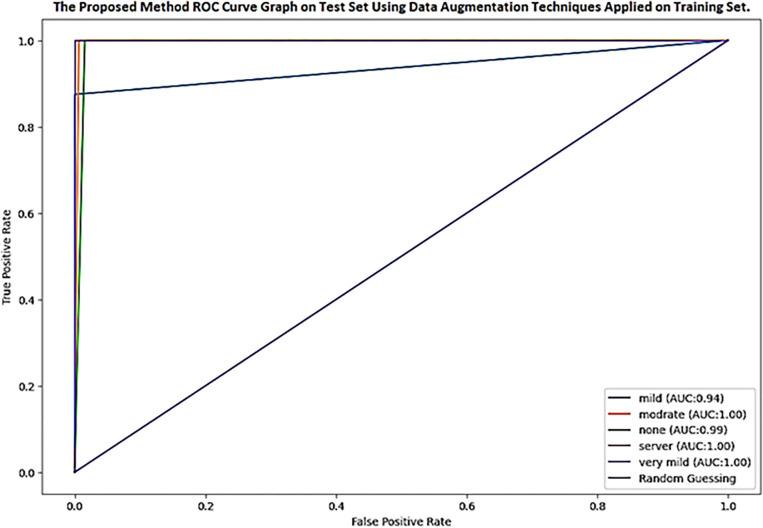
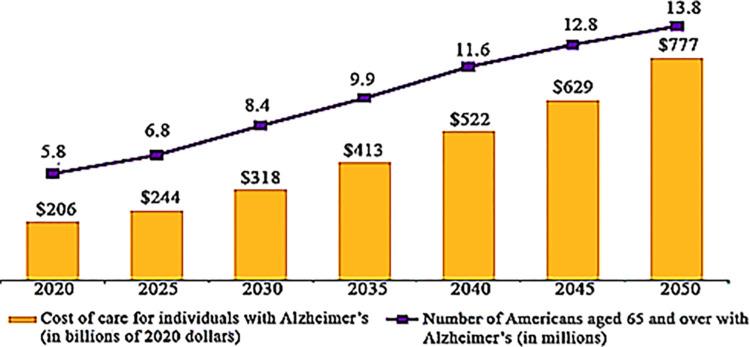
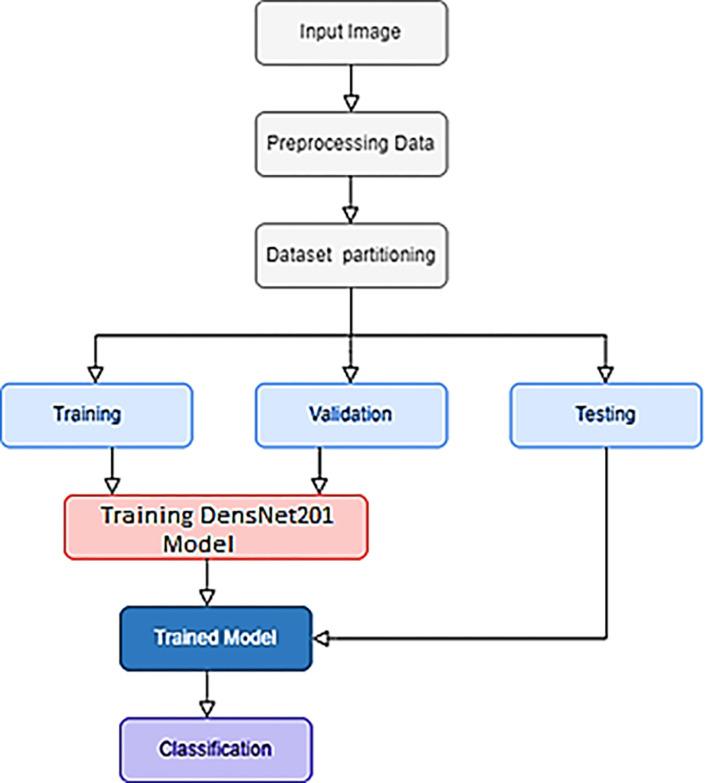
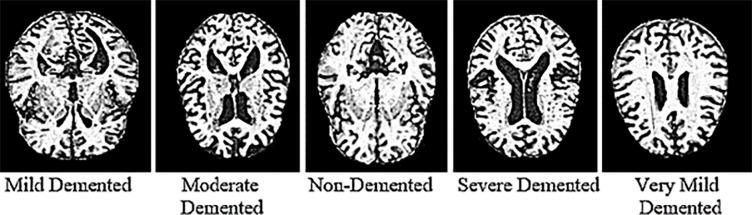
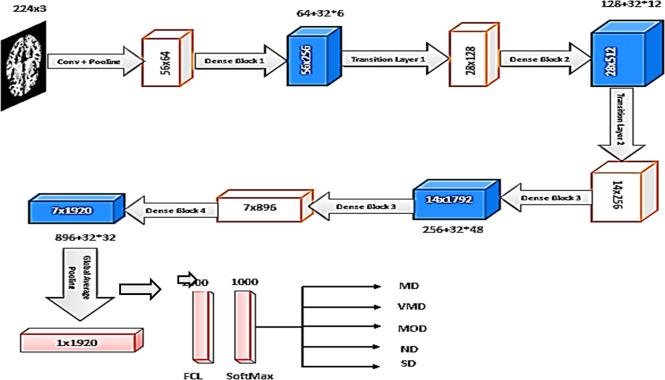
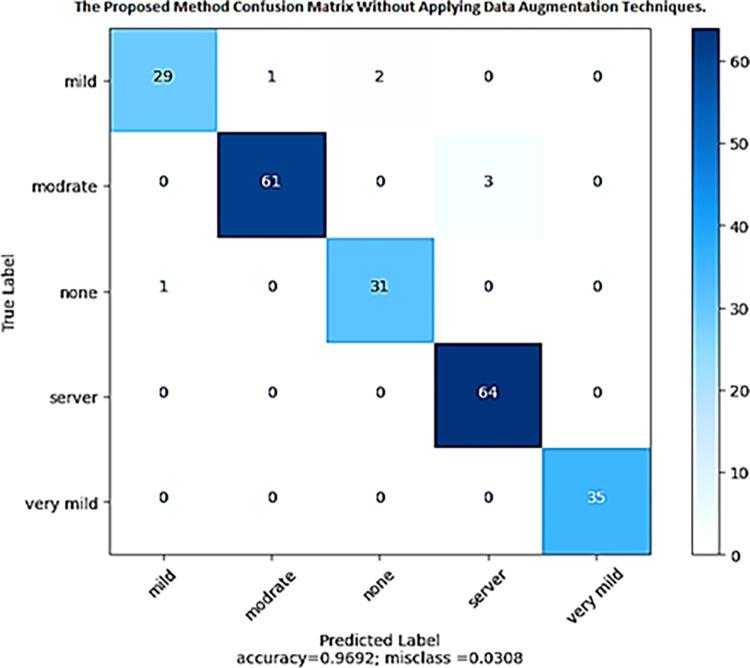
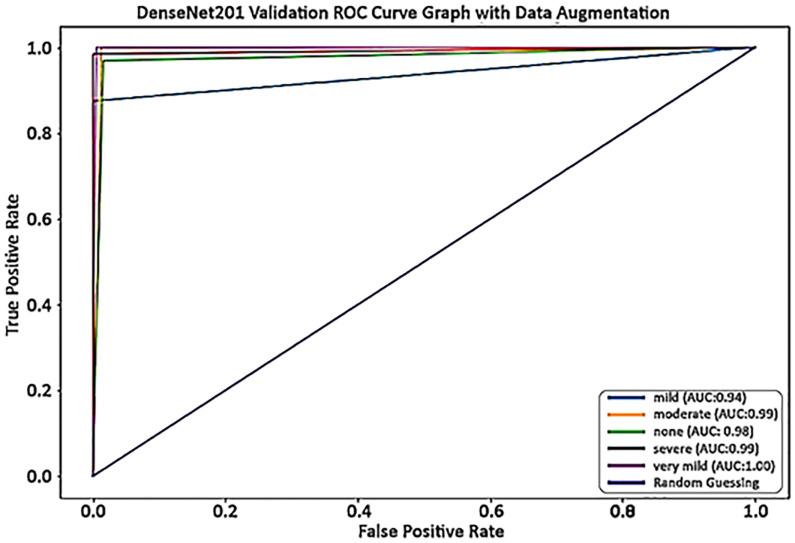
Alzheimer's disease (AD) is a brain illness that causes gradual memory loss. AD has no treatment and cannot be cured, so early detection is critical. Various AD diagnosis approaches are used in this regard, but Magnetic Resonance Imaging (MRI) provides the most helpful neuroimaging tool for detecting AD. In this paper, we employ a DenseNet-201 based transfer learning technique for diagnosing different Alzheimer's stages as Non-Demented (ND), Moderate Demented (MOD), Mild Demented (MD), Very Mild Demented (VMD), and Severe Demented (SD). The suggested method for a dataset of MRI scans for Alzheimer's disease is divided into five classes. Data augmentation methods were used to expand the size of the dataset and increase DenseNet-201's accuracy. It was found that the proposed strategy provides a very high classification accuracy. This practical and reliable model delivers a success rate of 98.24%. The findings of the experiments demonstrate that the suggested deep learning approach is more accurate and performs well compared to existing techniques and state-of-the-art methods.
阿尔茨海默病(AD)是一种导致逐渐记忆丧失的脑部疾病。AD 目前尚无治疗方法,也无法治愈,因此早期发现至关重要。在这方面使用了各种 AD 诊断方法,但磁共振成像(MRI)为检测 AD 提供了最有用的神经影像学工具。在本文中,我们采用基于 DenseNet-201 的迁移学习技术,对不同的阿尔茨海默病阶段进行诊断,包括非痴呆(ND)、中度痴呆(MOD)、轻度痴呆(MD)、轻度痴呆(VMD)和重度痴呆(SD)。建议的用于阿尔茨海默病 MRI 扫描数据集的方法分为五类。使用数据增强方法来扩大数据集的大小并提高 DenseNet-201 的准确性。结果表明,所提出的策略提供了非常高的分类准确性。该实用可靠的模型的成功率达到了 98.24%。实验结果表明,与现有技术和最新方法相比,所提出的深度学习方法更加准确,性能更好。



 Zotero 插件