
饲养黑水虻幼虫产品对蛋鸡产蛋性能、蛋品质和器官性状的影响。
Performance, egg quality and organ traits of laying hens fed black soldier fly larvae products.
机构信息
Laboratory of Entomology, Wageningen University & Research, 6700AA Wageningen, The Netherlands.
Biometris, Wageningen University & Research, 6700AA Wageningen, The Netherlands.
出版信息
Poult Sci. 2024 Nov;103(11):104229. doi: 10.1016/j.psj.2024.104229. Epub 2024 Aug 19.
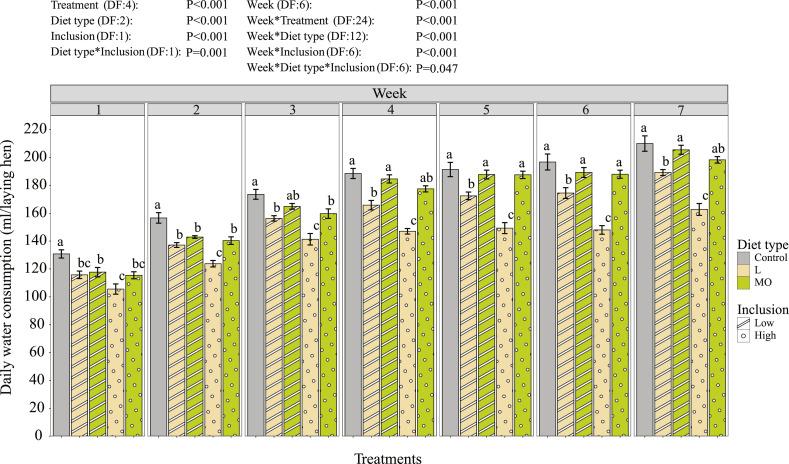
Due to consumer demands and institutional pressure, the egg production sector, is looking for alternative protein sources for laying hen feed to support more sustainable, circular production. black soldier fly (BSF) larvae could be used as a protein source. In addition to protein the larvae contain large quantities of fat and can either be fed to laying hens unprocessed (alive) or processed (meal and oil). The current study was performed with 560 Brown Nick laying hens from 20 to 27 wk of age. The laying hens were divided over 5 treatments, each replicated 8 times. Treatments consisted of standard laying hen feed (control) and standard feed in which soybean meal was partly exchanged with live BSF larvae or BSF larvae meal and oil combined, at 2 inclusion levels. During the experiment production parameters, egg-quality, and length and weight of various organs were measured. Laying hens fed BSF larvae products consumed less feed compared to those of the control group. Most egg production parameters were similar, however laying hens fed diets with BSF larvae meal plus oil produced eggs with lower egg weight during the last 2 wk of the experiment, compared to the control group. All egg-quality characteristics remained the same across treatments, except for darker yolk colors when feeding BSF meal and oil and high inclusion of live BSF larvae. This is a favorable characteristic for European consumers. The weight of intestinal organs was largely unaffected by the treatments. The jejunum and ileum weight of laying hens fed live larvae was lower compared to the control group. As FCRs were similar or improved compared to the control group, we assume that nutrient utilization was not impaired. For most detected differences the type of BSF larvae product (live larvae or meal plus oil) rather than inclusion level was of significance.
由于消费者的需求和制度的压力,蛋鸡生产部门正在寻找替代蛋白质来源的蛋鸡饲料,以支持更可持续、更循环的生产。黑水虻幼虫可以作为一种蛋白质来源。除了蛋白质,幼虫还含有大量的脂肪,可以未经加工(活的)或加工(粉和油)喂给蛋鸡。本研究使用了 20 至 27 周龄的 560 只褐壳尼克蛋鸡。将蛋鸡分为 5 个处理组,每个处理组重复 8 次。处理组包括标准蛋鸡饲料(对照组)和标准饲料,其中部分豆粕被活黑水虻幼虫或黑水虻幼虫粉和油代替,替代水平为 2 个。在实验过程中,测量了生产参数、蛋品质以及各种器官的长度和重量。与对照组相比,饲喂黑水虻幼虫产品的蛋鸡饲料消耗量较少。大多数产蛋参数相似,但在实验的最后 2 周,饲喂添加黑水虻幼虫粉和油的日粮的蛋鸡所产鸡蛋的蛋重较低,与对照组相比。除了饲喂黑水虻粉和油以及高比例的活黑水虻幼虫时蛋黄颜色较深外,所有蛋品质特性在各处理组中保持不变。这是欧洲消费者的一个有利特征。肠道器官的重量受处理的影响不大。饲喂活幼虫的蛋鸡空肠和回肠的重量低于对照组。由于与对照组相比,FCR 相似或有所改善,我们假设营养物质的利用没有受到损害。对于大多数检测到的差异,黑水虻幼虫产品的类型(活幼虫或粉和油)而不是添加水平是重要的。


 Zotero 插件