
使用水解鲑鱼胶原蛋白脂质体提升化妆品的外观、皮肤渗透性并减少异味
Enhancement of Physical Appearance, Skin Permeation, and Odor Reduction Using Liposome of Hydrolyzed Salmon Collagen for Cosmetic Products.
作者信息
Amnuaikit Thanaporn, Rajagopal Rajeev Shankar, Nilsuwan Krisana, Benjakul Soottawat
机构信息
Drug Delivery System Excellence Center, Department of Pharmaceutical Technology, Faculty of Pharmaceutical Sciences, Prince of Songkla University, Hat Yai, Songkhla, Thailand.
International Center of Excellence in Seafood Science and Innovation, Faculty of Agro-Industry, Prince of Songkla University, Hat Yai, Songkhla, Thailand.
出版信息
Scientifica (Cairo). 2024 Apr 24;2024:7843660. doi: 10.1155/2024/7843660. eCollection 2024.
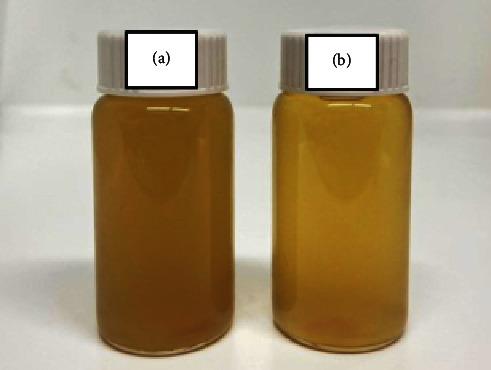
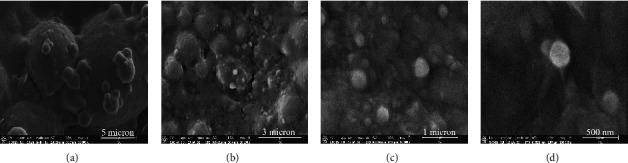
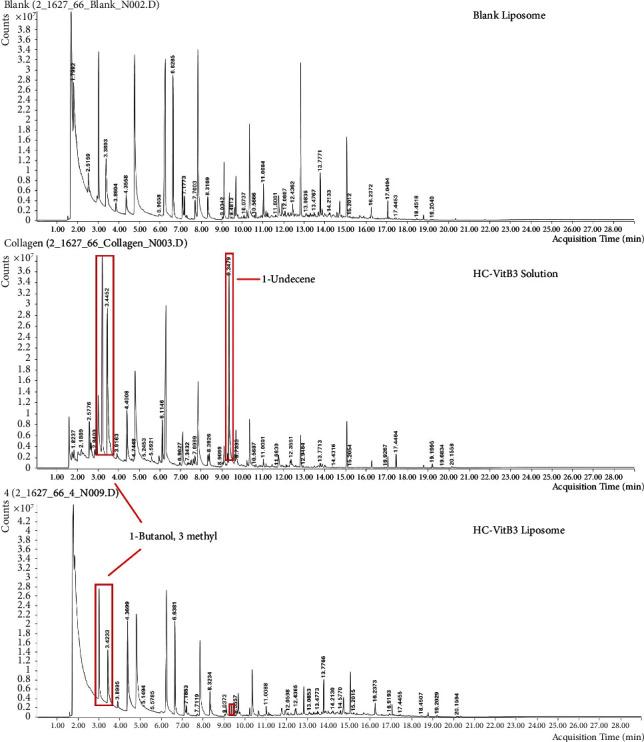
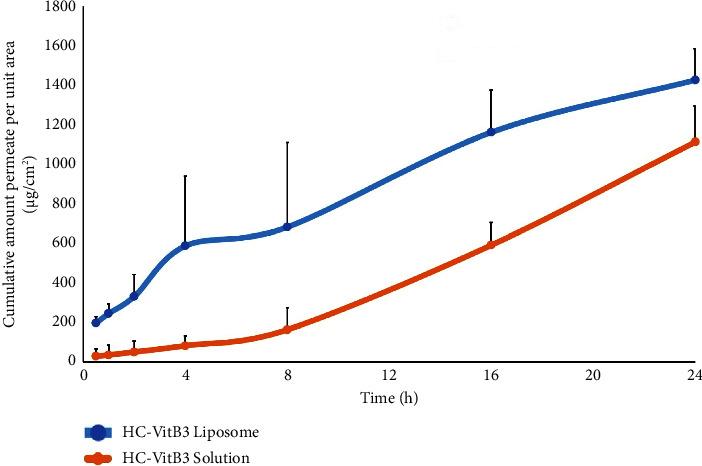
Hydrolyzed collagen (HC) derived from salmon () skin possesses properties that can nourish the skin, and it is one of the active ingredients used in cosmeceutical products for moisturizing the facial skin. However, HC solution gives off a fishy odor and it is gray in color that makes the product unacceptable for cosmetic purposes. This study aimed to use liposome-encapsulated hydrolyzed salmon collagen to improve its physical appearance, skin permeation, and eliminate the fishy odor. Two percent of HC and vitamin B3 (VitB3) were used as active ingredients to incorporate into liposomes. Phosphatidylcholine, cholesterol, and Tween 80 at a suitable weight ratio of 8 : 2 : 1 produced nano-sized vesicles (170.6 ± 0.70 nm) with the highest percentage of entrapment efficiency (95.72 ± 2.00%) of VitB3 and (49.63 ± 1.74%) of HC. Skin permeation and odor detection of the HC-VitB3 liposome were studied using Franz's diffusion cell and gas chromatography, respectively, and compared with HC-VitB3 solution. Subsequently, facial serums were formulated using HC-VitB3 liposomes and HC-VitB3 solutions, and a product satisfaction test was conducted with 100 volunteers to determine their preferred product. The results of the studies of HC-VitB3 liposome serum showed improved formulation appearance, enhanced skin permeation, and better odor elimination compared to the HC-VitB3 serum. Furthermore, seventy-three volunteers in the product satisfaction test preferred and selected the liposomal serum for its superior scent. From all the experimental results, it could be seen that liposomes can help increase skin penetration, and undesirable odors and colors can be masked by the appropriate lipid bilayer structure of liposomes.
源自三文鱼()皮的水解胶原蛋白(HC)具有滋养肌肤的特性,是用于面部肌肤保湿的药妆产品中的活性成分之一。然而,HC溶液会散发鱼腥味且呈灰色,这使得该产品不符合化妆品的要求。本研究旨在使用脂质体包裹的水解三文鱼胶原蛋白来改善其外观、皮肤渗透性并消除鱼腥味。将2%的HC和维生素B3(VitB3)用作活性成分并包封于脂质体中。按8 : 2 : 1的合适重量比使用磷脂酰胆碱、胆固醇和吐温80,制得纳米级囊泡(170.6 ± 0.70 nm),其中VitB3的包封率最高(95.72 ± 2.00%),HC的包封率为(49.63 ± 1.74%)。分别使用Franz扩散池和气相色谱法研究了HC-VitB3脂质体的皮肤渗透性和气味,并与HC-VitB3溶液进行比较。随后,使用HC-VitB3脂质体和HC-VitB3溶液配制面部精华液,并对100名志愿者进行产品满意度测试以确定他们更喜欢的产品。与HC-VitB3精华液相比,HC-VitB3脂质体精华液的研究结果显示其配方外观得到改善、皮肤渗透性增强且气味消除效果更好。此外,在产品满意度测试中,73名志愿者因其 superior scent而更喜欢并选择了脂质体精华液。从所有实验结果可以看出,脂质体有助于提高皮肤渗透性,并且脂质体合适的脂质双层结构可以掩盖不良气味和颜色。 (注原文中“salmon () skin”括号处内容缺失)
 Zotero 插件