
SKBR3/HER2+乳腺癌细胞对拉帕替尼和研究性药物伊帕替尼激酶抑制剂的蛋白质组学评估
Proteomic assessment of SKBR3/HER2+ breast cancer cellular response to Lapatinib and investigational Ipatasertib kinase inhibitors.
作者信息
Karcini Arba, Mercier Nicole R, Lazar Iulia M
机构信息
Department of Biological Sciences, Virginia Tech, Blacksburg, VA, United States.
Fralin Life Sciences Institute, Virginia Tech, Blacksburg, VA, United States.
出版信息
Front Pharmacol. 2024 Aug 29;15:1413818. doi: 10.3389/fphar.2024.1413818. eCollection 2024.
INTRODUCTION
Modern cancer treatment strategies aim at achieving cancer remission by using targeted and personalized therapies, as well as harnessing the power of the immune system to recognize and eradicate the cancer cells. To overcome a relatively short-lived response due to resistance to the administered drugs, combination therapies have been pursued.
OBJECTIVE
The objective of this study was to use high-throughput data generation technologies such as mass spectrometry and proteomics to investigate the broader implications, and to expand the outlook, of such therapeutic approaches. Specifically, we investigated the systems-level response of a breast cancer cell line model to a mixture of kinase inhibitors that has not been adopted yet as a standard therapeutic regime.
METHODS
Two critical pathways that sustain the growth and survival of cancer cells, EGFR and PI3K/AKT, were inhibited in SKBR3/HER2+ breast cancer cells with Lapatinib (Tyr kinase inhibitor) and Ipatasertib (Ser/Thr kinase inhibitor), and the landscape of the affected biological processes was investigated with proteomic technologies.
RESULTS
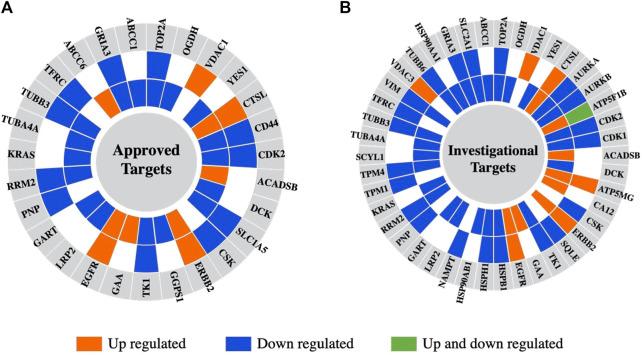
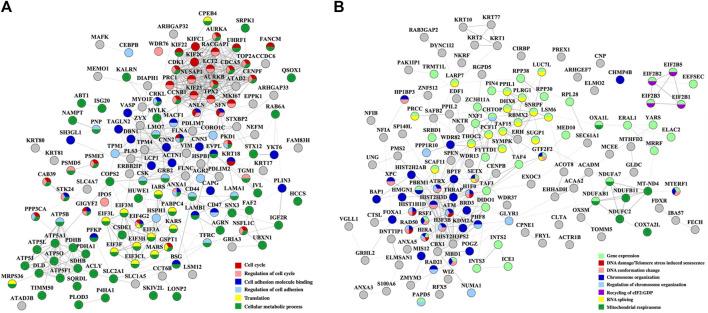
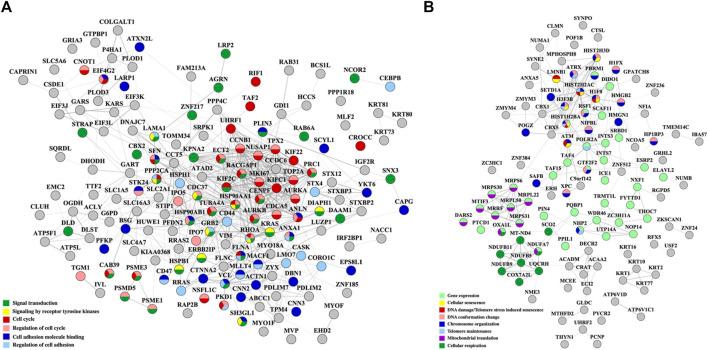
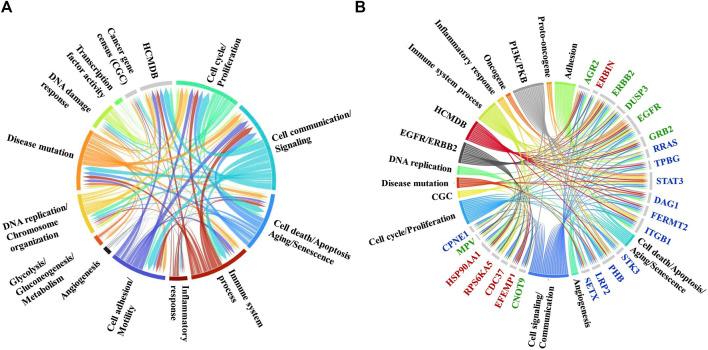
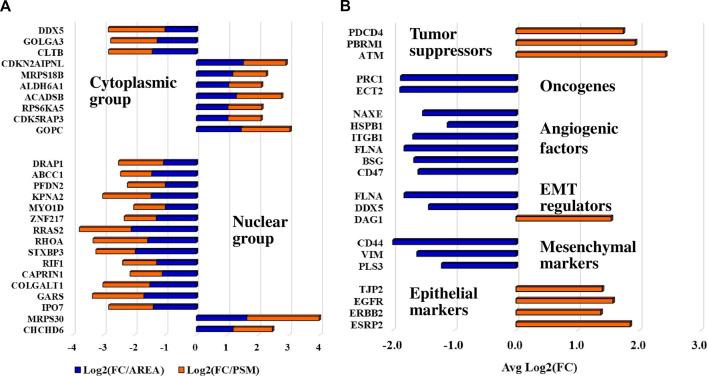
Over 800 proteins matched by three unique peptide sequences were affected by exposing the cells to the drugs. The work corroborated the anti-proliferative activity of Lapatinib and Ipatasertib and uncovered a range of impacted cancer-supportive hallmark processes, among which immune response, adhesion, and migration emerged as particularly relevant to the ability of drugs to effectively suppress the proliferation and dissemination of cancer cells. Changes in the expression of key cancer drivers such as oncogenes, tumor suppressors, EMT and angiogenesis regulators underscored the inhibitory effectiveness of drugs on cancer proliferation. The supplementation of Lapatinib with Ipatasertib further affected additional transcription factors and proteins involved in gene expression, trafficking, DNA repair, and development of multidrug resistance. Furthermore, over fifty of the impacted proteins represent approved or investigational targets in the DrugBank database, which through their protein-protein interaction networks can inform the selection of effective therapeutic partners.
CONCLUSION
Altogether, the exposure of SKBR3/HER2+ cells to Lapatinib and Ipatasertib kinase inhibitors uncovered a broad plethora of yet untapped opportunities that can be further explored for enhancing the anti-cancer effects of each drug as well as of many other multi-drug therapies that target the EGFR/ERBB2 and PI3K/AKT pathways.
引言
现代癌症治疗策略旨在通过使用靶向和个性化疗法,以及利用免疫系统识别和根除癌细胞的能力来实现癌症缓解。为了克服由于对所给药的耐药性导致的相对短暂的反应,人们一直在探索联合疗法。
目的
本研究的目的是使用诸如质谱和蛋白质组学等高通量数据生成技术来研究此类治疗方法的更广泛影响,并拓展其前景。具体而言,我们研究了一种尚未被采用为标准治疗方案的激酶抑制剂混合物对乳腺癌细胞系模型的系统水平反应。
方法
使用拉帕替尼(酪氨酸激酶抑制剂)和伊帕替尼(丝氨酸/苏氨酸激酶抑制剂)在SKBR3/HER2+乳腺癌细胞中抑制维持癌细胞生长和存活的两个关键途径,即表皮生长因子受体(EGFR)和磷脂酰肌醇-3-激酶/蛋白激酶B(PI3K/AKT),并用蛋白质组学技术研究受影响的生物学过程概况。
结果
通过将细胞暴露于药物,超过800种由三个独特肽序列匹配的蛋白质受到影响。这项工作证实了拉帕替尼和伊帕替尼的抗增殖活性,并揭示了一系列受影响的癌症支持性标志性过程,其中免疫反应、黏附和迁移与药物有效抑制癌细胞增殖和扩散的能力特别相关。关键癌症驱动因子如癌基因、肿瘤抑制因子、上皮-间质转化(EMT)和血管生成调节因子的表达变化强调了药物对癌症增殖的抑制效果。拉帕替尼与伊帕替尼联合使用进一步影响了其他与基因表达、运输、DNA修复和多药耐药性发展相关的转录因子和蛋白质。此外,超过五十种受影响的蛋白质是药物银行数据库中已批准或正在研究的靶点,通过它们的蛋白质-蛋白质相互作用网络可以为有效治疗伙伴的选择提供信息。
结论
总之,将SKBR3/HER2+细胞暴露于拉帕替尼和伊帕替尼激酶抑制剂揭示了大量尚未开发的机会,可进一步探索这些机会以增强每种药物以及许多其他靶向EGFR/ERBB2和PI3K/AKT途径的多药疗法的抗癌效果。



 Zotero 插件