
模块化肽组装的可吸入喷雾纳米颗粒逆转致命革兰氏阴性菌感染中的肺泡炎症。
Inhalable SPRAY nanoparticles by modular peptide assemblies reverse alveolar inflammation in lethal Gram-negative bacteria infection.
机构信息
Department of Chemistry, Zhejiang University, Hangzhou 310027, Zhejiang Province, China.
Key Laboratory of Precise Synthesis of Functional Molecules of Zhejiang Province, Department of Chemistry, School of Science, Westlake University, Hangzhou 310030, China.
出版信息
Sci Adv. 2024 Sep 13;10(37):eado1749. doi: 10.1126/sciadv.ado1749.
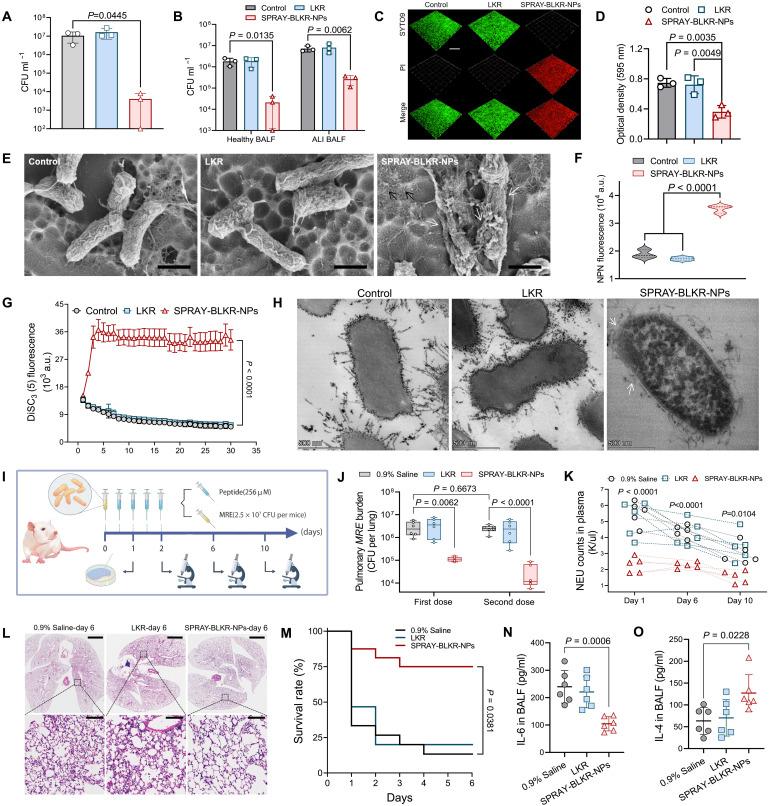
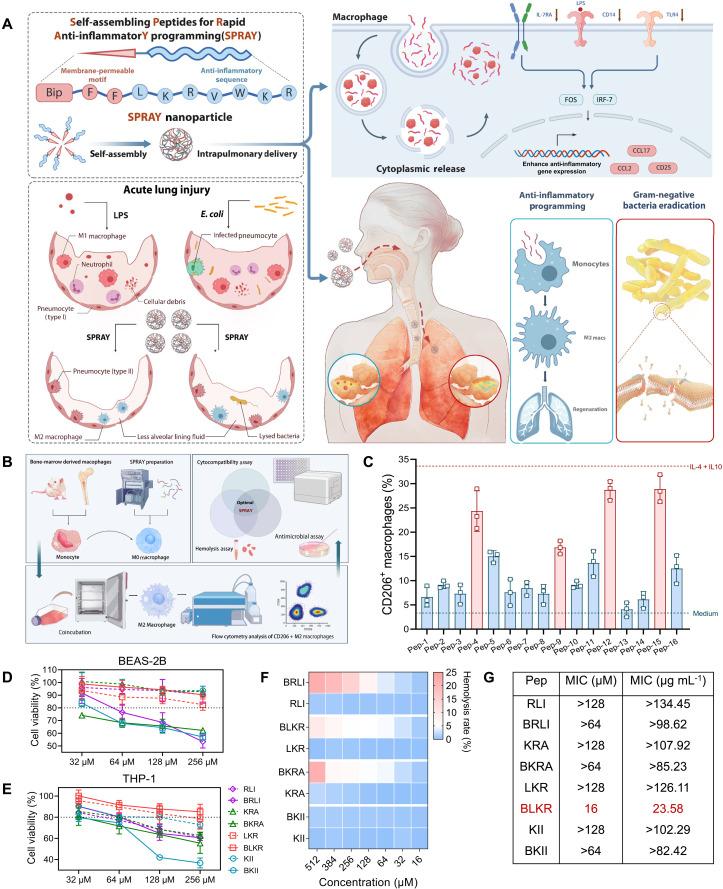
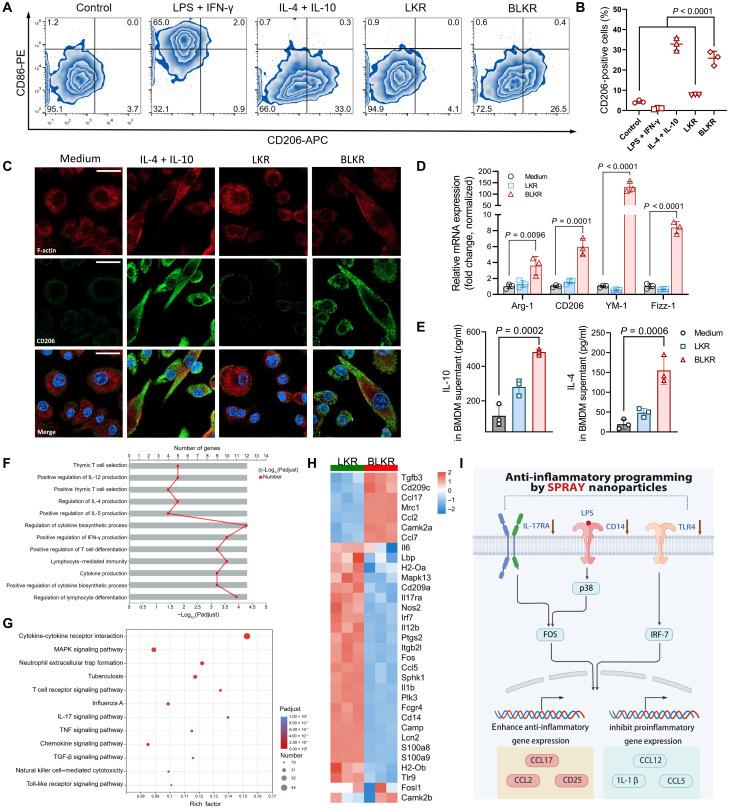
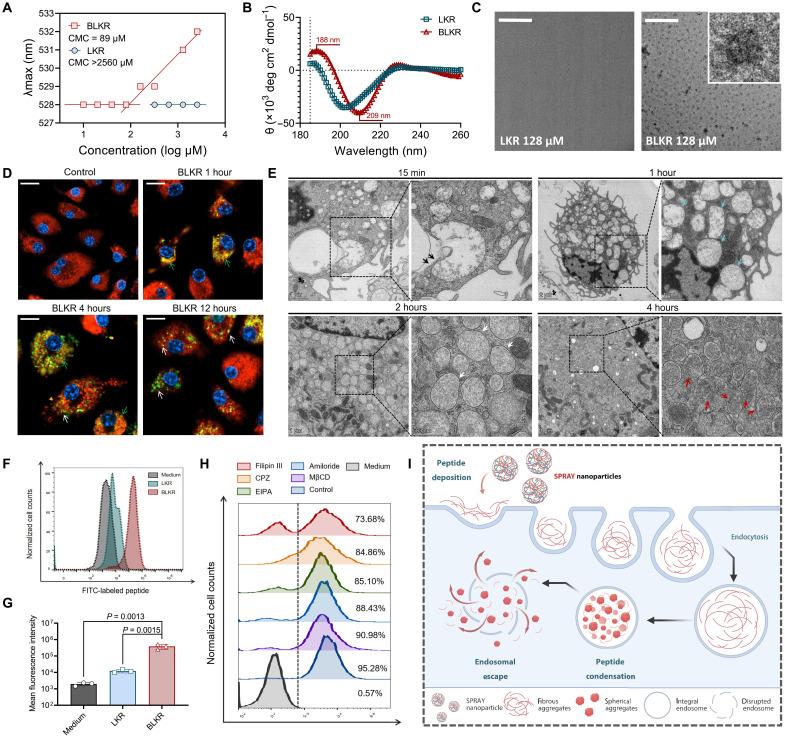
Current pharmacotherapy remains futile in acute alveolar inflammation induced by Gram-negative bacteria (GNB), eliciting consequent respiratory failure. The release of lipid polysaccharides after antibiotic treatment and subsequent progress of proinflammatory cascade highlights the necessity to apply effective inflammation management simultaneously. This work describes modular self-assembling peptides for rapid anti-inflammatory programming (SPRAY) to form nanoparticles targeting macrophage specifically, having anti-inflammation and bactericidal functions synchronously. SPRAY nanoparticles accelerate the self-delivery process in macrophages via lysosomal membrane permeabilization, maintaining anti-inflammatory programming in macrophages with efficacy close to T helper 2 cytokines. By pulmonary deposition, SPRAY nanoparticles effectively suppress inflammatory infiltration and promote alveoli regeneration in murine aseptic acute lung injury. Moreover, SPRAY nanoparticles efficiently eradicate multidrug-resistant GNB in alveoli by disrupting bacterial membrane. The universal molecular design of SPRAY nanoparticles provides a robust and clinically unseen local strategy in reverse acute inflammation featured by a high accumulation of proinflammatory cellularity and drug-resistant bacteria.
目前,针对革兰氏阴性菌(GNB)引起的急性肺泡炎症的药物治疗仍然无效,导致随后发生呼吸衰竭。抗生素治疗后脂多糖的释放和随后的促炎级联反应的进展突出表明,有必要同时应用有效的炎症管理。本工作描述了用于快速抗炎编程(SPRAY)的模块化自组装肽,以形成针对巨噬细胞的纳米颗粒,这些纳米颗粒具有抗炎和杀菌功能。SPRAY 纳米颗粒通过溶酶体膜通透性加速巨噬细胞内的自递呈过程,保持巨噬细胞中的抗炎编程,其功效接近辅助性 T 细胞 2 细胞因子。通过肺部沉积,SPRAY 纳米颗粒可有效抑制小鼠无菌性急性肺损伤中的炎症浸润,并促进肺泡再生。此外,SPRAY 纳米颗粒通过破坏细菌膜,有效根除肺泡中的多药耐药 GNB。SPRAY 纳米颗粒的通用分子设计为逆转以促炎细胞高度积聚和耐药菌为特征的急性炎症提供了一种强大且临床上未见的局部策略。


 Zotero 插件