
AbaI 突变对鲍曼不动杆菌毒力、生物膜形成和抗生素敏感性的影响。
Impact of AbaI mutation on virulence, biofilm development, and antibiotic susceptibility in Acinetobacter baumannii.
机构信息
Department of Microbiology and Immunology, Mahidol University, Bangkok, Thailand.
Department of Medical Technology, School of Allied Health Sciences, Walailak University, Nakhon Si Thammarat, Thailand.
出版信息
Sci Rep. 2024 Sep 14;14(1):21521. doi: 10.1038/s41598-024-72740-1.
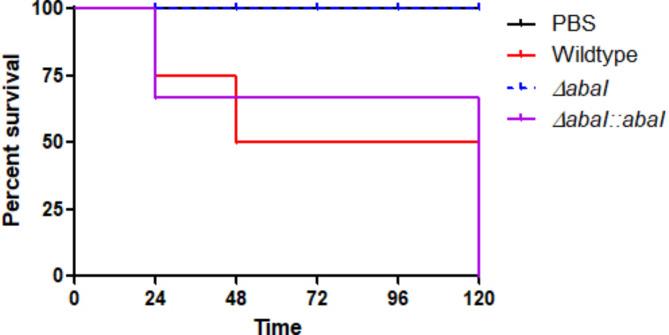
The quorum sensing (QS) system mediated by the abaI gene in Acinetobacter baumannii is crucial for various physiological and pathogenic processes. In this study, we constructed a stable markerless abaI knockout mutant (ΔabaI) strain using a pEXKm5-based allele replacement method to investigate the impact of abaI on A. baumannii. Proteomic analysis revealed significant alterations in protein expression between the wild type (WT) and ΔabaI mutant strains, particularly in proteins associated with membrane structure, antibiotic resistance, and virulence. Notably, the downregulation of key outer membrane proteins such as SurA, OmpA, OmpW, and BamA suggests potential vulnerabilities in outer membrane integrity, which correlate with structural abnormalities in the ΔabaI mutant strain, including irregular cell shapes and compromised membrane integrity, observed by scanning and transmission electron microscopy. Furthermore, diminished expression of regulatory proteins such as OmpR and GacA-GacS highlights the broader regulatory networks affected by abaI deletion. Functional assays revealed impaired biofilm formation and surface-associated motility in the mutant strain, indicative of altered colonization capabilities. Interestingly, the mutant showed a complex antibiotic susceptibility profile. While it demonstrated increased susceptibility to membrane-targeting antibiotics, its response to beta-lactams was more nuanced. Despite increased expression of metallo-beta-lactamase (MBL) superfamily proteins and DcaP-like protein, the mutant unexpectedly showed lower MICs for carbapenems (imipenem and meropenem) compared to the wild-type strain. This suggests that abaI deletion affects antibiotic susceptibility through multiple, potentially competing mechanisms. Further investigation is needed to fully elucidate the interplay between quorum sensing, antibiotic resistance genes, and overall antibiotic susceptibility in A. baumannii. Our findings underscore the multifaceted role of the abaI gene in modulating various cellular processes and highlight its significance in A. baumannii physiology, pathogenesis, and antibiotic resistance. Targeting the abaI QS system may offer novel therapeutic strategies for this clinically significant pathogen.
群体感应(QS)系统由鲍曼不动杆菌中的 abaI 基因介导,对各种生理和病理过程至关重要。在这项研究中,我们使用基于 pEXKm5 的等位基因替换方法构建了一个稳定的无标记 abaI 敲除突变体(ΔabaI)菌株,以研究 abaI 对鲍曼不动杆菌的影响。蛋白质组学分析显示,野生型(WT)和 ΔabaI 突变菌株之间的蛋白质表达存在显著差异,特别是与膜结构、抗生素耐药性和毒力相关的蛋白质。值得注意的是,关键的外膜蛋白如 SurA、OmpA、OmpW 和 BamA 的下调表明外膜完整性存在潜在的脆弱性,这与 ΔabaI 突变菌株的结构异常相关,包括扫描和透射电子显微镜下观察到的不规则细胞形状和膜完整性受损。此外,调节蛋白如 OmpR 和 GacA-GacS 的表达下调突出了 abaI 缺失影响的更广泛的调节网络。功能测定显示突变菌株生物膜形成和表面相关运动能力受损,表明定植能力发生改变。有趣的是,突变株表现出复杂的抗生素敏感性谱。虽然它对膜靶向抗生素的敏感性增加,但对β-内酰胺类抗生素的反应更为复杂。尽管金属β-内酰胺酶(MBL)超家族蛋白和 DcaP 样蛋白的表达增加,但突变株出人意料地表现出比野生型菌株更低的碳青霉烯(亚胺培南和美罗培南)MIC。这表明 abaI 缺失通过多种潜在竞争机制影响抗生素敏感性。需要进一步研究以充分阐明群体感应、抗生素耐药基因和鲍曼不动杆菌整体抗生素敏感性之间的相互作用。我们的研究结果强调了 abaI 基因在调节各种细胞过程中的多方面作用,并突出了其在鲍曼不动杆菌生理学、发病机制和抗生素耐药性中的重要性。靶向 abaI QS 系统可能为这种具有临床重要性的病原体提供新的治疗策略。


 Zotero 插件