
炎症标志物、氧化应激与线粒体动力学:对糖尿病患者冠状动脉疾病的影响
Inflammatory markers, oxidative stress, and mitochondrial dynamics: Repercussions on coronary artery disease in diabetes.
作者信息
Tatmatsu-Rocha José Carlos, Mendes-Costa Luan Santos
机构信息
College of Medicine, Postgraduate Program in Physiotherapy and Functionality, Federal University of Ceará-UFC, Fortaleza 60430-450, Ceará, Brazil.
Physical Therapy, Federal University of Ceará, Fortaleza 60000-000, Ceará, Brazil.
出版信息
World J Diabetes. 2024 Sep 15;15(9):1853-1857. doi: 10.4239/wjd.v15.i9.1853.
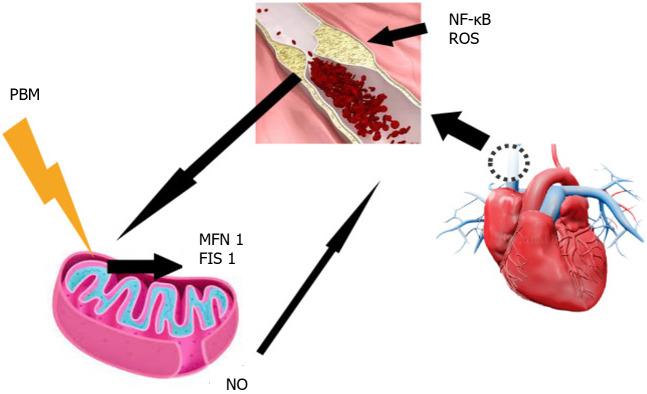
Inflammatory markers and mediators that affect the development of car-diovascular diseases have been the focus of recent scientific work. Thus, the purpose of this editorial is to promote a critical debate about the article titled "Nε-carboxymethyl-lysine and inflammatory cytokines, markers, and mediators of coronary artery disease progression in diabetes", published in the in 2024. This work directs us to reflect on the role of advanced glycation end products, which are pro-inflammatory products arising from the metabolism of fatty acids and sugars whose main marker in tissues is Nε-carboxymethyl-lysine (NML). Recent studies have linked high levels of pro-inflammatory agents with the development of coronary artery disease (CAD), especially tumor necrosis factor alpha, interleukins, and C-reactive protein. These inflammatory agents increase the production of reactive oxygen species (ROS), of which people with diabetes are known to have an increased production. The increase in ROS promotes lipid peroxidation, which causes damage to myocytes, promoting myocardial damage. Furthermore, oxidative stress induces the binding of NML to its receptor RAGE, which in turn activates the nuclear factor-kB, and conse-quently, inflammatory cytokines. These inflammatory cytokines induce endo-thelial dysfunction, with increased expression of adhesion molecules, changes in endothelial permeability and changes in the expression of nitric oxide. In this sense, the therapeutic use of monoclonal antibodies (inflammatory reducers such as statins and sodium-glucose transport inhibitors) has demonstrated positive results in the regression of atherogenic plaques and consequently CAD. On the other hand, many studies have demonstrated a relationship between mito-chondrial dynamics, diabetes, and cardiovascular diseases. This link occurs since ROS have their origin in the imbalance in glucose metabolism that occurs in the mitochondrial matrix, and this imbalance can have its origin in inadequate diet as well as some pathologies. Photobiomodulation (PBM) has recently been considered a possible therapeutic agent for cardiovascular diseases due to its effects on mitochondrial dynamics and oxidative stress. In this sense, therapies such as PBM that act on pro-inflammatory mediators and mitochondrial modulation could benefit those with cardiovascular diseases.
影响心血管疾病发展的炎症标志物和介质一直是近期科学研究的重点。因此,本社论的目的是推动对2024年发表的题为《Nε-羧甲基赖氨酸与糖尿病患者冠状动脉疾病进展中的炎症细胞因子、标志物和介质》一文展开批判性讨论。这项研究引导我们思考晚期糖基化终产物的作用,晚期糖基化终产物是脂肪酸和糖代谢产生的促炎产物,其在组织中的主要标志物是Nε-羧甲基赖氨酸(NML)。近期研究已将高水平的促炎因子与冠状动脉疾病(CAD)的发展联系起来,尤其是肿瘤坏死因子α、白细胞介素和C反应蛋白。这些炎症因子会增加活性氧(ROS)的产生,已知糖尿病患者体内ROS的产生会增加。ROS的增加会促进脂质过氧化,从而导致心肌细胞受损,进而引发心肌损伤。此外,氧化应激会诱导NML与其受体RAGE结合,进而激活核因子-κB,从而导致炎症细胞因子的产生。这些炎症细胞因子会诱导内皮功能障碍,导致黏附分子表达增加、内皮通透性改变以及一氧化氮表达变化。从这个意义上说,单克隆抗体(如他汀类药物和钠-葡萄糖转运抑制剂等炎症抑制剂)的治疗应用已在动脉粥样硬化斑块消退以及CAD的治疗中显示出积极效果。另一方面,许多研究表明线粒体动力学、糖尿病和心血管疾病之间存在关联。这种联系的产生是因为ROS源于线粒体基质中葡萄糖代谢的失衡,而这种失衡可能源于饮食不当以及某些疾病。由于光生物调节(PBM)对线粒体动力学和氧化应激有影响,最近它被认为是心血管疾病的一种可能的治疗药物。从这个意义上说,像PBM这样作用于促炎介质和线粒体调节的疗法可能会使心血管疾病患者受益。
 Zotero 插件