
肿瘤微环境中的固有免疫细胞:癌症免疫治疗的新前沿。
Innate immune cells in tumor microenvironment: A new frontier in cancer immunotherapy.
作者信息
Li Changhui, Yu Xinyu, Han Xinyan, Lian Chen, Wang Zijin, Shao Shiqun, Shao Fangwei, Wang Hua, Ma Shenglin, Liu Jian
机构信息
Department of Respiratory and Critical Care Medicine, the Second Affiliated Hospital, and Zhejiang University-University of Edinburgh Institute (ZJU-UoE Institute), Zhejiang University School of Medicine, Zhejiang University, Hangzhou 310029, China.
Edinburgh Medical School: Biomedical Sciences, College of Medicine and Veterinary Medicine, The University of Edinburgh, Edinburgh, UK.
出版信息
iScience. 2024 Aug 17;27(9):110750. doi: 10.1016/j.isci.2024.110750. eCollection 2024 Sep 20.
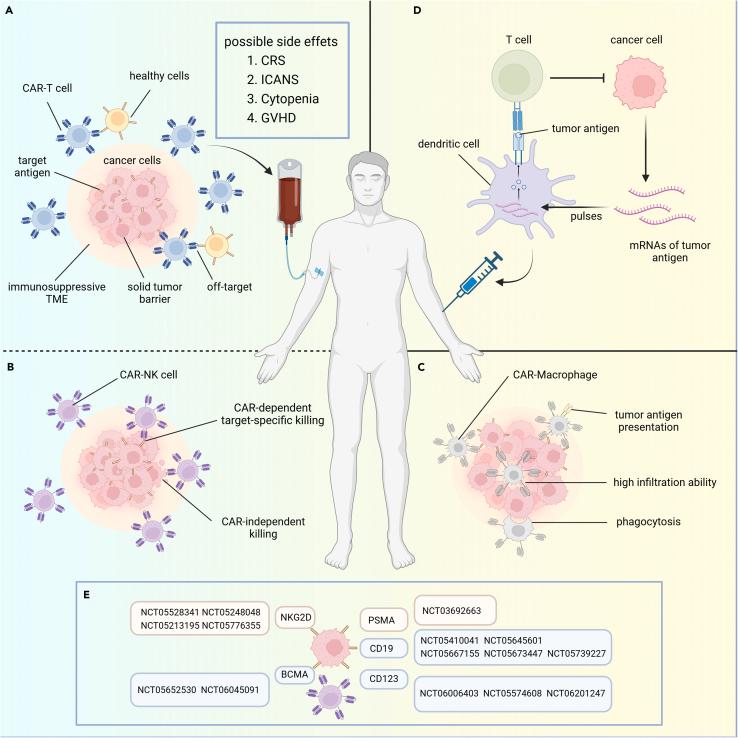
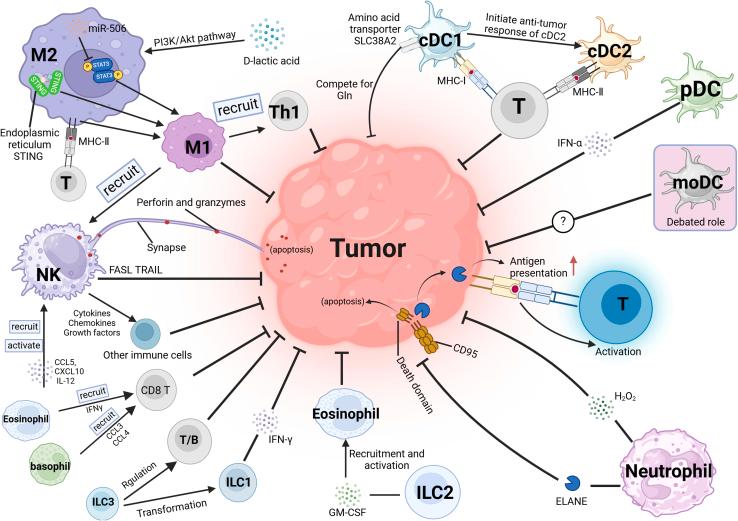
Innate immune cells, crucial in resisting infections and initiating adaptive immunity, play diverse and significant roles in tumor development. These cells, including macrophages, granulocytes, dendritic cells (DCs), innate lymphoid cells, and innate-like T cells, are pivotal in the tumor microenvironment (TME). Innate immune cells are crucial components of the TME, based on which various immunotherapy strategies have been explored. Immunotherapy strategies, such as novel immune checkpoint inhibitors, STING/CD40 agonists, macrophage-based surface backpack anchoring, polarization approaches, DC-based tumor vaccines, and CAR-engineered innate immune cells, aim to enhance their anti-tumor potential and counteract cancer-induced immunosuppression. The proximity of innate immune cells to tumor cells in the TME also makes them excellent drug carriers. In this review, we will first provide a systematic overview of innate immune cells within the TME and then discuss innate cell-based therapeutic strategies. Furthermore, the research obstacles and perspectives within the field will also be addressed.
固有免疫细胞在抵抗感染和启动适应性免疫中起关键作用,在肿瘤发展中发挥着多样且重要的作用。这些细胞包括巨噬细胞、粒细胞、树突状细胞(DC)、固有淋巴细胞和固有样T细胞,在肿瘤微环境(TME)中起关键作用。固有免疫细胞是TME的重要组成部分,基于此人们探索了各种免疫治疗策略。免疫治疗策略,如新型免疫检查点抑制剂、STING/CD40激动剂、基于巨噬细胞的表面背包锚定、极化方法、基于DC的肿瘤疫苗和CAR工程化固有免疫细胞,旨在增强其抗肿瘤潜力并对抗癌症诱导的免疫抑制。TME中固有免疫细胞与肿瘤细胞的接近性也使其成为优秀的药物载体。在本综述中,我们将首先系统概述TME中的固有免疫细胞,然后讨论基于固有细胞的治疗策略。此外,还将探讨该领域的研究障碍和前景。



 Zotero 插件