
膝骨关节炎非药物治疗的疗效:一项系统评价与网状Meta分析
Efficacy of non-pharmacological treatments for knee osteoarthritis: A systematic review and network meta-analysis.
作者信息
Cao ShiHang, Zan Qiang, Wang Baohui, Fan Xiaochen, Chen Ziying, Yan Fengxiang
机构信息
Honghui Hospital, Xi'an Jiaotong University, Xi'an, 710000, Shaanxi, China.
Affiliated Hospital of Shaanxi University of Traditional Chinese Medicine, Xianyang, 712046, Shaanxi, China.
出版信息
Heliyon. 2024 Aug 23;10(17):e36682. doi: 10.1016/j.heliyon.2024.e36682. eCollection 2024 Sep 15.
PURPOSE
This study aims to conduct a network meta-analysis to compare the clinical efficacy of seven distinct non-pharmacological therapies for knee osteoarthritis. We hope that our research findings can provide reference for clinical practitioners in formulating treatment plans.
METHODS
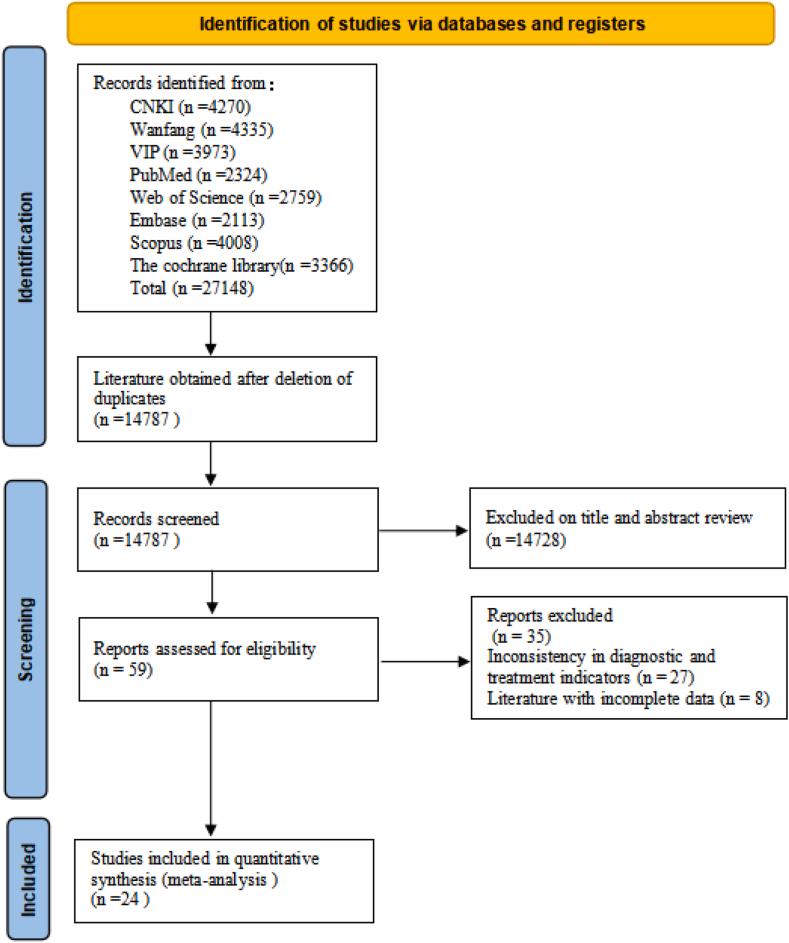
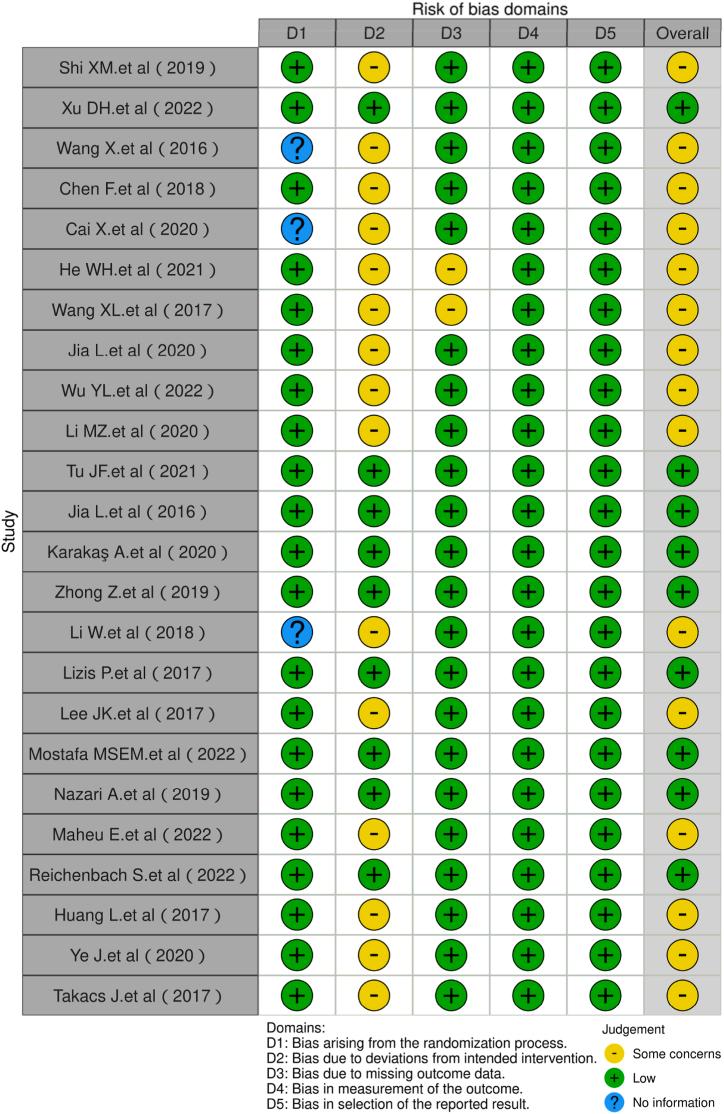
Through a computer-based search, we systematically retrieved randomized controlled trials (RCTs) on non-pharmacological therapies for knee osteoarthritis from eight databases, including CNKI, Wanfang, VIP, PubMed, Web of Science, Embase, Scopus, and The Cochrane Library. Following screening, data extraction, and methodological quality assessment, relevant data were included and analyzed using R 4.2.3 software.
RESULTS
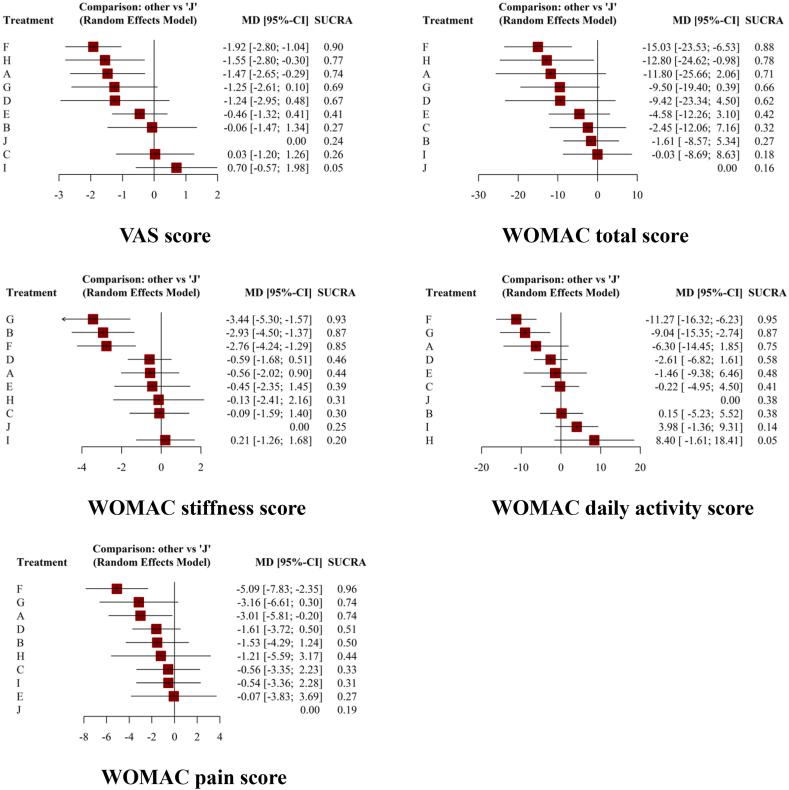
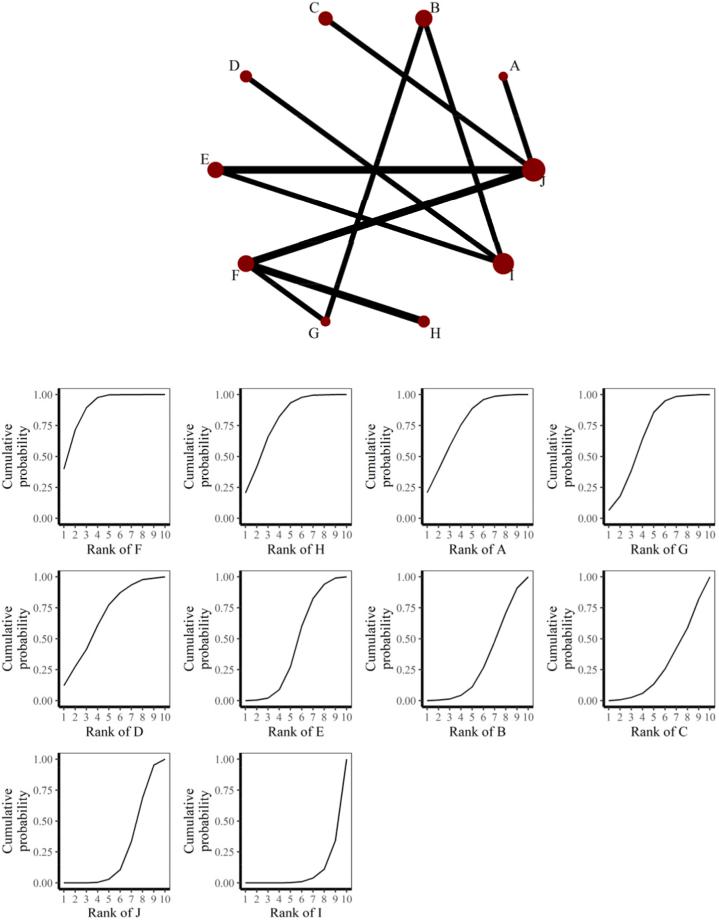
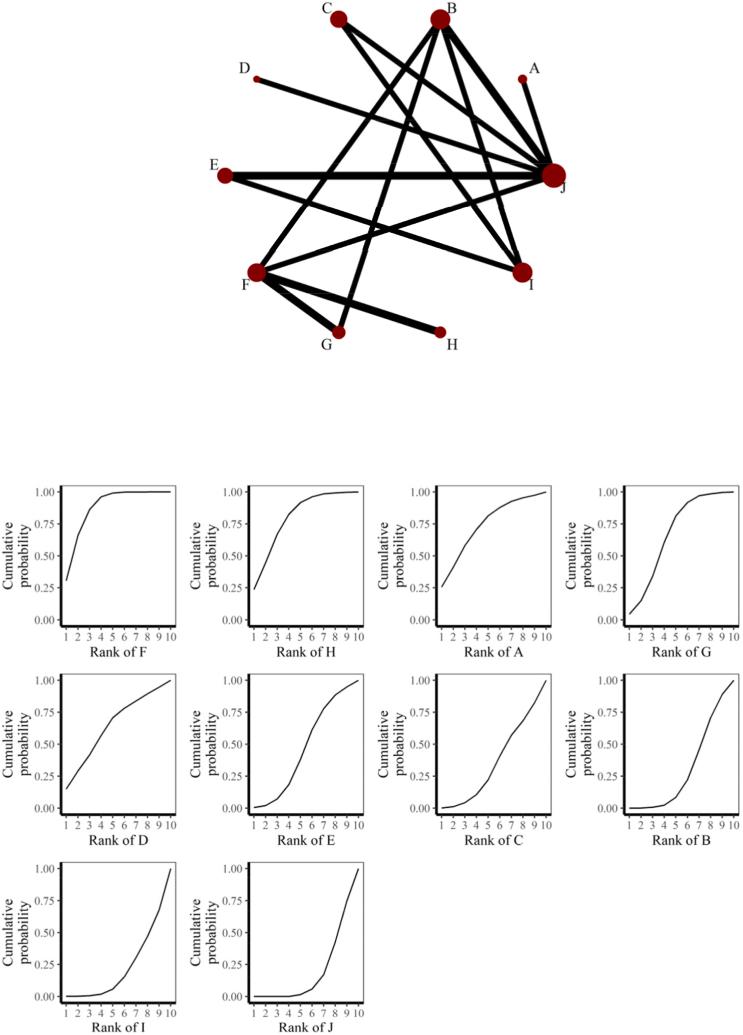
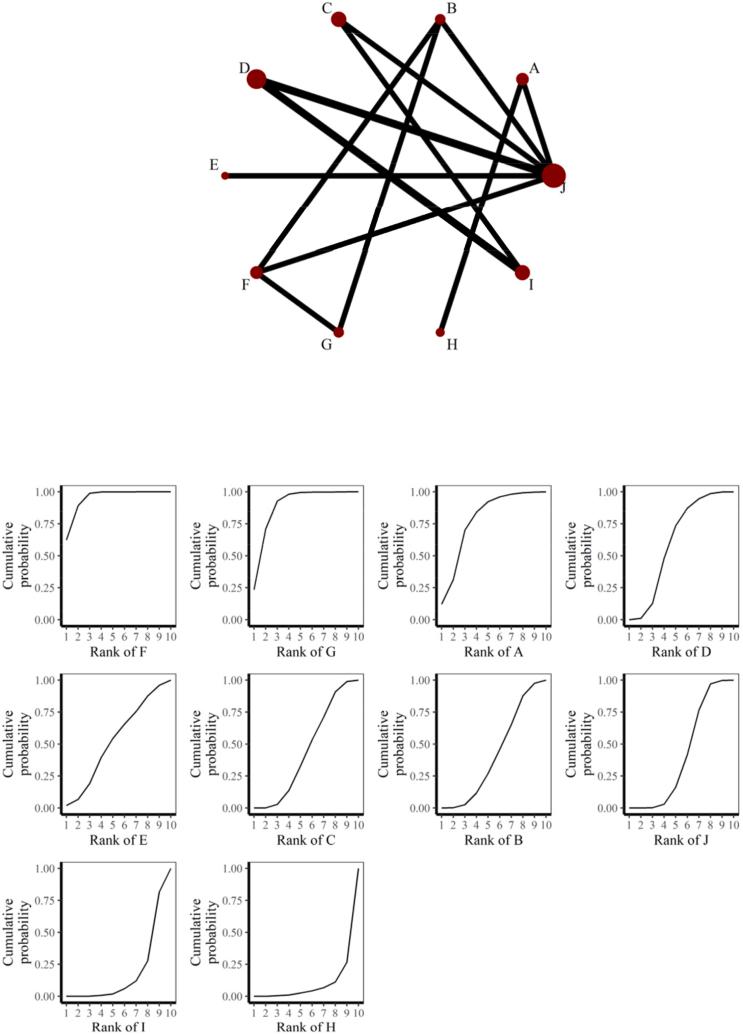
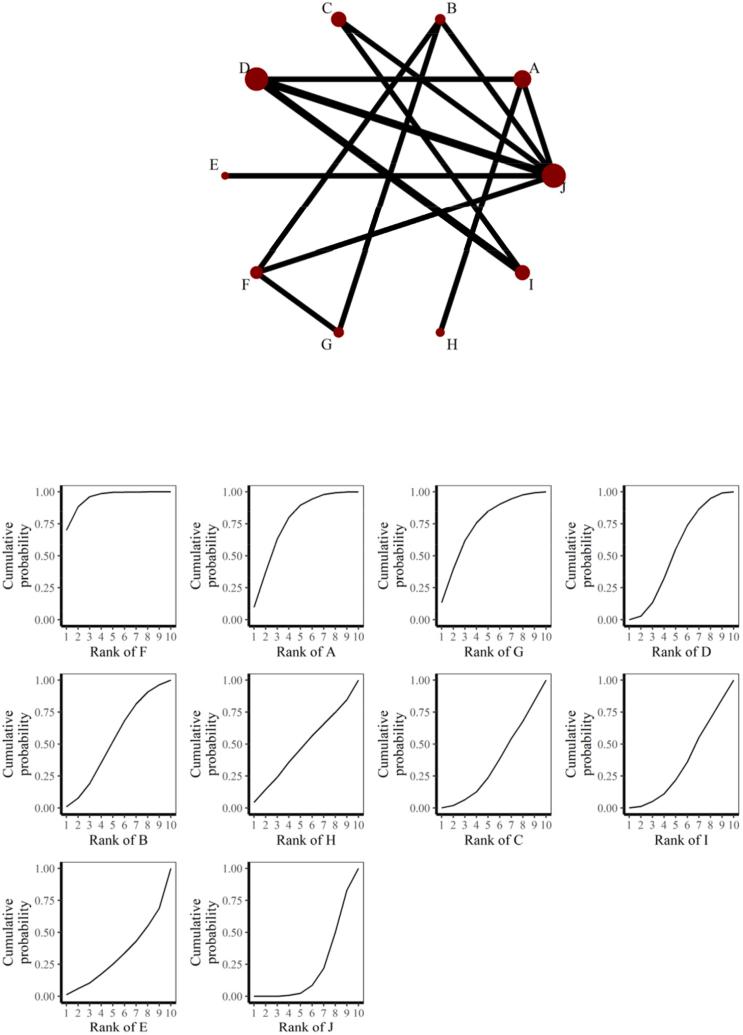
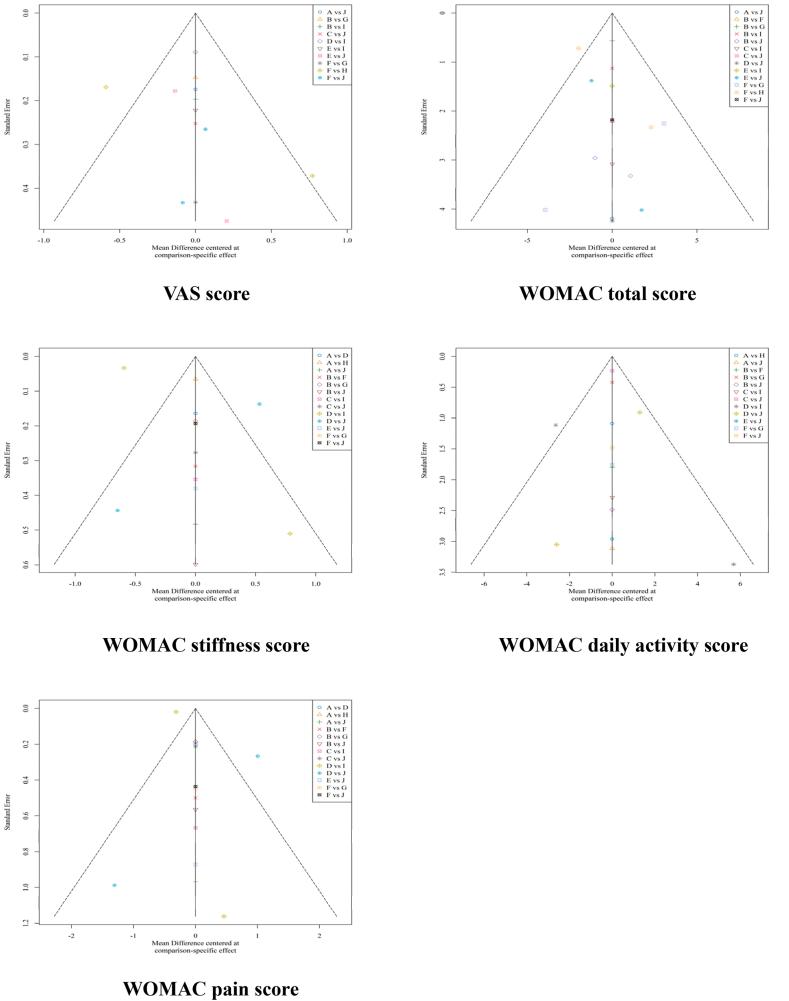
A comprehensive analysis of 24 RCTs involving 2582 patients encompassed seven diverse non-pharmacological therapies. The efficacy rankings, based on Visual Analog Scale (VAS) scores, were as follows: shock wave therapy > needle-knife > laser therapy > acupuncture > ultrasound > exercise > transcutaneous electrical nerve stimulation. Similarly, based on Western Ontario and McMaster Universities Osteoarthritis Index (WOMAC) total scores, the efficacy rankings were as follows: shock wave therapy > needle-knife > laser therapy > acupuncture > ultrasound > transcutaneous electrical nerve stimulation > exercise. Among the three WOMAC subscales, the efficacy rankings for non-pharmacological therapies were as follows: For stiffness: laser therapy > exercise > shock wave therapy > acupuncture > needle-knife > ultrasound > transcutaneous electrical nerve stimulation; For daily activities: shock wave therapy > laser therapy > needle-knife > acupuncture > ultrasound > transcutaneous electrical nerve stimulation > exercise; For pain: shock wave therapy > needle-knife > laser therapy > acupuncture > exercise > transcutaneous electrical nerve stimulation > ultrasound.
CONCLUSION
Based on the currently limited research, we can prioritize the use of shockwave therapy to treat patients with knee osteoarthritis. However, it is essential to emphasize that further rigorous and well-designed randomized controlled trials are necessary to validate the conclusions drawn from this study.
目的
本研究旨在进行一项网络荟萃分析,以比较七种不同的非药物疗法治疗膝骨关节炎的临床疗效。我们希望我们的研究结果能为临床医生制定治疗方案提供参考。
方法
通过计算机检索,我们从中国知网、万方、维普、PubMed、Web of Science、Embase、Scopus和Cochrane图书馆八个数据库中系统检索关于膝骨关节炎非药物疗法的随机对照试验(RCT)。经过筛选、数据提取和方法学质量评估后,纳入相关数据并使用R 4.2.3软件进行分析。
结果
对涉及2582例患者的24项RCT进行综合分析,涵盖了七种不同的非药物疗法。基于视觉模拟量表(VAS)评分的疗效排名如下:冲击波疗法>针刀>激光疗法>针灸>超声>运动>经皮电刺激神经疗法。同样,基于西安大略和麦克马斯特大学骨关节炎指数(WOMAC)总分的疗效排名如下:冲击波疗法>针刀>激光疗法>针灸>超声>经皮电刺激神经疗法>运动。在WOMAC三个分量表中,非药物疗法的疗效排名如下:对于僵硬:激光疗法>运动>冲击波疗法>针灸>针刀>超声>经皮电刺激神经疗法;对于日常活动:冲击波疗法>激光疗法>针刀>针灸>超声>经皮电刺激神经疗法>运动;对于疼痛:冲击波疗法>针刀>激光疗法>针灸>运动>经皮电刺激神经疗法>超声。
结论
基于目前有限的研究,我们可以优先使用冲击波疗法治疗膝骨关节炎患者。然而,必须强调的是,需要进一步进行严格且设计良好的随机对照试验来验证本研究得出的结论。

 Zotero 插件