
代谢涟漪效应——解读癌症中的脂质代谢如何与肿瘤微环境相互作用。
Metabolic ripple effects - deciphering how lipid metabolism in cancer interfaces with the tumor microenvironment.
作者信息
Jonker Patrick B, Muir Alexander
机构信息
Ben May Department for Cancer Research, University of Chicago, Chicago, IL 60637, USA.
出版信息
Dis Model Mech. 2024 Sep 1;17(9). doi: 10.1242/dmm.050814. Epub 2024 Sep 16.
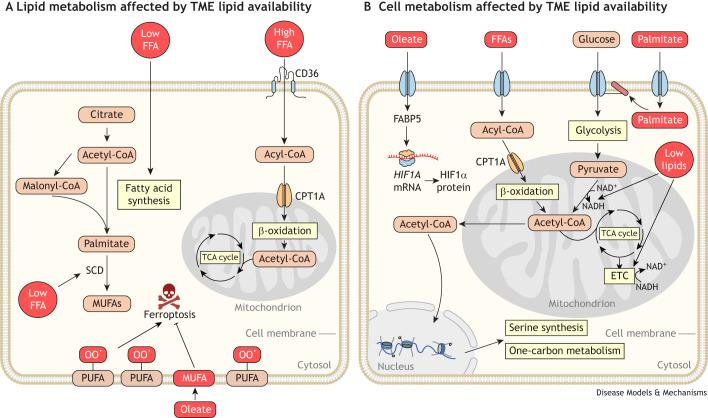
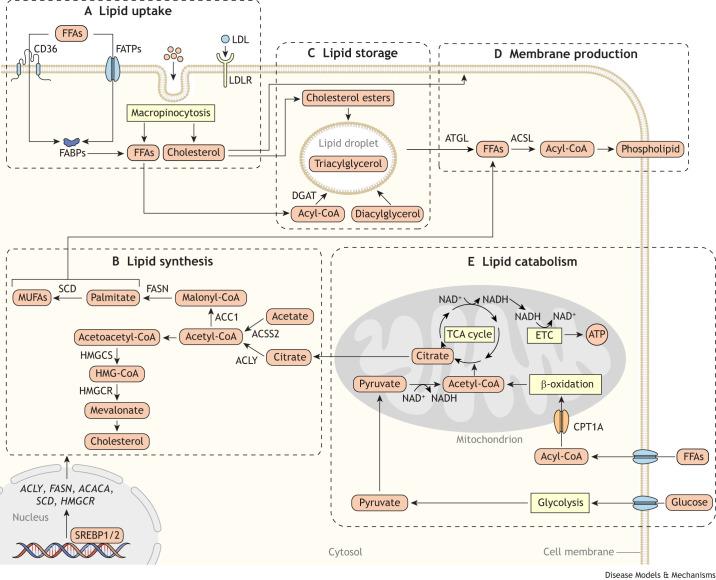
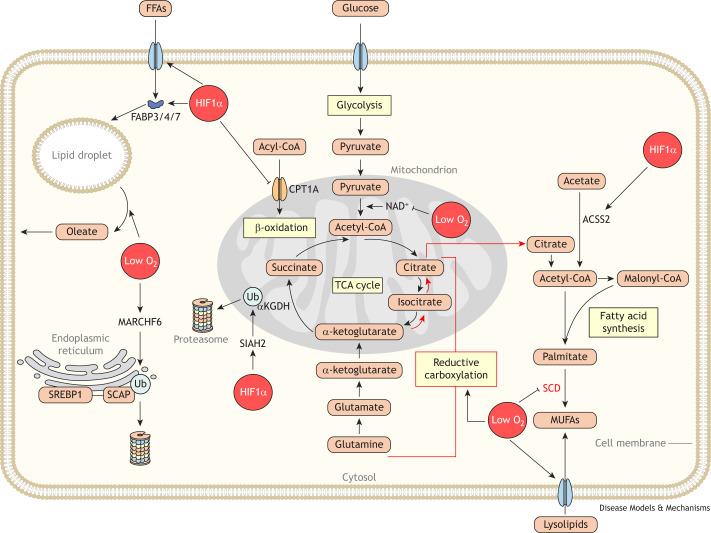
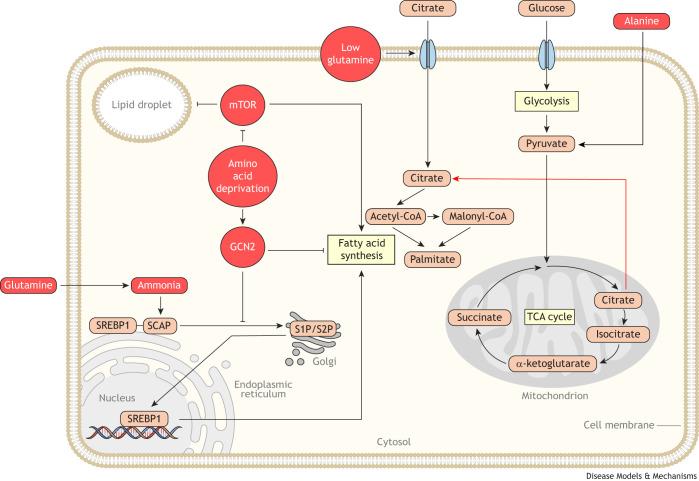
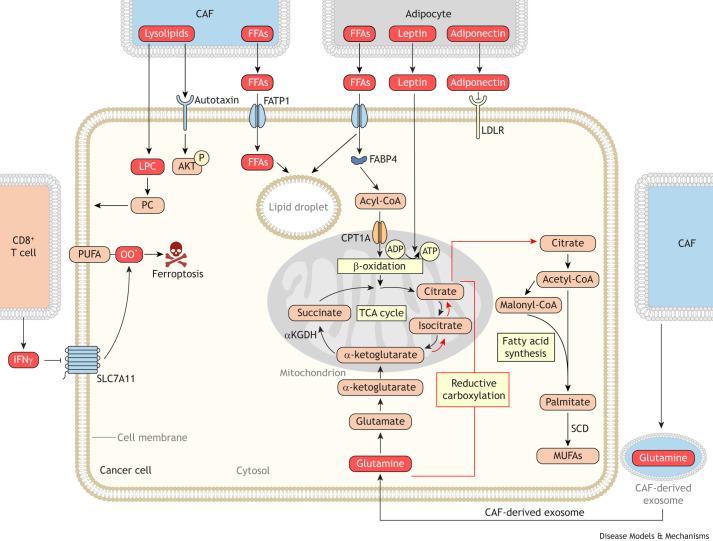
Cancer cells require a constant supply of lipids. Lipids are a diverse class of hydrophobic molecules that are essential for cellular homeostasis, growth and survival, and energy production. How tumors acquire lipids is under intensive investigation, as these mechanisms could provide attractive therapeutic targets for cancer. Cellular lipid metabolism is tightly regulated and responsive to environmental stimuli. Thus, lipid metabolism in cancer is heavily influenced by the tumor microenvironment. In this Review, we outline the mechanisms by which the tumor microenvironment determines the metabolic pathways used by tumors to acquire lipids. We also discuss emerging literature that reveals that lipid availability in the tumor microenvironment influences many metabolic pathways in cancers, including those not traditionally associated with lipid biology. Thus, metabolic changes instigated by the tumor microenvironment have 'ripple' effects throughout the densely interconnected metabolic network of cancer cells. Given the interconnectedness of tumor metabolism, we also discuss new tools and approaches to identify the lipid metabolic requirements of cancer cells in the tumor microenvironment and characterize how these requirements influence other aspects of tumor metabolism.
癌细胞需要持续的脂质供应。脂质是一类多样的疏水分子,对细胞内稳态、生长、存活及能量产生至关重要。肿瘤如何获取脂质正受到深入研究,因为这些机制可能为癌症提供有吸引力的治疗靶点。细胞脂质代谢受到严格调控,并对环境刺激做出反应。因此,癌症中的脂质代谢受到肿瘤微环境的严重影响。在本综述中,我们概述了肿瘤微环境决定肿瘤获取脂质所使用的代谢途径的机制。我们还讨论了新出现的文献,这些文献揭示肿瘤微环境中的脂质可用性会影响癌症中的许多代谢途径,包括那些传统上与脂质生物学无关的途径。因此,肿瘤微环境引发的代谢变化在癌细胞紧密相连的代谢网络中产生“连锁”反应。鉴于肿瘤代谢的相互关联性,我们还讨论了新的工具和方法,以确定肿瘤微环境中癌细胞的脂质代谢需求,并描述这些需求如何影响肿瘤代谢的其他方面。

 Zotero 插件