
抗体作为预防 …… 的关键介质。
Antibodies as key mediators of protection against .
机构信息
Ragon Institute of Massachusetts General Hospital, Massachusetts Institute of Technology, and Harvard University, Cambridge, MA, United States.
Seattle Children's Research Institute, Center for Global Infectious Disease Research, Seattle, WA, United States.
出版信息
Front Immunol. 2024 Sep 2;15:1430955. doi: 10.3389/fimmu.2024.1430955. eCollection 2024.
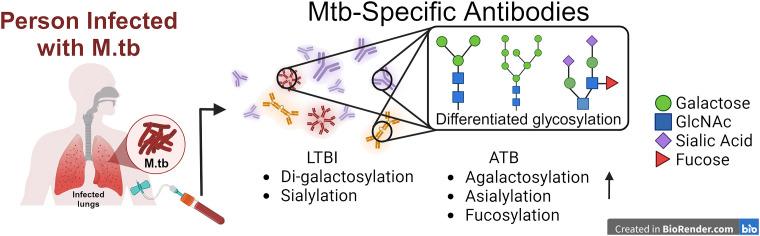
Tuberculosis (TB) is caused by infection with the bacterial pathogen (M.tb) in the respiratory tract. There was an estimated 10.6 million people newly diagnosed with TB, and there were approximately 1.3 million deaths caused by TB in 2022. Although the global prevalence of TB has remained high for decades and is an annual leading cause of death attributed to infectious diseases, only one vaccine, Bacillus Calmette-Guérin (BCG), has been approved so far to prevent/attenuate TB disease. Correlates of protection or immunological mechanisms that are needed to control M.tb remain unknown. The protective role of antibodies after BCG vaccination has also remained largely unclear; however, recent studies have provided evidence for their involvement in protection against disease, as biomarkers for the state of infection, and as potential predictors of outcomes. Interestingly, the antibodies generated post-vaccination with BCG are linked to the activation of innate immune cascades, providing further evidence that antibody effector functions are critical for protection against respiratory pathogens such as M.tb. In this review, we aim to provide current knowledge of antibody application in TB diagnosis, prevention, and treatment. Particularly, this review will focus on 1) The role of antibodies in preventing M.tb infections through preventing Mtb adherence to epithelium, antibody-mediated phagocytosis, and antibody-mediated cellular cytotoxicity; 2) The M.tb-directed antibody response generated after vaccination and how humoral profiles with different glycosylation patterns of these antibodies are linked with protection against the disease state; and 3) How antibody-mediated immunity against M.tb can be further explored as early diagnosis biomarkers and different detection methods to combat the global M.tb burden. Broadening the paradigm of differentiated antibody profiling and antibody-based detection during TB disease progression offers new directions for diagnosis, treatment, and preventative strategies. This approach involves linking the aforementioned humoral responses with the disease state, progression, and clearance.
结核病(TB)是由呼吸道感染细菌病原体(M.tb)引起的。据估计,2022 年有 1060 万人新诊断出患有结核病,约有 130 万人死于结核病。尽管结核病的全球患病率几十年来一直居高不下,是传染病导致的年度主要死亡原因,但迄今为止,只有一种疫苗,即卡介苗(BCG),被批准用于预防/减轻结核病。控制 M.tb 所需的保护相关物或免疫机制仍不清楚。BCG 接种后抗体的保护作用也在很大程度上不清楚;然而,最近的研究为它们在预防疾病、作为感染状态的生物标志物以及作为潜在结果预测因子方面的作用提供了证据。有趣的是,接种 BCG 后产生的抗体与先天免疫级联的激活有关,这进一步证明了抗体效应功能对于预防呼吸道病原体(如 M.tb)感染至关重要。在这篇综述中,我们旨在提供关于抗体在结核病诊断、预防和治疗中的应用的最新知识。特别是,本综述将重点关注:1)抗体通过阻止 Mtb 附着在上皮细胞、抗体介导的吞噬作用和抗体介导的细胞毒性来预防 M.tb 感染的作用;2)接种后产生的针对 M.tb 的抗体反应,以及这些抗体的不同糖基化模式的体液特征与预防疾病状态的关系;3)如何进一步探索针对 M.tb 的抗体介导免疫作为早期诊断生物标志物以及不同的检测方法来应对全球 M.tb 负担。拓宽 TB 疾病进展期间差异化抗体分析和基于抗体的检测范式,为诊断、治疗和预防策略提供了新的方向。这种方法涉及将上述体液反应与疾病状态、进展和清除联系起来。


 Zotero 插件