
淀粉样前体蛋白运输和加工的细胞生物学进展:家族性阿尔茨海默病突变的影响。
Advances in the cell biology of the trafficking and processing of amyloid precursor protein: impact of familial Alzheimer's disease mutations.
机构信息
Department of Biochemistry and Pharmacology, Bio21 Molecular Science and Biotechnology Institute, The University of Melbourne, Melbourne, Victoria 3010, Australia.
出版信息
Biochem J. 2024 Oct 2;481(19):1297-1325. doi: 10.1042/BCJ20240056.
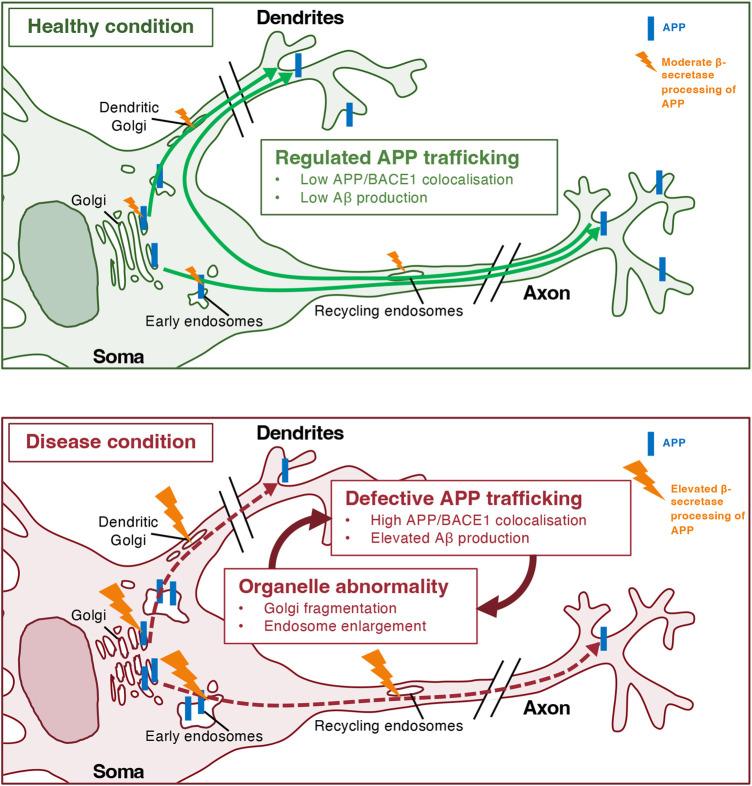
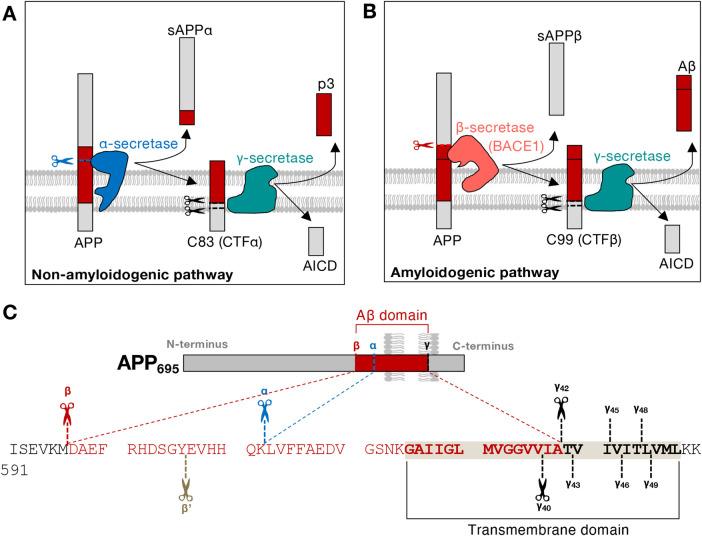
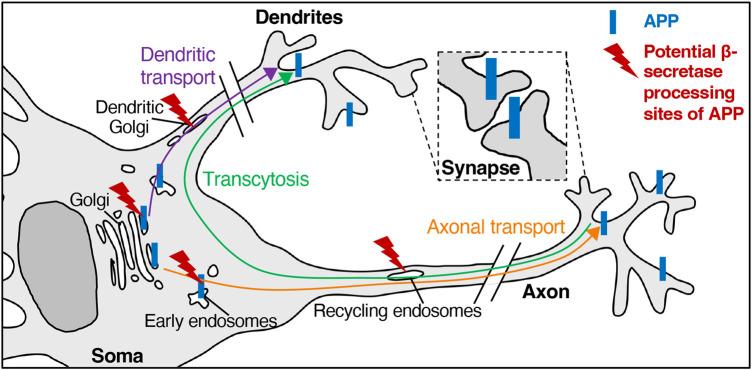
The production of neurotoxic amyloid-β peptides (Aβ) is central to the initiation and progression of Alzheimer's disease (AD) and involves sequential cleavage of the amyloid precursor protein (APP) by β- and γ-secretases. APP and the secretases are transmembrane proteins and their co-localisation in the same membrane-bound sub-compartment is necessary for APP cleavage. The intracellular trafficking of APP and the β-secretase, BACE1, is critical in regulating APP processing and Aβ production and has been studied in several cellular systems. Here, we summarise the intracellular distribution and transport of APP and its secretases, and the intracellular location for APP cleavage in non-polarised cells and neuronal models. In addition, we review recent advances on the potential impact of familial AD mutations on APP trafficking and processing. This is critical information in understanding the molecular mechanisms of AD progression and in supporting the development of novel strategies for clinical treatment.
神经毒性淀粉样β肽(Aβ)的产生是阿尔茨海默病(AD)起始和进展的核心,涉及淀粉样前体蛋白(APP)被β-和γ-分泌酶的顺序切割。APP 和分泌酶是跨膜蛋白,它们在同一膜结合亚区中的共定位对于 APP 切割是必要的。APP 和 β-分泌酶,BACE1 的细胞内运输在调节 APP 加工和 Aβ产生中至关重要,并在几个细胞系统中进行了研究。在这里,我们总结了 APP 及其分泌酶的细胞内分布和运输,以及在非极化细胞和神经元模型中 APP 切割的细胞内位置。此外,我们还回顾了家族性 AD 突变对 APP 运输和加工的潜在影响的最新进展。这是理解 AD 进展的分子机制以及支持开发新的临床治疗策略的关键信息。


 Zotero 插件