
脑挫裂伤后挫伤扩大、血小板计数低和额极挫伤与创伤性脑损伤患者的预后较差相关——一项回顾性单中心研究。
Contusion expansion, low platelet count and bifrontal contusions are associated with worse patient outcome following traumatic brain injury-a retrospective single-center study.
机构信息
Department of Clinical Sciences Lund, Neurosurgery, Lund University and Skane University Hospital, Lund, Sweden.
Department of Neurosurgery, Neurocenter, Turku University Hospital and University of Turku, Turku, Finland.
出版信息
Acta Neurochir (Wien). 2024 Sep 24;166(1):377. doi: 10.1007/s00701-024-06269-7.
BACKGROUND
Cortical contusions are common in moderate-severe traumatic brain injury (TBI). Cortical contusions often expand, potentially causing neuro-worsening several hours to days post-trauma. While contusion expansion (CE) may affect outcome, potential clinical and radiological markers that can predict CE have been insufficiently explored. In the present single-center retrospective observational cohort study, we evaluated clinical outcome by the Glasgow Outcome Scale extended (GOSE) scale and evaluated risk factor for CE.
METHOD
Adult TBI patients > 18 years of age, and of all injury severities, were included. Main variables of interest were low platelet count, defined as < 150 × 10/L, presence of bifrontal contusions and CE, defined as absolute contusion volume increase in cm. Factors associated with CE and clinical outcome according to GOSE were analyzed.
RESULTS
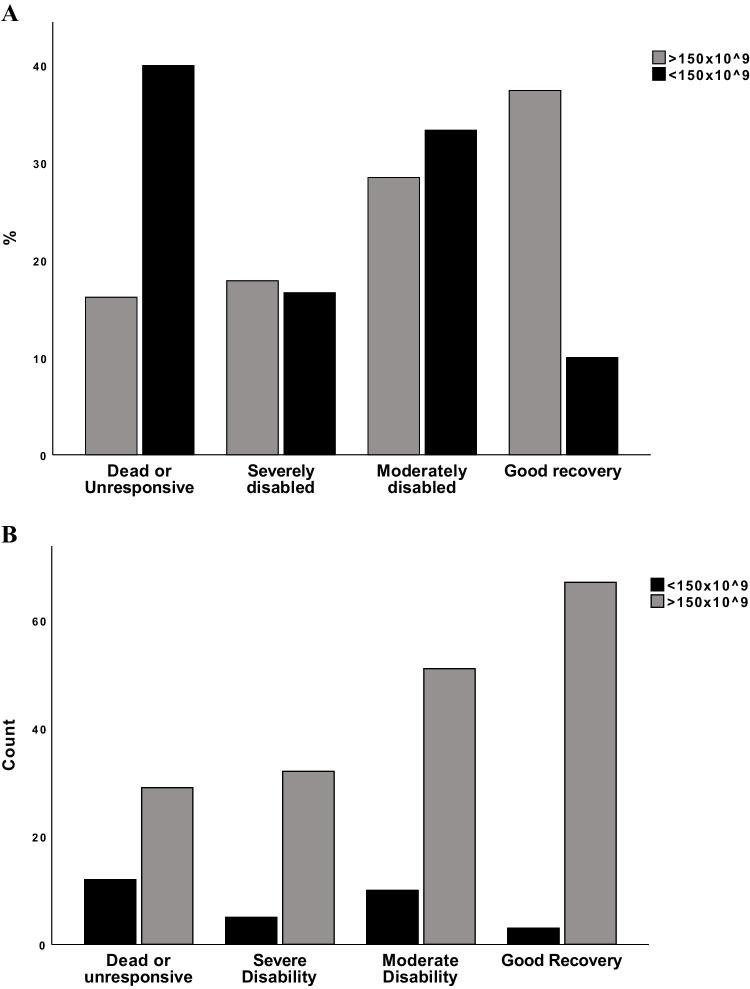
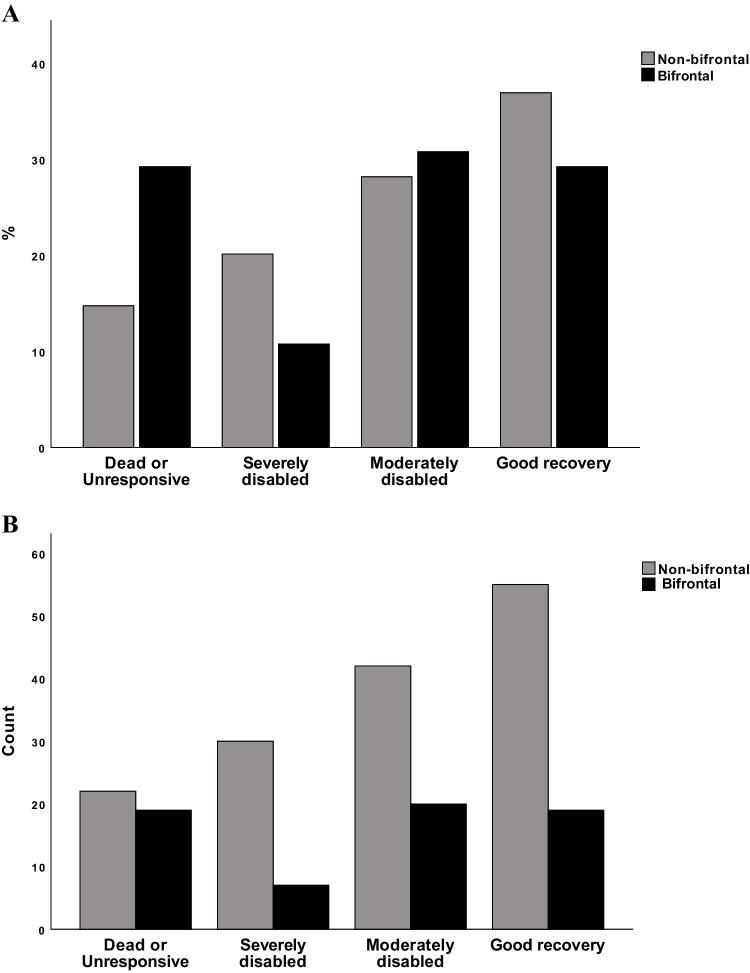
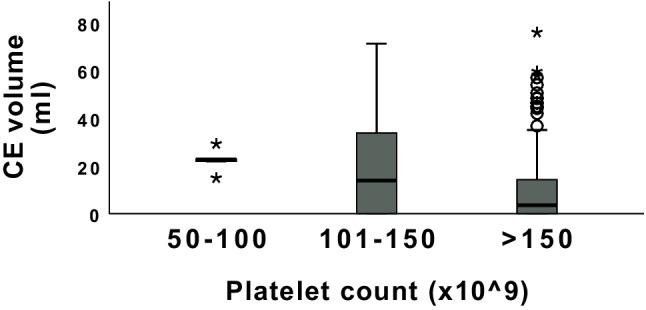
Between 2012-2022, 272 patients were included. Contusion size on admission correlated positively with CE, as did the Marshall and Rotterdam radiological classification scores. Bifrontal contusions were significantly larger at admission, experienced larger CE, and had a worse outcome than contusions in other locations. Patients with a platelet count < 150 × 10/L experienced a greater volume CE and had a worse outcome when compared to patients with a normal platelet count. In a multivariate analysis, CE remained significantly associated with a poor outcome six months post- injury.
CONCLUSION
Contusion volume at admission, Marshall CT classification and Rotterdam CT score, positively correlated to CE. Bifrontal contusions and a platelet count < 150 × 10/L were associated with CE, and a poor clinical outcome. Large CE volumes were associated with a worse clinical outcome, and CE was per se associated with outcome in a multivariate analysis. Management of these risk factors for CE in the acute post-injury setting may be needed to attenuate contusion expansion and to improve clinical outcome in TBI patients suffering from cortical contusion injuries.
背景
皮质挫裂伤是中度至重度创伤性脑损伤(TBI)的常见并发症。皮质挫裂伤通常会扩大,可能导致创伤后数小时至数天神经恶化。虽然挫伤扩大(CE)可能会影响预后,但能够预测 CE 的潜在临床和影像学标志物尚未得到充分探索。在本单中心回顾性观察队列研究中,我们通过格拉斯哥预后量表扩展版(GOSE)评估临床预后,并评估了 CE 的危险因素。
方法
纳入年龄≥18 岁的所有损伤严重程度的成年 TBI 患者。主要关注的变量包括血小板计数低(定义为<150×10/L)、存在双额皮质挫伤和 CE,定义为挫伤体积绝对值增加 cm。根据 GOSE 分析与 CE 和临床预后相关的因素。
结果
2012 年至 2022 年期间,共纳入 272 例患者。入院时的挫伤大小与 CE 呈正相关,Marshall 和 Rotterdam 影像学分类评分也是如此。双额皮质挫伤在入院时明显更大,CE 更大,与其他部位的挫伤相比预后更差。血小板计数<150×10/L 的患者经历的 CE 体积更大,与血小板计数正常的患者相比预后更差。在多变量分析中,CE 仍与伤后 6 个月的不良预后显著相关。
结论
入院时的挫伤体积、Marshall CT 分类和 Rotterdam CT 评分与 CE 呈正相关。双额皮质挫伤和血小板计数<150×10/L 与 CE 相关,并与不良临床预后相关。较大的 CE 体积与较差的临床预后相关,CE 在多变量分析中本身与预后相关。在急性伤后阶段,需要管理这些 CE 危险因素,以减轻挫伤扩大并改善皮质挫伤损伤 TBI 患者的临床预后。

 Zotero 插件