
当前对治疗放射性肝损伤的分子机制和潜在生物标志物的深入了解。
Current Insights into Molecular Mechanisms and Potential Biomarkers for Treating Radiation-Induced Liver Damage.
机构信息
Medical Biotechnology, Faculty of Allied Health Sciences, Chettinad Academy of Research and Education (CARE), Chettinad Hospital and Research Institute (CHRI), Chennai 603103, India.
R&D, Genomic Bio-Medicine Research and Incubation (GBMRI), Durg 491001, Chhattisgarh, India.
出版信息
Cells. 2024 Sep 16;13(18):1560. doi: 10.3390/cells13181560.
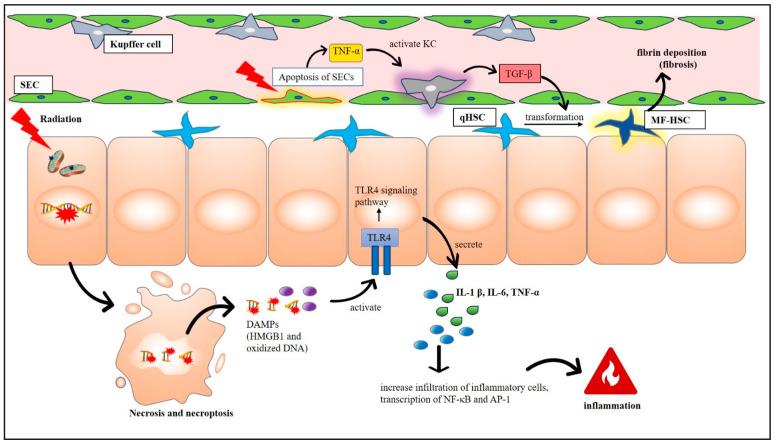
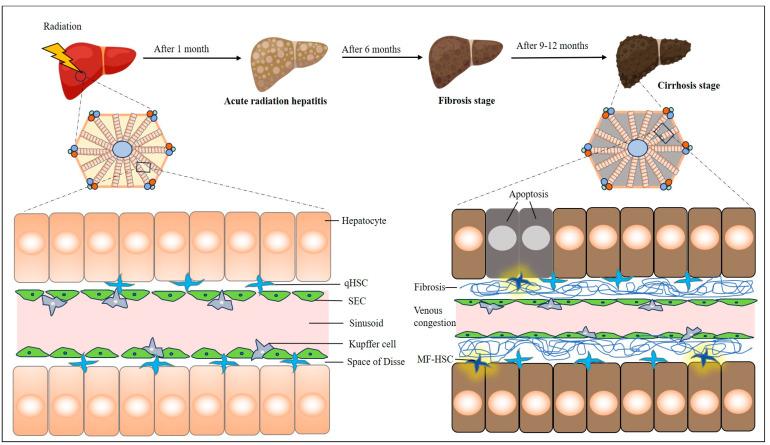
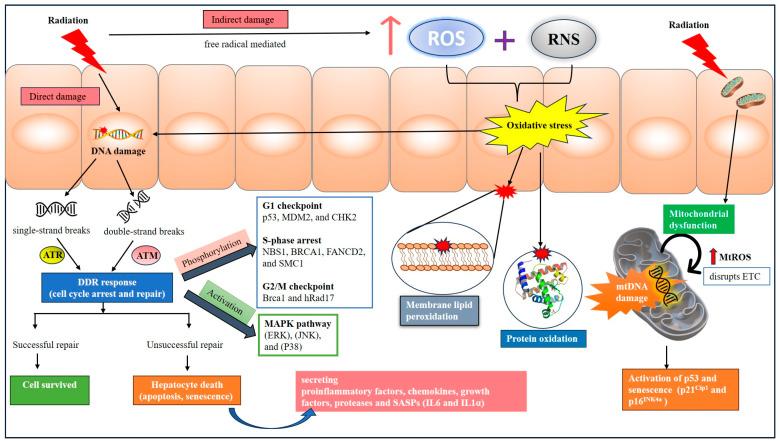
Highly conformal delivery of radiation therapy (RT) has revolutionized the treatment landscape for primary and metastatic liver cancers, yet concerns persist regarding radiation-induced liver disease (RILD). Despite advancements, RILD remains a major dose-limiting factor due to the potential damage to normal liver tissues by therapeutic radiation. The toxicity to normal liver tissues is associated with a multitude of physiological and pathological consequences. RILD unfolds as multifaceted processes, intricately linking various responses, such as DNA damage, oxidative stress, inflammation, cellular senescence, fibrosis, and immune reactions, through multiple signaling pathways. The DNA damage caused by ionizing radiation (IR) is a major contributor to the pathogenesis of RILD. Moreover, current treatment options for RILD are limited, with no established biomarker for early detection. RILD diagnosis often occurs at advanced stages, highlighting the critical need for early biomarkers to adjust treatment strategies and prevent liver failure. This review provides an outline of the diverse molecular and cellular mechanisms responsible for the development of RILD and points out all of the available biomarkers for early detection with the aim of helping clinicians decide on advance treatment strategies from a single literature recourse.
高适形放射治疗(RT)的应用彻底改变了原发性和转移性肝癌的治疗格局,但人们仍然对放射诱导肝损伤(RILD)存在担忧。尽管取得了进展,但由于治疗性辐射对正常肝组织的潜在损伤,RILD 仍然是一个主要的剂量限制因素。正常肝组织的毒性与多种生理和病理后果有关。RILD 是一个多方面的过程,通过多种信号通路错综复杂地联系着各种反应,如 DNA 损伤、氧化应激、炎症、细胞衰老、纤维化和免疫反应。电离辐射(IR)引起的 DNA 损伤是 RILD 发病机制的主要因素。此外,目前 RILD 的治疗选择有限,也没有明确的早期检测生物标志物。RILD 的诊断通常发生在晚期,这突出表明迫切需要早期生物标志物来调整治疗策略,以防止肝功能衰竭。这篇综述概述了导致 RILD 发展的多种分子和细胞机制,并指出了所有可用于早期检测的生物标志物,旨在帮助临床医生从单一文献资源中选择先进的治疗策略。
 Zotero 插件