
MIR-96 与 IRS/PI3K/AKT/VEGF 级联在人 RPE 细胞中的串扰;预防糖尿病视网膜病变的潜在靶点。
Crosstalk between MIR-96 and IRS/PI3K/AKT/VEGF cascade in hRPE cells; A potential target for preventing diabetic retinopathy.
机构信息
Department of Molecular Medicine, National Institute of Genetic Engineering and Biotechnology (NIGEB), Tehran, Iran.
Electrophysiology Research Center, Neuroscience Institute, Tehran University of Medical Sciences, Tehran, Iran.
出版信息
PLoS One. 2024 Sep 30;19(9):e0310999. doi: 10.1371/journal.pone.0310999. eCollection 2024.
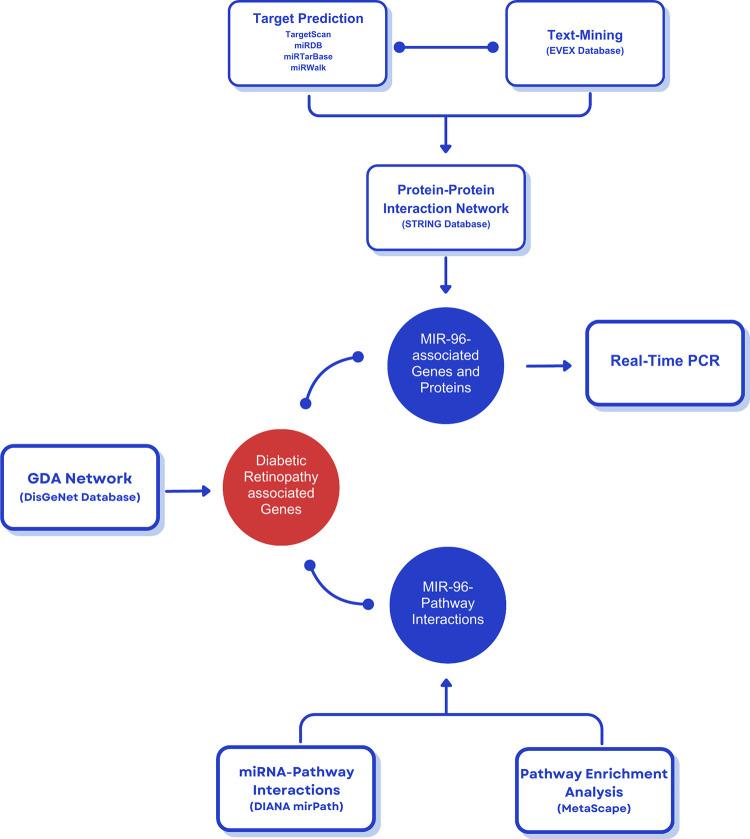
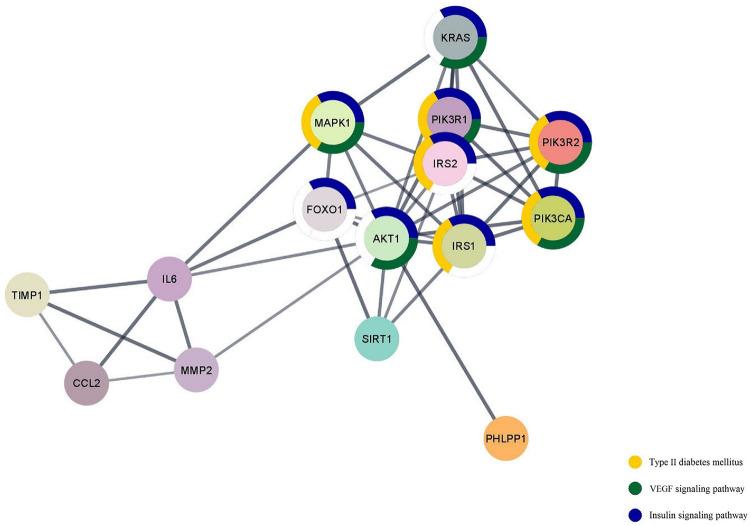
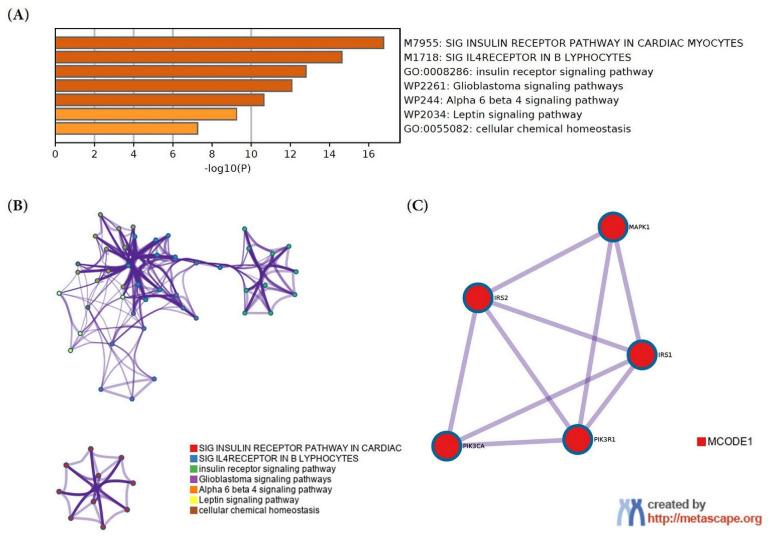
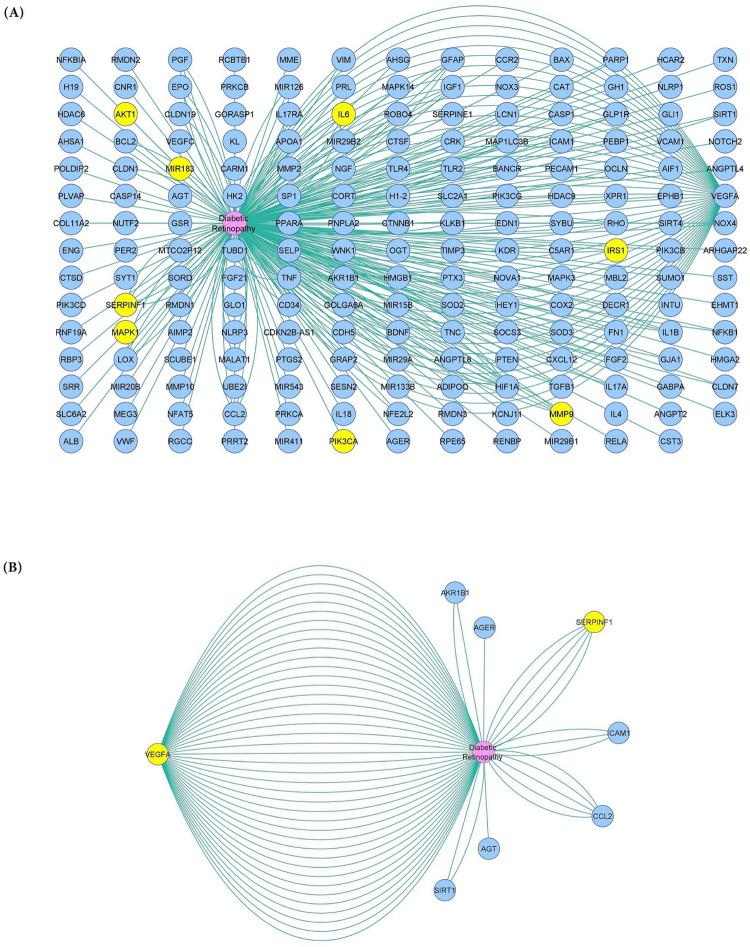
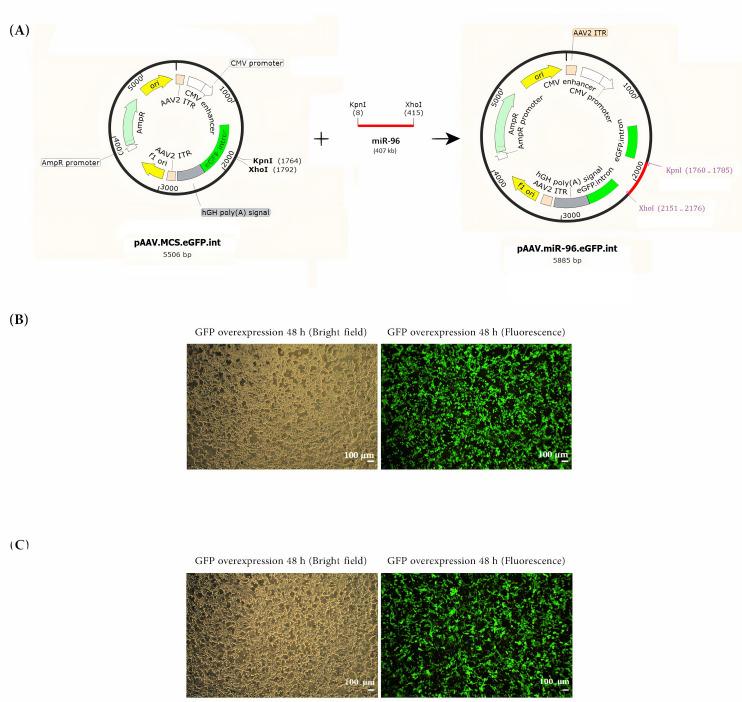
Regulation of visual system function demands precise gene regulation. Dysregulation of miRNAs, as key regulators of gene expression in retinal cells, contributes to different eye disorders such as diabetic retinopathy (DR), macular edema, and glaucoma. MIR-96, a member of the MIR-183 cluster family, is widely expressed in the retina, and its alteration is associated with neovascular eye diseases. MIR-96 regulates protein cascades in inflammatory and insulin signaling pathways, but further investigation is required to understand its potential effects on related genes. For this purpose, we identified a series of key target genes for MIR-96 based on gene and protein interaction networks and utilized text-mining resources. To examine the MIR-96 impact on candidate gene expression, we overexpressed MIR-96 via adeno-associated virus (AAV)-based plasmids in human retinal pigment epithelial (RPE) cells. Based on Real-Time PCR results, the relative expression of the selected genes responded differently to overexpressed MIR-96. While the expression levels of IRS2, FOXO1, and ERK2 (MAPK1) were significantly decreased, the SERPINF1 gene exhibited high expression simultaneously. pAAV-delivered MIR-96 had no adverse effect on the viability of human RPE cells. The data showed that changes in insulin receptor substrate-2 (IRS2) expression play a role in disrupted retinal insulin signaling and contribute to the development of diabetic complications. Considered collectively, our findings suggest that altered MIR-96 and its impact on IRS/PI3K/AKT/VEGF axis regulation contribute to DR progression. Therefore, further investigation of the IRS/PI3K/AKT/VEGF axis is recommended as a potential target for DR treatment.
视觉系统功能的调节需要精确的基因调控。miRNA 的失调作为视网膜细胞中基因表达的关键调节剂,导致了不同的眼部疾病,如糖尿病视网膜病变(DR)、黄斑水肿和青光眼。MIR-96 是 MIR-183 簇家族的成员,在视网膜中广泛表达,其改变与新生血管性眼病有关。MIR-96 调节炎症和胰岛素信号通路中的蛋白质级联反应,但需要进一步研究以了解其对相关基因的潜在影响。为此,我们基于基因和蛋白质相互作用网络和文本挖掘资源,确定了一系列 MIR-96 的关键靶基因。为了研究 MIR-96 对候选基因表达的影响,我们通过腺相关病毒(AAV)-基于质粒在人视网膜色素上皮(RPE)细胞中转染过表达 MIR-96。根据实时 PCR 结果,所选基因的相对表达对过表达的 MIR-96 有不同的反应。虽然 IRS2、FOXO1 和 ERK2(MAPK1)的表达水平显著降低,但 SERPINF1 基因同时表现出高表达。pAAV 递送的 MIR-96 对人 RPE 细胞的活力没有不良影响。数据表明,胰岛素受体底物-2(IRS2)表达的改变在视网膜胰岛素信号转导中断中起作用,并导致糖尿病并发症的发展。综上所述,我们的研究结果表明,MIR-96 的改变及其对 IRS/PI3K/AKT/VEGF 轴调节的影响可能导致 DR 的进展。因此,建议进一步研究 IRS/PI3K/AKT/VEGF 轴作为 DR 治疗的潜在靶点。


 Zotero 插件