
对接受波纳替尼治疗的慢性髓性白血病患者外周血单核细胞中HIV-1感染的持续抗病毒反应。
Sustained antiviral response against HIV-1 infection in peripheral blood mononuclear cells from people with chronic myeloid leukemia treated with ponatinib.
作者信息
Manzanares Mario, Ramos-Martín Fernando, Rodríguez-Mora Sara, Casado-Fernández Guiomar, Sánchez-Menéndez Clara, Simón-Rueda Alicia, Mateos Elena, Cervero Miguel, Spivak Adam M, Planelles Vicente, Torres Montserrat, García-Gutiérrez Valentín, Coiras Mayte
机构信息
Immunopathology and Viral Reservoir Unit, National Center of Microbiology, Instituto de Salud Carlos III, Madrid, Spain.
PhD Program in Biomedical Sciences and Public Health, Universidad Nacional de Educación a Distancia (UNED), Madrid, Spain.
出版信息
Front Pharmacol. 2024 Sep 23;15:1426974. doi: 10.3389/fphar.2024.1426974. eCollection 2024.
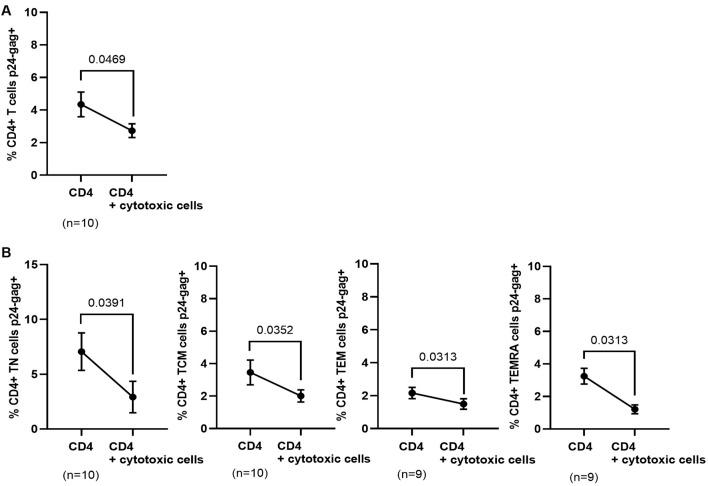
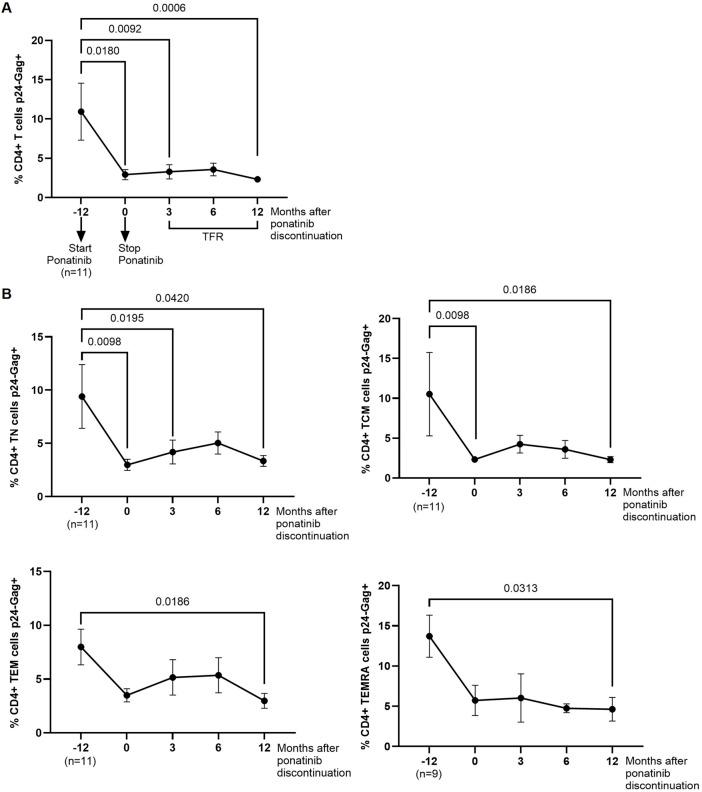
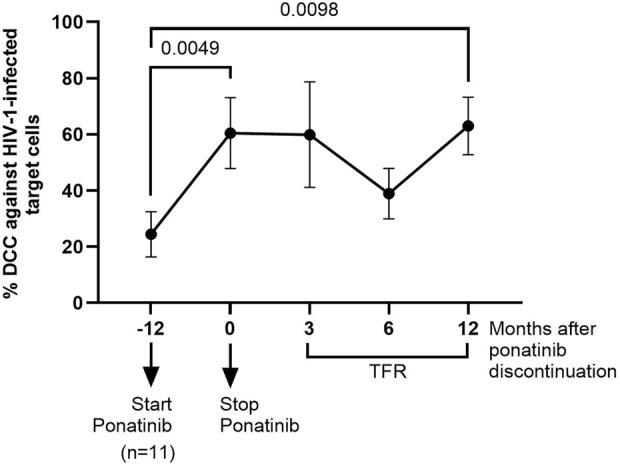
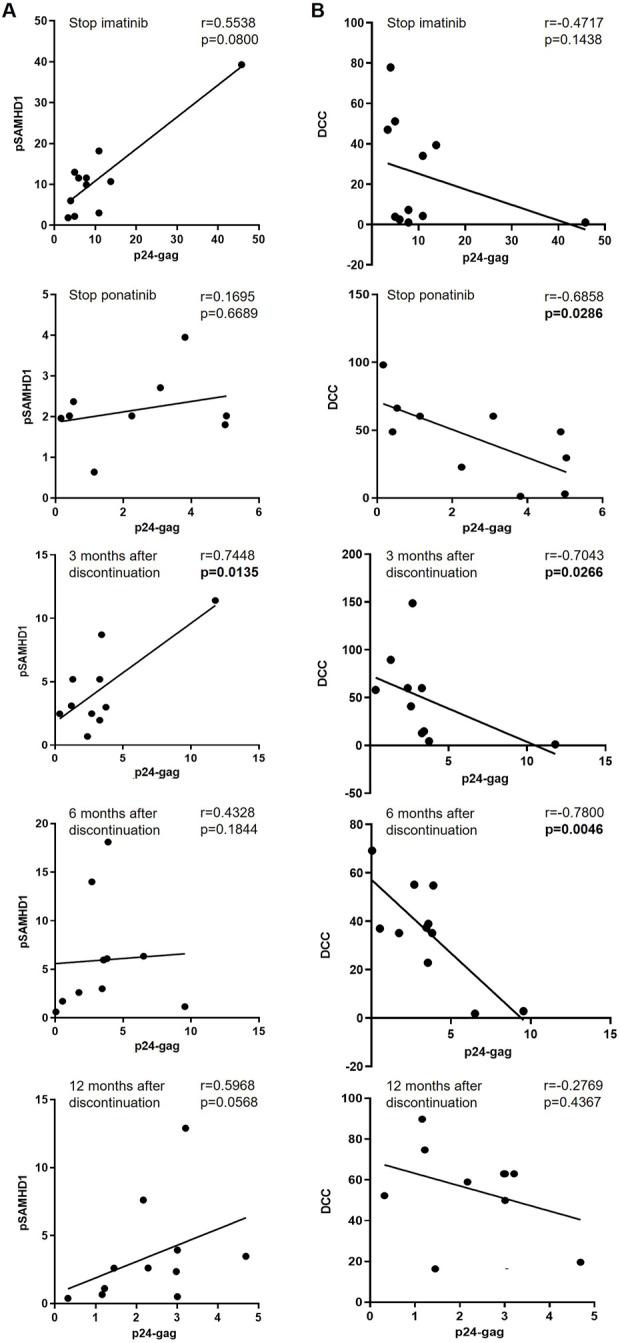
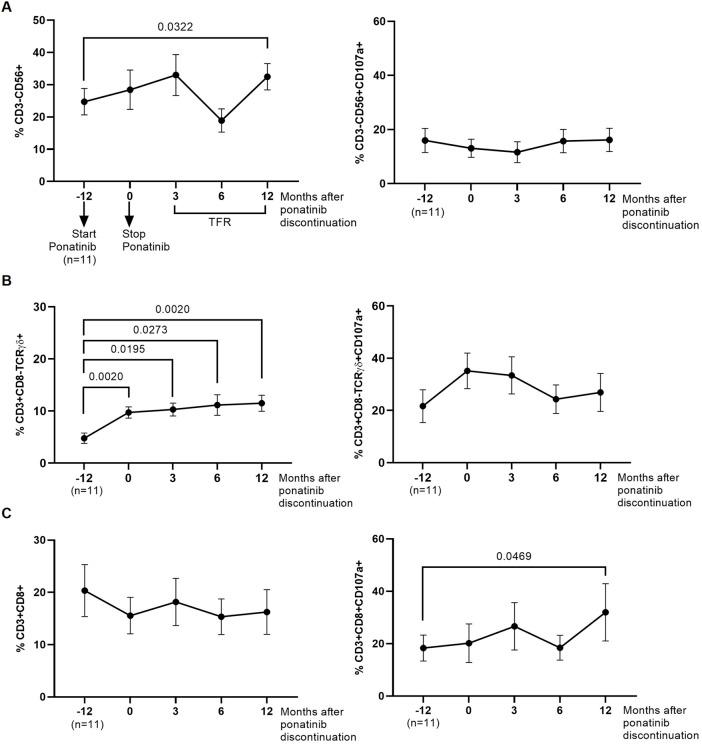
HIV-1 infection cannot be cured due to long-lived viral reservoirs formed by latently infected CD4 T cells. "Shock and Kill" strategy has been considered to eliminate the viral reservoir and achieve a functional cure but the stimulation of cytotoxic immunity is necessary. Ponatinib is a tyrosine kinase inhibitor (TKI) clinically used against chronic myeloid leukemia (CML) that has demonstrated to be effective against HIV-1 infection . Several TKIs may induce a potent cytotoxic response against cancer cells that makes possible to discontinue treatment in people with CML who present long-term deep molecular response. In this longitudinal study, we analyzed the capacity of ponatinib to induce an antiviral response against HIV-1 infection in peripheral blood mononuclear cells (PBMCs) obtained from people with CML previously treated with imatinib for a median of 10 years who changed to ponatinib for 12 months to boost the anticancer response before discontinuing any TKI as part of the clinical trial NCT04043676. Participants were followed-up for an additional 12 months in the absence of treatment. PBMCs were obtained at different time points and then infected with HIV-1. The rate of infection was determined by quantifying the intracellular levels of p24-gag in CD4 T cells. The levels of p24-gag+ CD4 T-cells were lower when these cells were obtained during and after treatment with ponatinib in comparison with those obtained during treatment with imatinib. Cytotoxicity of PBMCs against HIV-infected target cells was significantly higher during treatment with ponatinib than during treatment with imatinib, and it was maintained at least 12 months after discontinuation. There was a significant negative correlation between the lower levels of p24-gag+ CD4 T-cells and the higher cytotoxicity induced by PBMCs when cells were obtained during and after treatment with ponatinib. This cytotoxic immunity was mostly based on higher levels of Natural Killer and Tγδ cells seemingly boosted by ponatinib. In conclusion, transient treatment with immunomodulators like ponatinib along with ART could be explored to boost the antiviral activity of cytotoxic cells and contribute to the elimination of HIV-1 reservoir.
由于潜伏感染的CD4 T细胞形成的长期病毒储存库,HIV-1感染无法治愈。“激活并清除”策略被认为可以消除病毒储存库并实现功能性治愈,但细胞毒性免疫的刺激是必要的。波纳替尼是一种临床上用于治疗慢性髓性白血病(CML)的酪氨酸激酶抑制剂(TKI),已证明对HIV-1感染有效。几种TKI可能会诱导针对癌细胞的强效细胞毒性反应,这使得在出现长期深度分子反应的CML患者中可以停止治疗。在这项纵向研究中,我们分析了波纳替尼在从先前接受伊马替尼治疗中位数为10年、改为波纳替尼治疗12个月以增强抗癌反应、然后在作为临床试验NCT04043676的一部分停用任何TKI之前的CML患者获得的外周血单核细胞(PBMC)中诱导针对HIV-1感染的抗病毒反应的能力。参与者在无治疗的情况下又随访了12个月。在不同时间点获取PBMC,然后用HIV-1感染。通过定量CD4 T细胞中p24 - gag的细胞内水平来确定感染率。与在伊马替尼治疗期间获得的细胞相比,在波纳替尼治疗期间和治疗后获得的这些细胞中,p24 - gag + CD4 T细胞的水平较低。PBMC对HIV感染靶细胞的细胞毒性在波纳替尼治疗期间显著高于伊马替尼治疗期间,并且在停药后至少维持12个月。当在波纳替尼治疗期间和治疗后获得细胞时,p24 - gag + CD4 T细胞水平较低与PBMC诱导的较高细胞毒性之间存在显著负相关。这种细胞毒性免疫主要基于波纳替尼似乎增强的自然杀伤细胞和Tγδ细胞的较高水平。总之,可以探索使用波纳替尼等免疫调节剂进行短暂治疗并联合抗逆转录病毒疗法,以增强细胞毒性细胞的抗病毒活性并有助于消除HIV-1储存库。

 Zotero 插件