
伊朗扎布尔地区药用植物中潜在有毒和必需元素的人体健康风险评估:蒙特卡罗模拟法。
Human health risk assessment of potentially toxic and essential elements in medicinal plants consumed in Zabol, Iran, using the Monte Carlo simulation method.
机构信息
Department of Environmental Health Engineering, School of Public Health, Zabol University of Medical Sciences, Zabol, Iran.
Zabol Medicinal Plants Research Center, Zabol University of Medical Sciences, Zabol, Iran.
出版信息
Sci Rep. 2024 Oct 10;14(1):23756. doi: 10.1038/s41598-024-75159-w.
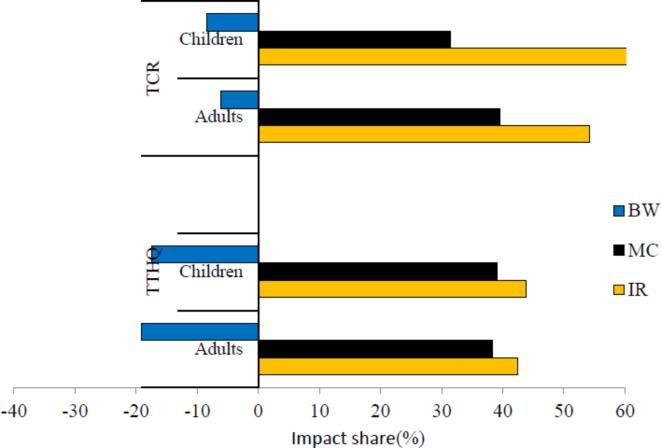
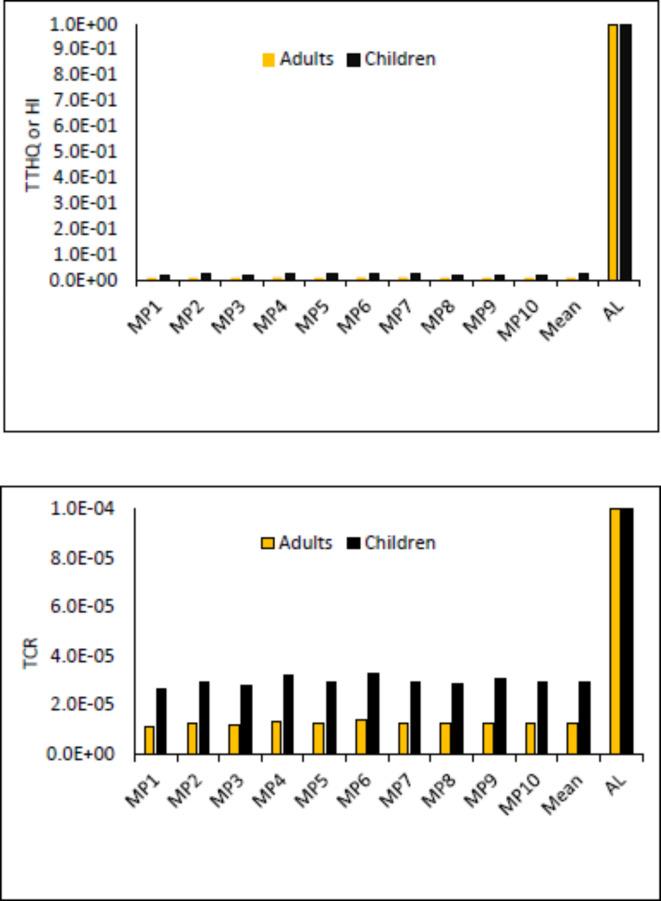
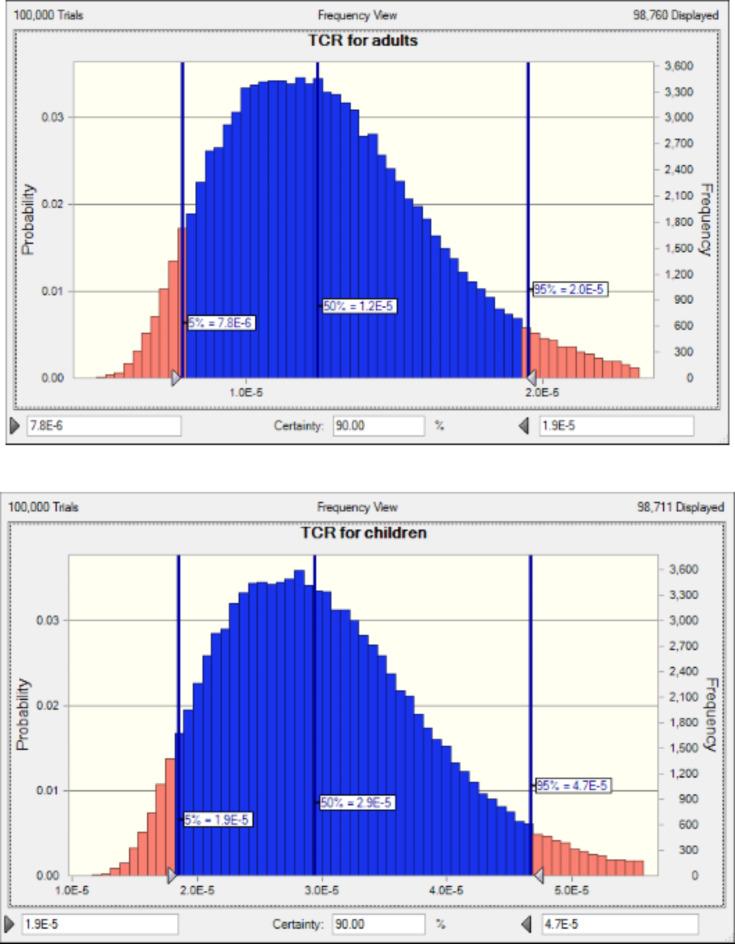
Medicinal plants (MPs) have long been used for their therapeutic properties in traditional forms of medicine. However, the presence of potentially toxic elements (PTEs) in MPs raises concerns about their safety, efficacy, and potential adverse effects on human health. The current study aimed to determine the level of potentially toxic and essential elements (PTEEs) in commonly consumed MPs in Zabol, Iran, along with their health risk assessments. To conduct the present study, 10 types of MPs widely used in Zabol, Iran, were selected, and 15 samples of each type (150 samples in total) were taken. Each sample was analyzed for the presence of various PTEEs using Inductively Coupled Plasma Optical Emission Spectroscopy (ICP-OES) for Lead (Pb), cadmium (Cd), chrome (Cr), nickel (Ni), copper (Cu), zinc (Zn), iron (Fe), aluminum (Al) and manganese (Mn); and Atomic Absorption Spectrometry (AAS) for arsenic (As) and mercury (Hg). Finally, to better comprehend the scope of exposure and its possible effects, the Monte Carlo simulation method is successfully applied to assess human health risks related to PTEs in MPs. Statistical analysis revealed statistically significant (P < 0.001) variations in PTE averages among MP types. Furthermore, all samples' overall PTE mean concentration (range: 0.18 to 215.5 µg/kg) was below the World Health Organization's (WHO) regulatory standards. Probabilistic health risks, including non-carcinogenic-target hazard quotient (THQ) for each element, total target hazard quotient (TTHQ) for all elements, and carcinogenic-incremental lifetime cancer risk (ILCR) for each element, and total carcinogenic risk (TCR) for all elements, were significantly lower than the acceptable limit for children and adults. Accordingly, it can be said that consuming MPs sold in Zabol is safe for children and adults regarding carcinogenic (ILCR/TCR = 10) and non-carcinogenic (THQ/TTHQ = 1) effects. In light of the findings presented here, and to our understanding, the primary factor contributing to lower levels of PTEs in MPs in Zabol City markets is the cultivation of plants in nonindustrialized areas, separate from urban and industrial zones. This practice keeps them from environmental contaminations, including soil quality and water sources. It is recommended that it is essential to regulate the sources that enhance the transfer of PTEs and other harmful pollutants from surroundings to the soil and, consequently, MPs. It is also suggested that, like chemical drugs, MPs should undergo rigorous testing by quality control agencies before being made available to the market.
药用植物(MPs)长期以来一直因其在传统医学形式中的治疗特性而被使用。然而,MPs 中潜在有毒元素(PTEs)的存在引起了人们对其安全性、功效和对人类健康的潜在不良影响的关注。本研究旨在确定伊朗扎布尔市常用 MPs 中潜在有毒和必需元素(PTEEs)的水平,以及对其进行健康风险评估。为了进行本研究,选择了伊朗扎布尔市广泛使用的 10 种 MPs,每种类型采集了 15 个样本(总共 150 个样本)。使用电感耦合等离子体发射光谱法(ICP-OES)对每种样本中的 Pb、Cd、Cr、Ni、Cu、Zn、Fe、Al 和 Mn 等各种 PTEEs 进行分析;使用原子吸收光谱法(AAS)对 As 和 Hg 进行分析。最后,为了更好地理解暴露范围及其可能的影响,成功应用蒙特卡罗模拟方法来评估 MPs 中 PTEs 对人体健康的风险。统计分析表明,MP 类型之间的 PTE 平均值存在统计学显著差异(P < 0.001)。此外,所有样本的总 PTE 平均浓度(范围:0.18 至 215.5 µg/kg)均低于世界卫生组织(WHO)的监管标准。非致癌目标危害系数(THQ)、总目标危害系数(TTHQ)、致癌增量终生癌症风险(ILCR)和总致癌风险(TCR)等概率健康风险均显著低于儿童和成人的可接受限值。因此,可以说,对于儿童和成人而言,食用扎布尔市销售的 MPs 在致癌(ILCR/TCR=10)和非致癌(THQ/TTHQ=1)方面都是安全的。根据这里提出的发现,据我们所知,导致扎布尔市市场 MPs 中 PTE 水平较低的主要因素是在远离城市和工业区的非工业化地区种植植物。这种做法使它们免受包括土壤质量和水源在内的环境污染。建议必须规范那些从周围环境向土壤和 MPs 中增强 PTE 等有害污染物转移的来源。还建议像化学药物一样,在向市场供应之前,应由质量控制机构对 MPs 进行严格测试。


 Zotero 插件