
沙蠋酰胺家族大环内酯类化合物为对抗耐多药结核病提供了新的治疗线索。
Arenicolide Family Macrolides Provide a New Therapeutic Lead Combating Multidrug-Resistant Tuberculosis.
作者信息
Hwang Sunghoon, Heo Bo Eun, Nguyen Thanh Quang, Kim Young Jae, Lee Sung-Gwon, Huynh Thanh-Hau, Kim Eunji, Jo Shin-Il, Baek Min-Jun, Shin Eun-Kyung, Oh Joonseok, Park Chungoo, Yoon Yeo Joon, Park Eun-Jin, Kim Kyung Tae, Ryoo Sungweon, Lee Da-Gyum, Wood Connor, Woo Minjeong, Kim Dae-Duk, Paik Seungwha, Jo Eun-Kyeong, Jang Jichan, Oh Dong-Chan
机构信息
Natural Products Research Institute, College of Pharmacy, Seoul National University, 1 Gwanak-ro, Gwanak-gu, 08826, Seoul, Republic of Korea.
Division of Life Science, Department of Bio & Medical Big Data (BK21 Four Program), Research Institute of Life Science, Gyeongsang National University, 52828, Jinju, Republic of Korea.
出版信息
Angew Chem Int Ed Engl. 2025 Jan 2;64(1):e202412994. doi: 10.1002/anie.202412994. Epub 2024 Nov 13.
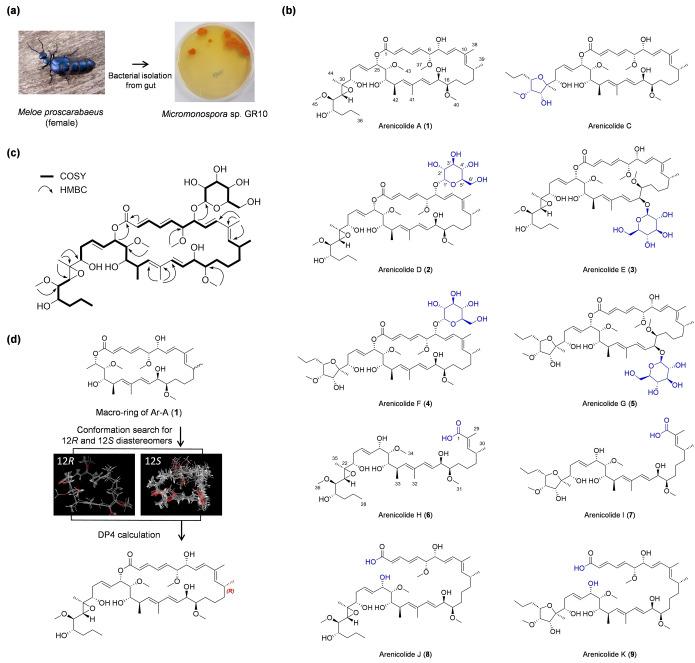
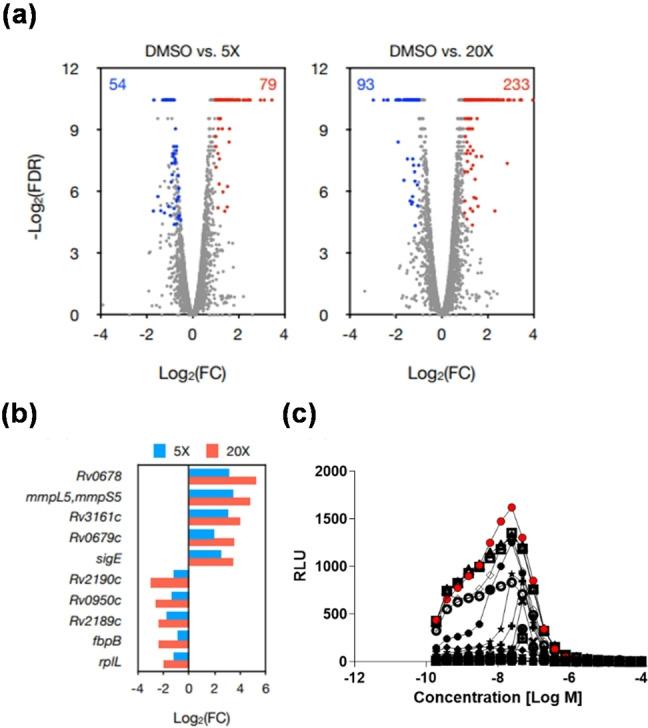
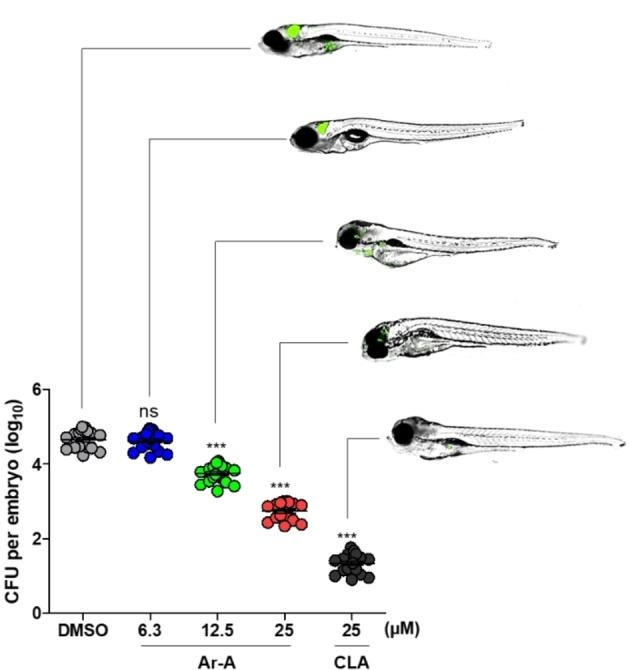
The emergence of multidrug-resistant (MDR) and extensively drug-resistant (XDR) strains of Mycobacterium tuberculosis (Mtb) poses a significant threat to health globally. During searching for new chemical entities regulating MDR- and XDR-Mtb, chemical investigation of the black oil beetle gut bacterium Micromonospora sp. GR10 led to the discovery of eight new members of arenicolides along with the identification of arenicolide A (Ar-A, 1), which was a previously reported macrolide with incomplete configuration. Genomic analysis of the bacterial strain GR10 revealed their putative biosynthetic pathway. Quantum mechanics-based computation, chemical derivatizations, and bioinformatic analysis established the absolute stereochemistry of Ar-A and arenicolides D-K (Ar-D-K, 2-9) completely for the first time. Biological studies of 1-9 revealed their antimicrobial activity against MDR and XDR strains of Mtb. Ar-A had the most potent in vitro antimicrobial efficacy against MDR- and XDR-Mtb. Mechanistically, Ar-A induced ATP depletion and destabilized Mtb cell wall, thereby inhibiting growth. Notably, Ar-A exerted a significant antimicrobial effect against Mtb in macrophages, was effective in the treatment of Mtb infections, and showed a synergistic effect with amikacin (AMK) in a mouse model of MDR-Mtb lung infection. Collectively, our findings indicate Ar-A to be a promising drug lead for drug-resistant tuberculosis.
耐多药(MDR)和广泛耐药(XDR)结核分枝杆菌(Mtb)菌株的出现对全球健康构成了重大威胁。在寻找调控耐多药和广泛耐药结核分枝杆菌的新化学实体的过程中,对黑油甲虫肠道细菌微小单孢菌属GR10进行化学研究,发现了8种新的砂海螂内酯类成员,并鉴定出砂海螂内酯A(Ar-A,1),它是一种先前报道的构型不完整的大环内酯类化合物。对GR10菌株的基因组分析揭示了其假定的生物合成途径。基于量子力学的计算、化学衍生化和生物信息学分析首次完全确定了Ar-A以及砂海螂内酯D-K(Ar-D-K,2-9)的绝对立体化学结构。对1-9的生物学研究揭示了它们对结核分枝杆菌耐多药和广泛耐药菌株的抗菌活性。Ar-A对耐多药和广泛耐药结核分枝杆菌具有最强的体外抗菌效力。从机制上讲,Ar-A导致ATP耗竭并破坏结核分枝杆菌细胞壁的稳定性,从而抑制其生长。值得注意的是,Ar-A在巨噬细胞中对结核分枝杆菌具有显著的抗菌作用,对结核分枝杆菌感染的治疗有效,并且在耐多药结核分枝杆菌肺部感染小鼠模型中与阿米卡星(AMK)显示出协同作用。总的来说,我们的研究结果表明Ar-A是一种有前景的耐多药结核病药物先导化合物。




 Zotero 插件