
利用新型微流控原位电化学装置对微生物生物膜结构进行可逆氧化/还原的软 X 射线光谱微区分析证明。
Soft X-ray spectromicroscopic proof of a reversible oxidation/reduction of microbial biofilm structures using a novel microfluidic in situ electrochemical device.
机构信息
Experimental Biogeochemistry, BayCEER, University of Bayreuth, 95448, Bayreuth, Germany.
Chemistry & Chemical Biology, McMaster University, Hamilton, ON, Canada.
出版信息
Sci Rep. 2024 Oct 14;14(1):24009. doi: 10.1038/s41598-024-74768-9.
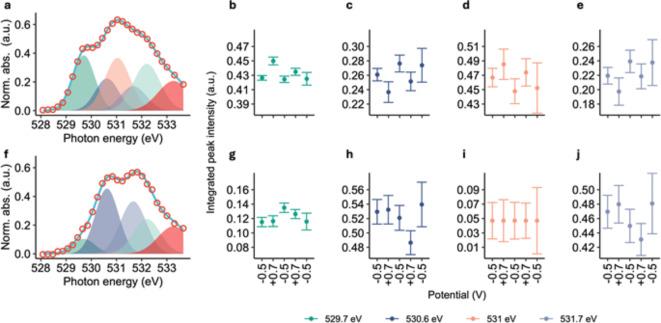
In situ electrochemistry on micron and submicron-sized individual particles and thin layers is a valuable, emerging tool for process understanding and optimization in a variety of scientific and technological fields such as material science, process technology, analytical chemistry, and environmental sciences. Electrochemical characterization and manipulation coupled with soft X-ray spectromicroscopy helps identify, quantify, and optimize processes in complex systems such as those with high heterogeneity in the spatial and/or temporal domain. Here we present a novel platform optimized for in situ electrochemistry with variable liquid electrolyte flow in soft X-ray scanning transmission X-ray microscopes (STXM). With four channels for fluid control and a modular design, it is suited for a wealth of experimental conditions. We demonstrate its capabilities by proving the reversible oxidation and reduction of individual microbial biofilm structures formed by microaerophilic Fe(II)-oxidizing bacteria, also known as twisted stalks. We show spectromicroscopically the heterogeneity of the redox activity on the submicron scale. Examples are also provided of electrochemical modification of liquid electrolyte species (Fe(II) and Fe(III) cyanides), and in situ studies of electrodeposited copper nanoparticles as CO reduction electrocatalysts under reaction conditions.
在微米和亚微米级别的单个颗粒和薄膜上进行原位电化学分析是一种非常有价值的新兴工具,可用于材料科学、过程技术、分析化学和环境科学等各种科学技术领域的过程理解和优化。电化学特性分析和操作与软 X 射线光谱显微镜相结合,有助于识别、量化和优化具有高度时空异质性的复杂系统中的过程。在这里,我们提出了一种优化的新型平台,用于在软 X 射线扫描透射 X 射线显微镜(STXM)中具有可变液态电解质流动的原位电化学。该平台具有四个流体控制通道和模块化设计,适用于各种实验条件。我们通过证明微需氧 Fe(II)氧化细菌(也称为扭曲菌)形成的单个微生物生物膜结构的可逆氧化和还原来证明其功能。我们在亚微米尺度上展示了氧化还原活性的异质性。还提供了电化学修饰液态电解质物种(Fe(II)和 Fe(III)氰化物)的实例,以及在反应条件下作为 CO 还原电催化剂的电沉积铜纳米粒子的原位研究。
 Zotero 插件