
不同收入人群运动量与肌肉骨骼疾病相关性分析:基于 2011-2018 年 NHANES 数据集的研究。
Correlation analysis of exercise volume and musculoskeletal disorders in people with income level differences: research based on the 2011-2018 NHANES dataset.
机构信息
The Orthopaedic Medical Center, Second Hospital of Jilin University, Changchun, Jilin Province, China.
Joint International Research Laboratory of Ageing Active Strategy and Bionic Health in Northeast Asia of Ministry of Education, Changchun, Jilin Province, China.
出版信息
BMC Public Health. 2024 Oct 14;24(1):2811. doi: 10.1186/s12889-024-20179-4.
OBJECTIVES
Socioeconomic factors significantly impact human health; however, the impact of exercise and income on musculoskeletal system health remains unclear. Our study aims to explore the relationship between exercise and income with musculoskeletal system health in young and middle-aged adults.
DESIGN
This cross-sectional study used data from 7,515 adults aged 20-59 years, which were obtained from the US NHANES, 2011-2018. Participants' musculoskeletal system health was evaluated on the basis of them having osteopenia, osteoporosis, or sarcopenia.
METHODS
Ordinal regression was used to explore the correlation between income level, exercise volume, and musculoskeletal system health. Mediating effect analysis was used to assess whether the exercise volume affected the impact of income levels on musculoskeletal system health. Ordinal regression and restricted cubic spline curve were used to further analyze the relationship between exercise and income level.
RESULTS
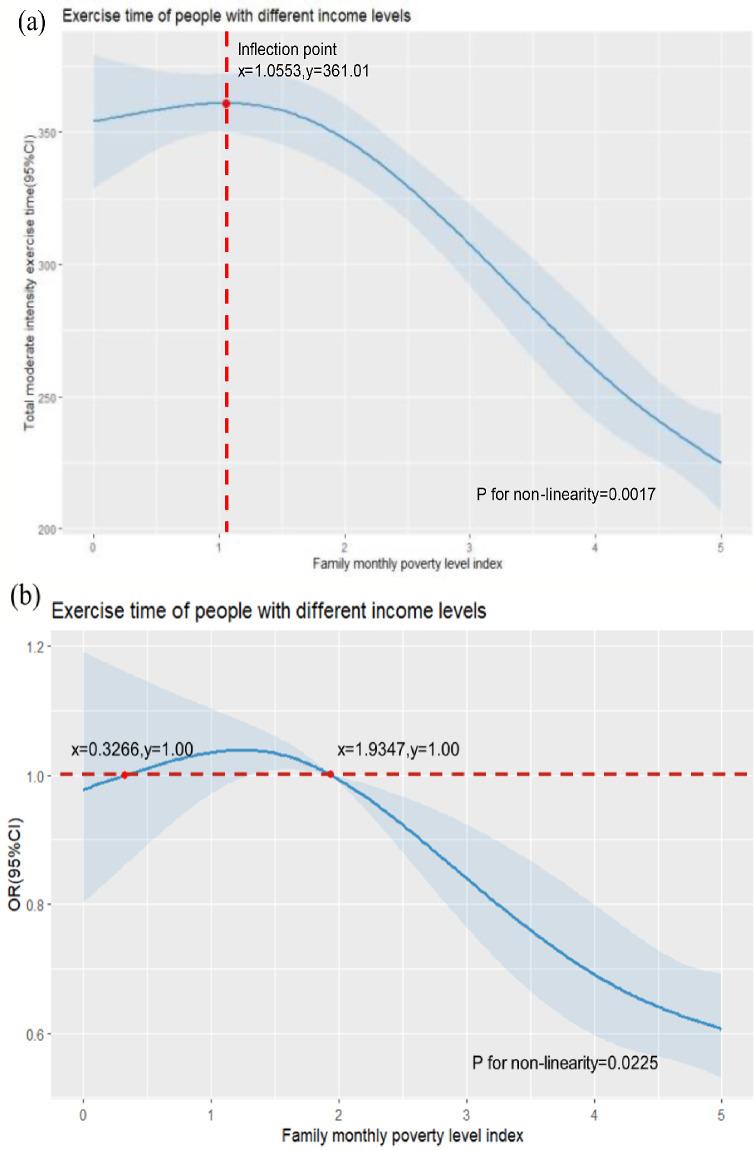
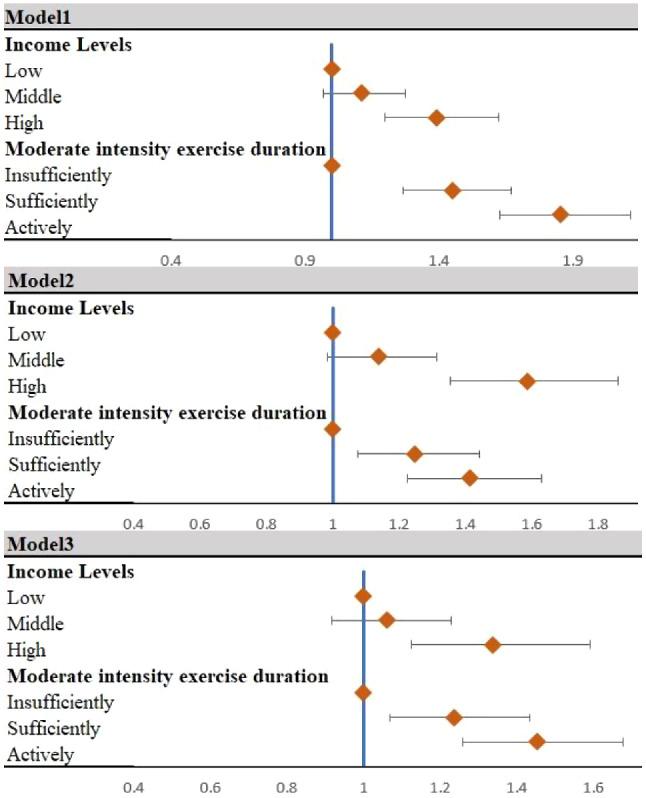
In the analysis of adjusted all covariates, the probability of having good musculoskeletal system health in high-income participants was higher than that of low- or middle-income participants. The probability of having good musculoskeletal system health in the actively exercising group higher than that of the participants exercised insufficiently or sufficiently. Mediating effect of exercise masked the effect of income on musculoskeletal system health. Participants with low income levels tended to spend more time exercising that those who had high income levels; exercise volume and income level had a significant non-linear relationship.
CONCLUSION
The findings presented will help identify young and middle-aged adults who are most at risk of developing musculoskeletal health problem and will likely benefit from certain lifestyle interventions.
目的
社会经济因素对人类健康有重大影响;然而,运动和收入对肌肉骨骼系统健康的影响仍不清楚。我们的研究旨在探讨运动和收入与中青年成年人肌肉骨骼系统健康之间的关系。
设计
本横断面研究使用了来自美国 NHANES(2011-2018 年)的 7515 名 20-59 岁成年人的数据。根据参与者是否患有骨质疏松症、骨质疏松症或肌肉减少症来评估其肌肉骨骼系统健康。
方法
使用有序回归来探索收入水平、运动量与肌肉骨骼系统健康之间的相关性。使用中介效应分析来评估运动量是否影响收入水平对肌肉骨骼系统健康的影响。使用有序回归和限制立方样条曲线进一步分析运动量和收入水平之间的关系。
结果
在调整所有协变量的分析中,高收入参与者具有良好肌肉骨骼系统健康的概率高于低收入或中等收入参与者。积极运动组具有良好肌肉骨骼系统健康的概率高于运动不足或适度的参与者。运动的中介作用掩盖了收入对肌肉骨骼系统健康的影响。低收入水平的参与者往往比高收入水平的参与者花更多的时间运动;运动量和收入水平之间存在显著的非线性关系。
结论
本研究结果有助于确定肌肉骨骼健康问题风险最高的中青年成年人,并可能受益于某些生活方式干预。



 Zotero 插件