
紫外线(UV)辐射:在癌症发展和治疗中的双刃剑。
Ultraviolet (UV) radiation: a double-edged sword in cancer development and therapy.
机构信息
State Key Laboratory of Oral Diseases & National Clinical Research Center for Oral Diseases & Department of Oral and Maxillofacial Surgery, West China Hospital of Stomatology, Sichuan University, No.14, Sec.3, Renminnan Road, Chengdu, Sichuan, 610041, People's Republic of China.
Department of Stomatology, Zhoushan Hospital, Wenzhou Medical University, Zhoushan, Zhejiang, China.
出版信息
Mol Biomed. 2024 Oct 17;5(1):49. doi: 10.1186/s43556-024-00209-8.
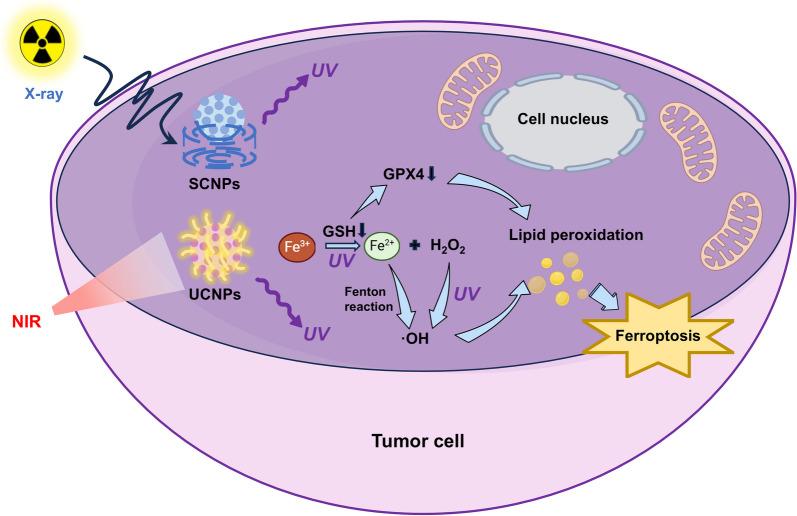
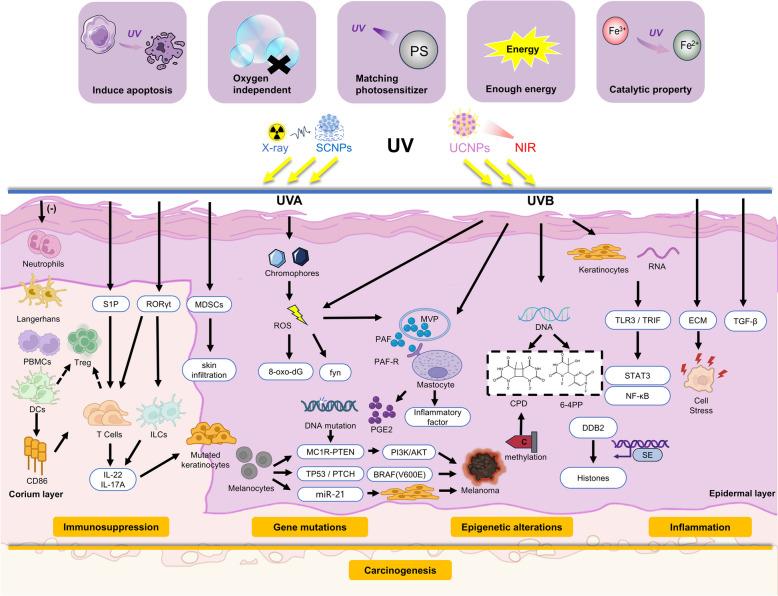
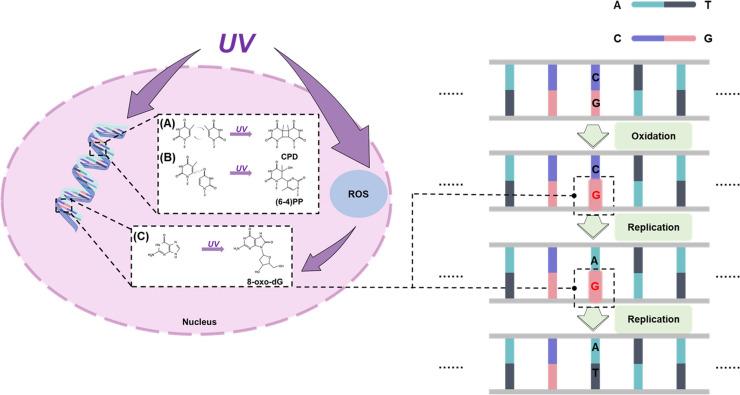
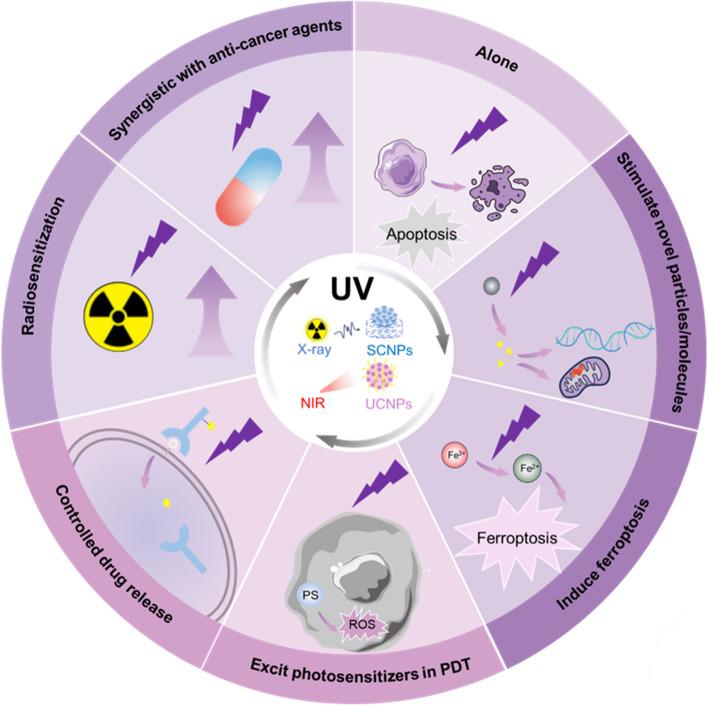
It has long been widely acknowledged that ultraviolet (UV) light is an environment risk factor that can lead to cancer, particularly skin cancer. However, it is worth noting that UV radiation holds potential for cancer treatment as a relatively high-energy electromagnetic wave. With the help of nanomaterials, the role of UV radiation has caught increasing attention in cancer treatment. In this review, we briefly summarized types of UV-induced cancers, including malignant melanoma, squamous cell carcinoma, basal cell carcinoma, Merkel cell carcinoma. Importantly, we discussed the primary mechanisms underlying UV carcinogenesis, including mutations by DNA damage, immunosuppression, inflammation and epigenetic alterations. Historically limited by its shallow penetration depth, the introduction of nanomaterials has dramatically transformed the utilization of UV light in cancer treatment. The direct effect of UV light itself generally leads to the suppression of cancer cell growth and the initiation of apoptosis and ferroptosis. It can also be utilized to activate photosensitizers for reactive oxygen species (ROS) production, sensitize radiotherapy and achieve controlled drug release. Finally, we comprehensively weigh the significant risks and limitations associated with the therapeutic use of UV radiation. And the contradictory effect of UV exposure in promoting and inhibiting tumor has been discussed. This review provides clues for potential clinical therapy as well as future study directions in the UV radiation field. The precise delivery and control of UV light or nanomaterials and the wavelength as well as dose effects of UV light are needed for a thorough understanding of UV radiation.
长期以来,人们普遍认为紫外线(UV)是一种环境风险因素,可导致癌症,尤其是皮肤癌。然而,值得注意的是,作为一种相对高能的电磁波,紫外线辐射具有癌症治疗的潜力。在纳米材料的帮助下,紫外线辐射在癌症治疗中的作用引起了越来越多的关注。在这篇综述中,我们简要总结了几种由 UV 诱导的癌症,包括恶性黑色素瘤、鳞状细胞癌、基底细胞癌、默克尔细胞癌。重要的是,我们讨论了 UV 致癌作用的主要机制,包括 DNA 损伤引起的突变、免疫抑制、炎症和表观遗传改变。由于其浅层穿透深度的限制,纳米材料的引入极大地改变了紫外线在癌症治疗中的利用。紫外线本身的直接作用通常会抑制癌细胞生长,启动细胞凋亡和铁死亡。它还可以用于激活光敏剂以产生活性氧(ROS),增强放射治疗并实现药物的控制释放。最后,我们全面权衡了使用 UV 辐射进行治疗的重大风险和局限性。并讨论了 UV 暴露在促进和抑制肿瘤方面的矛盾作用。这篇综述为潜在的临床治疗以及 UV 辐射领域的未来研究方向提供了线索。需要对 UV 光或纳米材料的精确传递和控制以及 UV 光的波长和剂量效应进行深入了解。

 Zotero 插件