
早期进化分支跨越空间域,使神经母细胞瘤在化疗下易于发生克隆性替换。
Early evolutionary branching across spatial domains predisposes to clonal replacement under chemotherapy in neuroblastoma.
机构信息
Division of Clinical Genetics, Department of Laboratory Medicine, Lund University, Lund, Sweden.
Department of Obstetrics and Gynecology, Nagoya University Graduate School of Medicine, Nagoya, Japan.
出版信息
Nat Commun. 2024 Oct 18;15(1):8992. doi: 10.1038/s41467-024-53334-x.
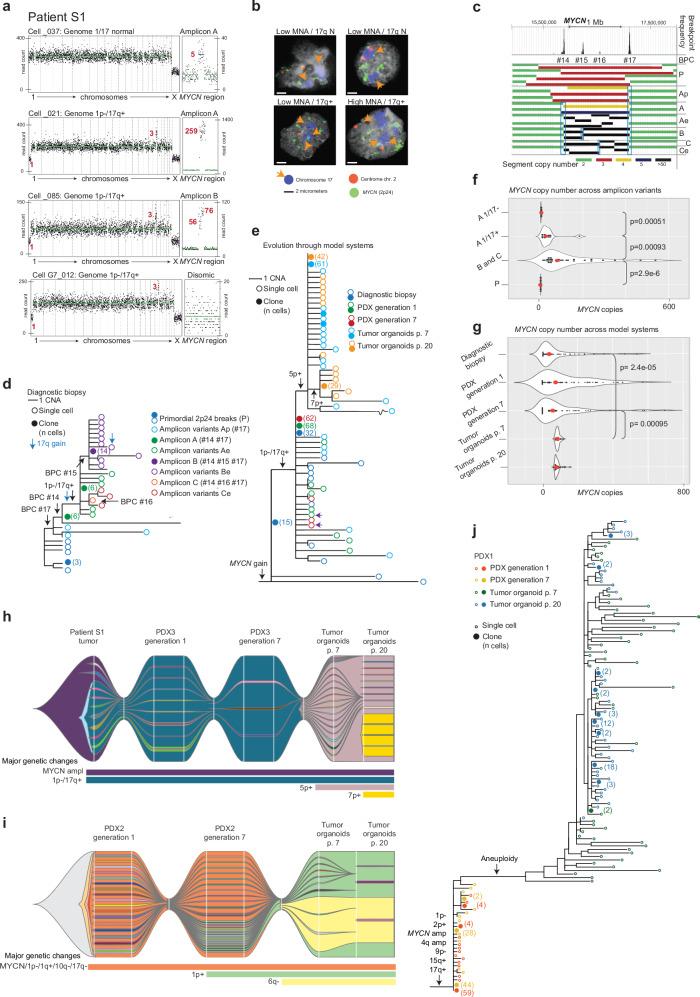
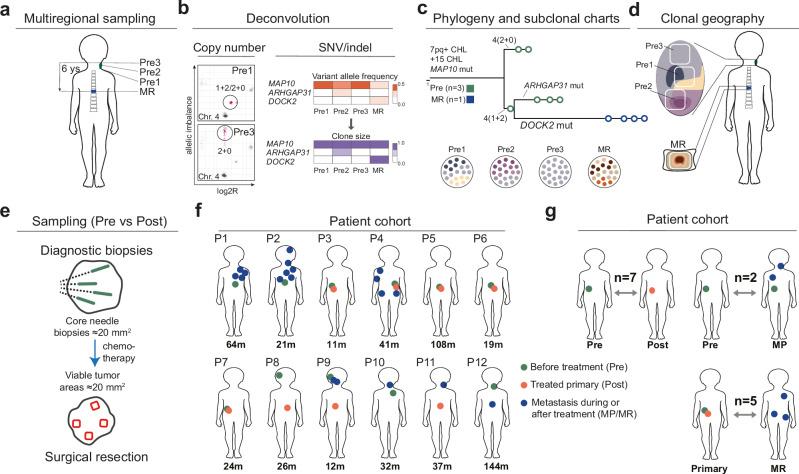
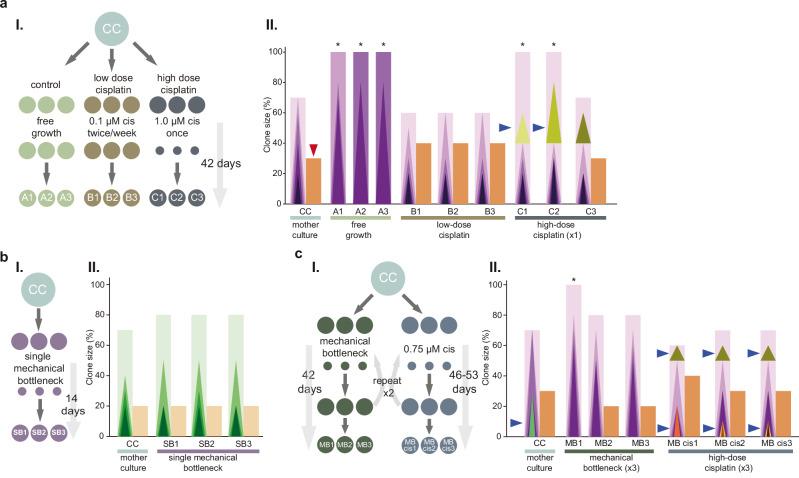
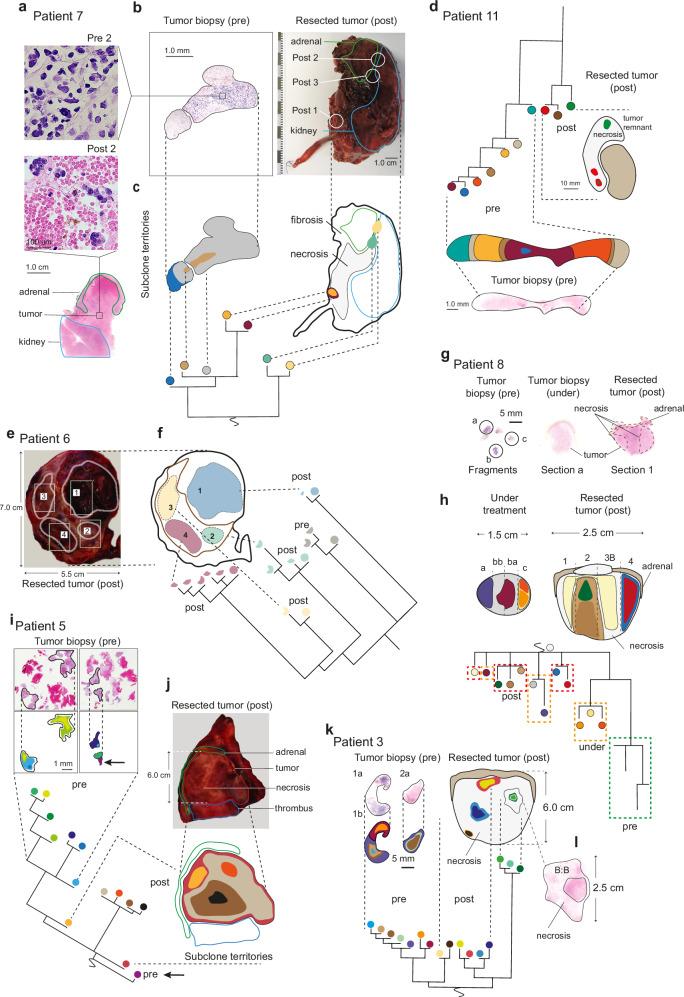
Neuroblastoma (NB) is one of the most lethal childhood cancers due to its propensity to become treatment resistant. By spatial mapping of subclone geographies before and after chemotherapy across 89 tumor regions from 12 NBs, we find that densely packed territories of closely related subclones present at diagnosis are replaced under effective treatment by islands of distantly related survivor subclones, originating from a different most recent ancestor compared to lineages dominating before treatment. Conversely, in tumors that progressed under treatment, ancestors of subclones dominating later in disease are present already at diagnosis. Chemotherapy treated xenografts and cell culture models replicate these two contrasting scenarios and show branching evolution to be a constant feature of proliferating NB cells. Phylogenies based on whole genome sequencing of 505 individual NB cells indicate that a rich repertoire of parallel subclones emerges already with the first oncogenic mutations and lays the foundation for clonal replacement under treatment.
神经母细胞瘤(NB)是儿童中最致命的癌症之一,因为它容易产生耐药性。通过对 12 例 NB 的 89 个肿瘤区域进行化疗前后亚克隆地理空间图谱绘制,我们发现,在有效的治疗下,诊断时密集存在的密切相关亚克隆区域被起源于不同最近祖先的、与治疗前主导谱系不同的、存活的远缘亚克隆岛屿所取代。相反,在治疗后进展的肿瘤中,在疾病后期主导的亚克隆的祖先在诊断时就已经存在。经化疗处理的异种移植物和细胞培养模型复制了这两种截然不同的情况,并表明分支进化是增殖性 NB 细胞的一个恒定特征。基于对 505 个单个 NB 细胞进行全基因组测序的系统发育分析表明,丰富的平行亚克隆库已经随着第一个致癌突变而出现,并为治疗下的克隆替换奠定了基础。


 Zotero 插件