
眼内液的分子变化:对近视的影响。
Molecular changes in intraocular fluid: implications for myopia.
机构信息
Department of Ophthalmology, Shanghai Ninth People's Hospital, China.
College of Health Science and Technology, Shanghai Jiao Tong University School of Medicine, China.
出版信息
Int J Biol Sci. 2024 Sep 30;20(13):5330-5342. doi: 10.7150/ijbs.101438. eCollection 2024.
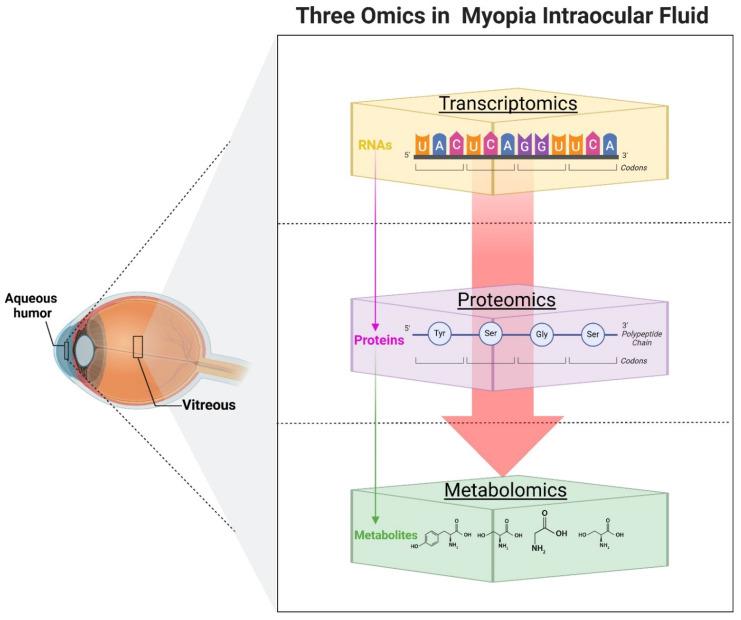
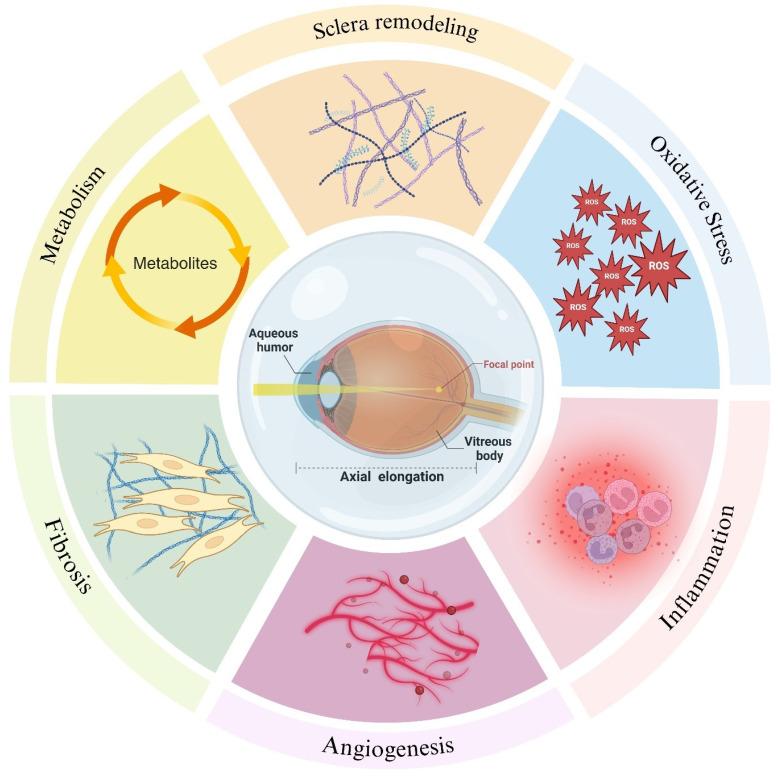
Myopia is the most common eye disease in the world which is caused by a mismatch between the optical power of the eye and its excessive axial length. Scleral remodeling, oxidative stress, inflammation, pathological states of angiogenesis and fibrosis and metabolism are closely associated with the onset and progression of myopia and the pathological changes that may ultimately result. Intraocular fluid is a collective term for the fluid within the eye, and changes in its composition can reflect the physiological and pathological status within the eye, with aqueous humor and vitreous being the commonly tested specimens. Recent studies have revealed potential changes in a variety of molecules in intraocular fluid during myopia progression. Abnormal expression of these molecules may reflect different stages of myopia and provide new perspectives for disease monitoring and treatment. Therefore, in this review, we systematically review the molecular changes in intraocular fluid associated with myopia, as well as the possible mechanisms, with a view to informing basic myopia research and clinical work.
近视是世界范围内最常见的眼部疾病,是由眼球的光学强度与其过长的眼轴之间不匹配引起的。巩膜重塑、氧化应激、炎症、血管生成和纤维化的病理状态以及代谢都与近视的发生和进展以及可能导致的病理变化密切相关。眼内液是眼球内液体的总称,其成分的变化可以反映眼内的生理和病理状态,房水和玻璃体是常用的检测标本。最近的研究揭示了近视进展过程中眼内液中多种分子的潜在变化。这些分子的异常表达可能反映了近视的不同阶段,并为疾病监测和治疗提供了新的视角。因此,在这篇综述中,我们系统地回顾了与近视相关的眼内液分子变化以及可能的机制,以期为基础近视研究和临床工作提供信息。
 Zotero 插件