
增材制造的Ti6Al4V表面的生物学特性:超短激光纹理化与传统后处理的比较
Biological Characterization of Ti6Al4V Additively Manufactured Surfaces: Comparison Between Ultrashort Laser Texturing and Conventional Post-Processing.
作者信息
Sartori Maria, Bregoli Chiara, Carniato Melania, Cavazza Luca, Maglio Melania, Giavaresi Gianluca, Biffi Carlo Alberto, Fiocchi Jacopo, Gruppioni Emanuele, Tuissi Ausonio, Fini Milena
机构信息
Surgical Sciences and Technologies, IRCCS Istituto Ortopedico Rizzoli, Via Di Barbiano, 1/10, Bologna, 40136, Italy.
Institute of Condensed Matter Chemistry and Technologies for Energy (ICMATE), (Consiglio Nazionale delle Ricerche - CNR), Via Gaetano Previati, 1/E, Lecco, 23900, Italy.
出版信息
Adv Healthc Mater. 2025 Feb;14(4):e2402873. doi: 10.1002/adhm.202402873. Epub 2024 Oct 22.
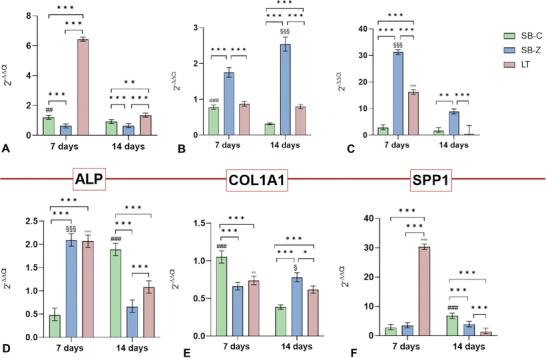
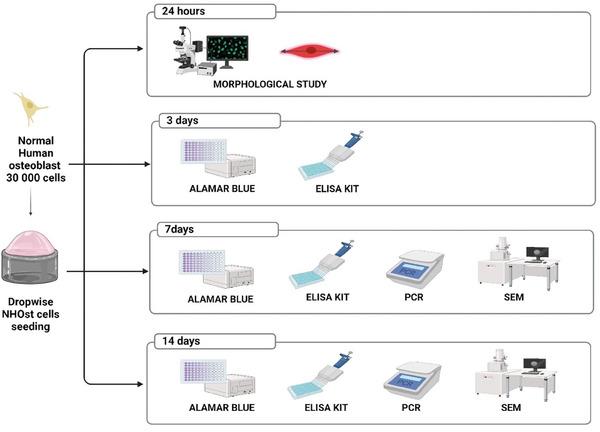
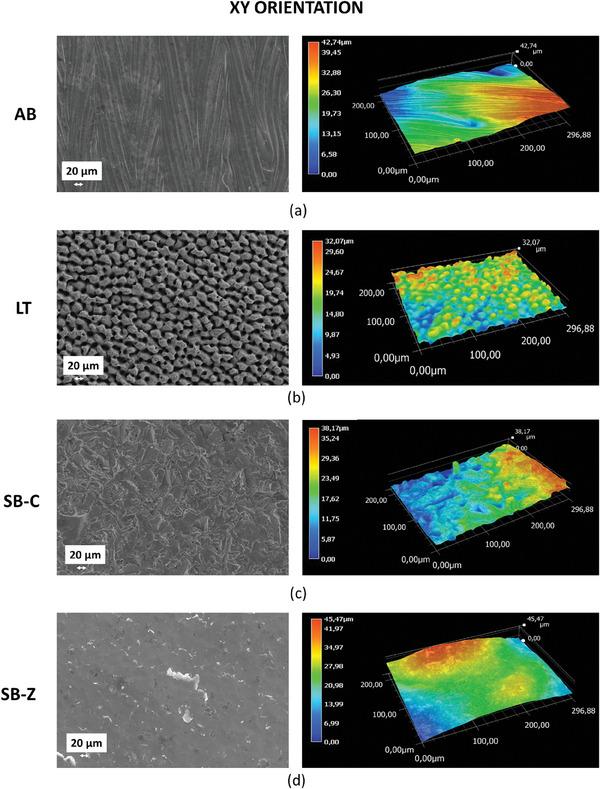
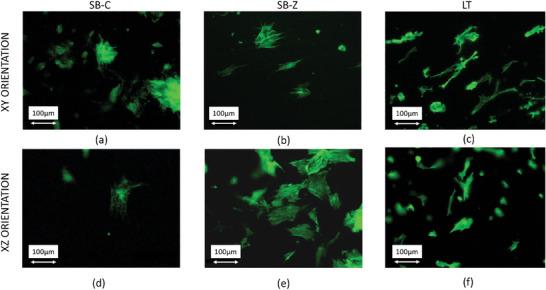
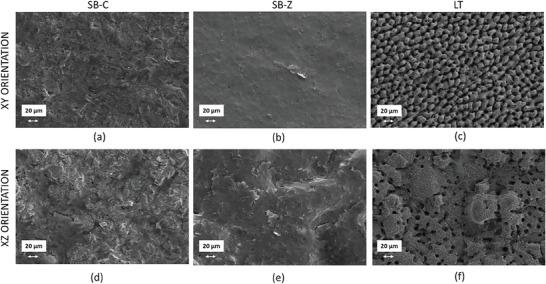
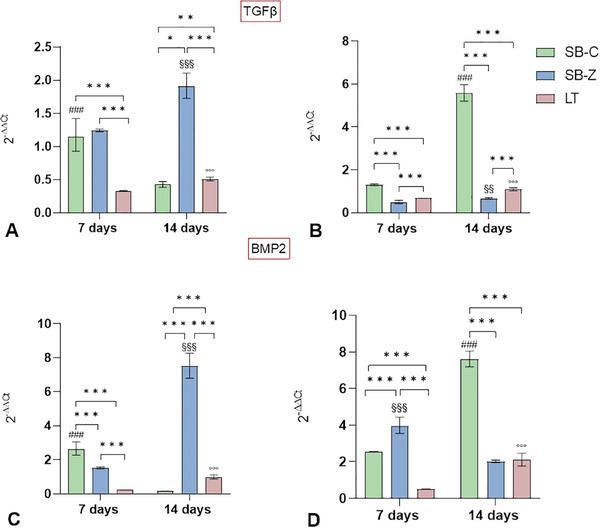
Among Additive Manufacturing (AM) technologies, Laser Powder Bed Fusion (LPBF) has made a great contribution to optimizing the production of customized implant materials. However, the design of the ideal surface topography, capable of exerting the best biological effect without drawbacks, is still a subject of study. The aim of the present study is to topographically and biologically characterize AM-produced Ti6Al4V ELI (Extra Low Interstitial) samples by comparing different surface finishing. Vertically and horizontally samples are realized by LPBF with four surface finishing conditions (as-built, corundum-sandblasted, zirconia-sandblasted, femtosecond laser textured). Bioactivity in vitro tests are performed with human osteoblasts evaluating morphology, metabolic activity, and differentiation capabilities in direct contact with surfaces. Scanning electron microscope and profilometry analysis are used to evaluate surface morphology and samples' roughness with and without cells. All tested surfaces show good biocompatibility. The influence of material surface features is evident in the early evaluation, with the most promising results of morphological study for laser texturing. Deposition orientations seem to influence metabolic activities, with XZ orientation more effective than XY. Current data provide the first positive feedback on the biocompatibility of laser texturing finishing, still poorly described in the literature, and support the future clinical development of devices produced with a combination of LPBF and different finishing treatments.
在增材制造(AM)技术中,激光粉末床熔融(LPBF)为优化定制植入材料的生产做出了巨大贡献。然而,能够发挥最佳生物学效应且无缺点的理想表面形貌设计仍是一个研究课题。本研究的目的是通过比较不同的表面处理方式,对增材制造生产的Ti6Al4V ELI(超低间隙)样品进行表面形貌和生物学表征。通过LPBF制备垂直和水平方向的样品,并设置四种表面处理条件(原始状态、刚玉喷砂、氧化锆喷砂、飞秒激光纹理化)。使用人成骨细胞进行体外生物活性测试,评估与表面直接接触时的形态、代谢活性和分化能力。使用扫描电子显微镜和轮廓仪分析来评估有无细胞时的表面形态和样品粗糙度。所有测试表面均显示出良好的生物相容性。在早期评估中,材料表面特征的影响很明显,激光纹理化的形态学研究结果最有前景。沉积方向似乎会影响代谢活性,XZ方向比XY方向更有效。目前的数据为激光纹理化处理的生物相容性提供了首个积极反馈,而这在文献中仍鲜有描述,并支持了未来结合LPBF和不同表面处理方法生产的器械的临床开发。




 Zotero 插件