
抗PcrV抗体与噬菌体疗法联合应用于小鼠肺炎模型的效果。
Effects of the combination of anti-PcrV antibody and bacteriophage therapy in a mouse model of pneumonia.
作者信息
Junya Ohara, Jumpei Fujiki, Kinoshita Mao, Sudo Kazuki, Kawaguchi Ken, Inoue Keita, Naito Yoshifumi, Moriyama Kiyoshi, Nakamura Tomohiro, Iwano Hidetomo, Sawa Teiji
机构信息
Department of Anesthesiology, Graduate School of Medical Science, Kyoto Prefectural University of Medicine, Kyoto, Japan.
Laboratory of Veterinary Biochemistry, School of Veterinary Medicine, Rakuno Gakuen University, Ebetsu, Hokkaido, Japan.
出版信息
Microbiol Spectr. 2024 Oct 23;12(12):e0178124. doi: 10.1128/spectrum.01781-24.
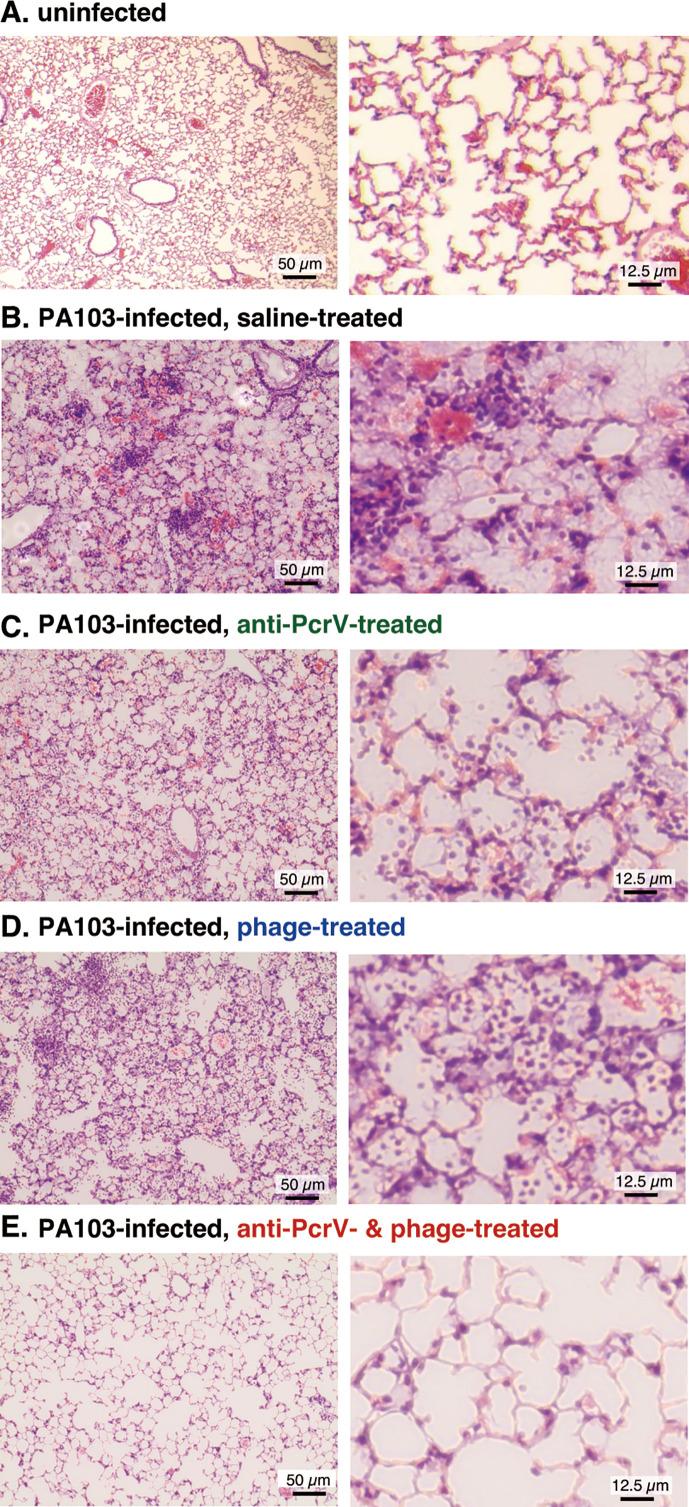
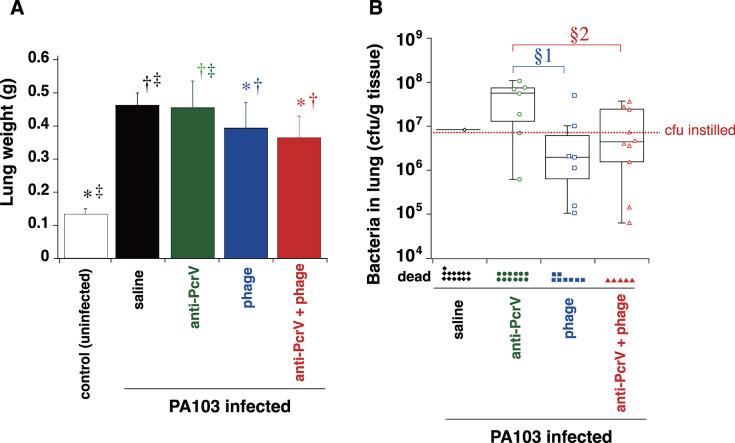
Acute lung injury caused by is attributed to the translocation of cytotoxin into pulmonary epithelial cells via the type III secretion system. This virulence can be blocked with a specific antibody against PcrV in this secretion system. However, because anti-PcrV antibodies do not have bactericidal activity, the treatment of bacteria depends on the phagocytic system of the host. In this study, we investigated the therapeutic effect of combination therapy with an anti-PcrV antibody and bactericidal bacteriophages on acute lung injury and subsequent death in mice compared with a single treatment. After the mice intratracheally received a lethal dose of the cytotoxic strain, a second instillation was performed with saline, anti-PcrV IgG, bacteriophages, or a mixture of anti-PcrV and bacteriophages. The survival rates 24 h after infection were as follows: 7.1% in the saline group, 26.7% in the anti-PcrV group, 41.2% in the phage group, and 66.7% in the anti-PcrV + phage group ( < 0.001 vs saline-treated group). The activity of surviving mice in the anti-PcrV + phage group was significantly greater than that in the saline group. The lung weight in the anti-PcrV + phage group was significantly lower than that in the anti-PcrV group. In conclusion, combination therapy with an anti-PcrV antibody and a bacteriophage reduces acute lung injury and suggests improved survival compared with each treatment alone. This combination therapy, which does not rely on conventional antibiotics, could constitute a new strategy for treating multidrug-resistant infections.IMPORTANCECombination therapy with either bacteriophages alone or in combination with anti-PcrV antibodies in a mouse model of pneumonia may reduce the acute lung injury and improve survival. This combination therapy, which does not rely on conventional antibiotics, may be a new strategy to treat multidrug-resistant infections.
由[病原体名称未给出]引起的急性肺损伤归因于细胞毒素通过Ⅲ型分泌系统转运至肺上皮细胞。该分泌系统中针对PcrV的特异性抗体可阻断这种毒力。然而,由于抗PcrV抗体不具有杀菌活性,细菌的清除依赖于宿主的吞噬系统。在本研究中,我们比较了抗PcrV抗体和杀菌性噬菌体联合治疗与单一治疗对小鼠急性肺损伤及后续死亡的治疗效果。小鼠经气管内给予致死剂量的细胞毒性[病原体名称未给出]菌株后,第二次滴注生理盐水、抗PcrV IgG、噬菌体或抗PcrV与噬菌体的混合物。感染后24小时的存活率如下:生理盐水组为7.1%,抗PcrV组为26.7%,噬菌体组为41.2%,抗PcrV +噬菌体组为66.7%(与生理盐水治疗组相比,P<0.001)。抗PcrV +噬菌体组存活小鼠的活动能力明显高于生理盐水组。抗PcrV +噬菌体组的肺重量明显低于抗PcrV组。总之,抗PcrV抗体与噬菌体联合治疗可减轻急性肺损伤,与单独使用每种治疗方法相比,生存率有所提高。这种不依赖传统抗生素的联合治疗可能构成治疗多重耐药[病原体名称未给出]感染的新策略。重要性在[病原体名称未给出]肺炎小鼠模型中,单独使用噬菌体或与抗PcrV抗体联合使用的联合治疗可能减轻急性肺损伤并提高生存率。这种不依赖传统抗生素的联合治疗可能是治疗多重耐药[病原体名称未给出]感染的新策略。



 Zotero 插件