
揭示维生素D与血管紧张素转换酶2(ACE-2)的分子相互作用在减轻新冠病毒(SARS-CoV-2)并发症和死亡方面的作用
Unveiling the Interplay-Vitamin D and ACE-2 Molecular Interactions in Mitigating Complications and Deaths from SARS-CoV-2.
作者信息
Wimalawansa Sunil J
机构信息
CardioMetabolic and Endocrine Institute, North Brunswick, NJ 08902, USA.
出版信息
Biology (Basel). 2024 Oct 16;13(10):831. doi: 10.3390/biology13100831.
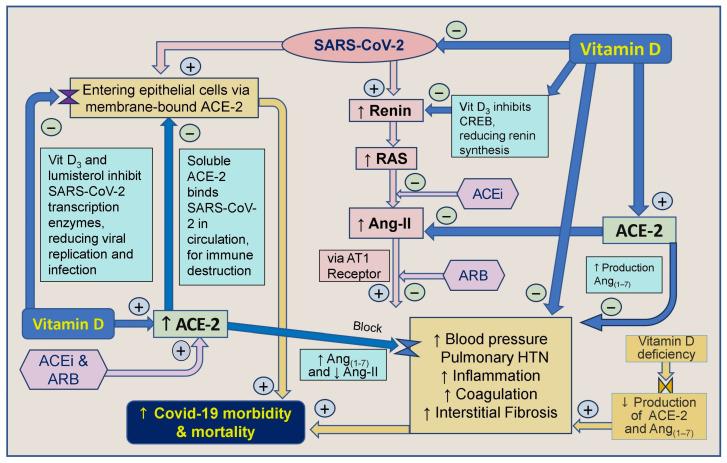
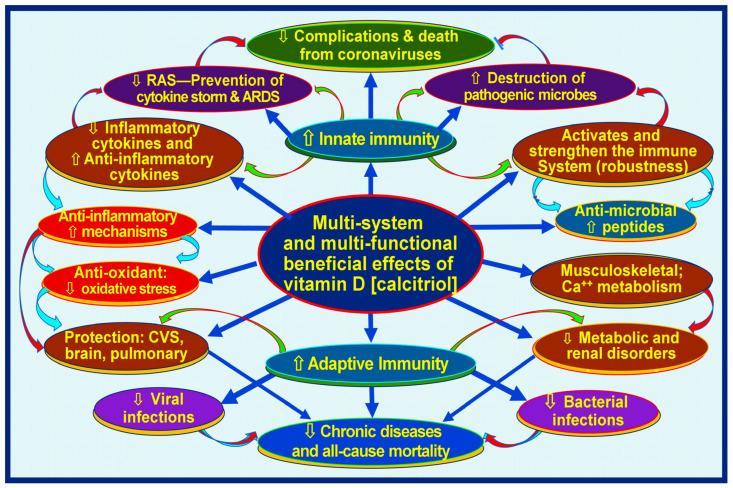
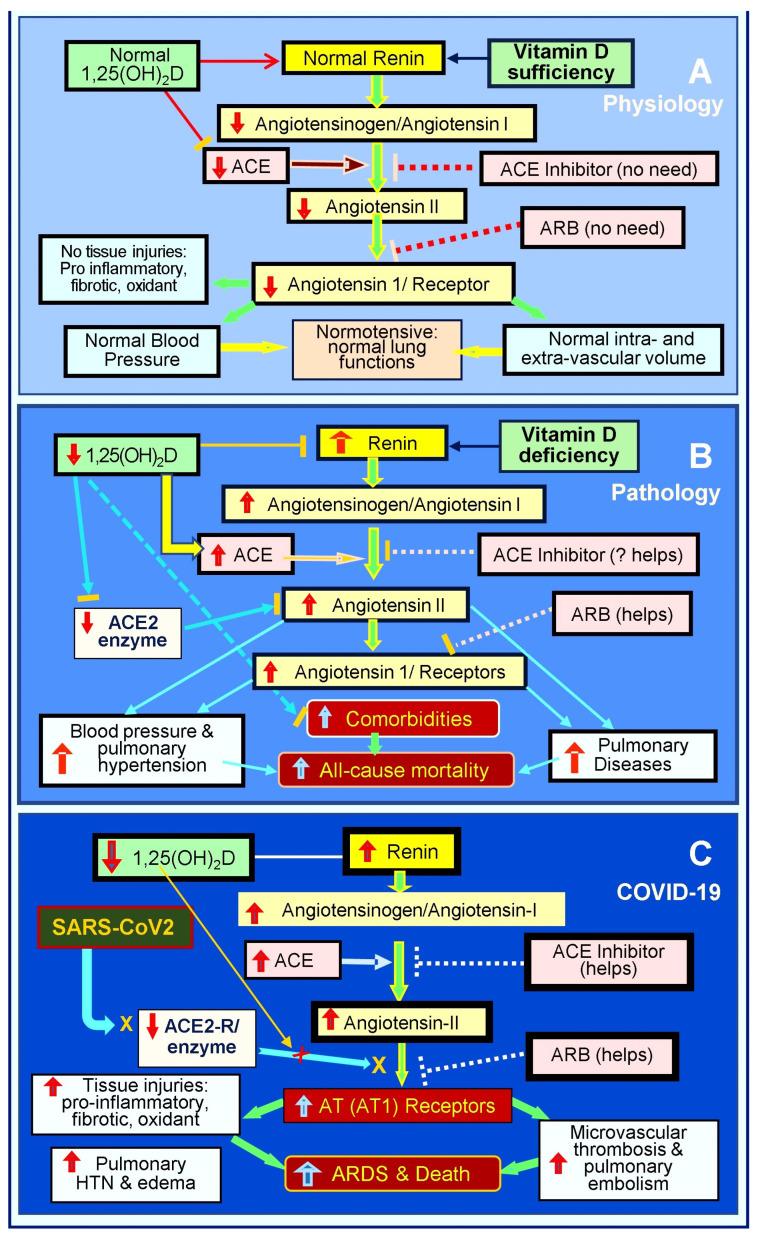
The interaction of the SARS-CoV-2 spike protein with membrane-bound angiotensin-converting enzyme-2 (ACE-2) receptors in epithelial cells facilitates viral entry into human cells. Despite this, ACE-2 exerts significant protective effects against coronaviruses by neutralizing viruses in circulation and mitigating inflammation. While SARS-CoV-2 reduces ACE-2 expression, vitamin D increases it, counteracting the virus's harmful effects. Vitamin D's beneficial actions are mediated through complex molecular mechanisms involving innate and adaptive immune systems. Meanwhile, vitamin D status [25(OH)D concentration] is inversely correlated with severity, complications, and mortality rates from COVID-19. This study explores mechanisms through which vitamin D inhibits SARS-CoV-2 replication, including the suppression of transcription enzymes, reduced inflammation and oxidative stress, and increased expression of neutralizing antibodies and antimicrobial peptides. Both hypovitaminosis D and SARS-CoV-2 elevate renin levels, the rate-limiting step in the renin-angiotensin-aldosterone system (RAS); it increases ACE-1 but reduces ACE-2 expression. This imbalance leads to elevated levels of the pro-inflammatory, pro-coagulatory, and vasoconstricting peptide angiotensin-II (Ang-II), leading to widespread inflammation. It also causes increased membrane permeability, allowing fluid and viruses to infiltrate soft tissues, lungs, and the vascular system. In contrast, sufficient vitamin D levels suppress renin expression, reducing RAS activity, lowering ACE-1, and increasing ACE-2 levels. ACE-2 cleaves Ang-II to generate Ang, a vasodilatory, anti-inflammatory, and anti-thrombotic peptide that mitigates oxidative stress and counteracts the harmful effects of SARS-CoV-2. Excess ACE-2 molecules spill into the bloodstream as soluble receptors, neutralizing and facilitating the destruction of the virus. These combined mechanisms reduce viral replication, load, and spread. Hence, vitamin D facilitates rapid recovery and minimizes transmission to others. Overall, vitamin D enhances the immune response and counteracts the pathological effects of SARS-CoV-2. Additionally, data suggests that widely used anti-hypertensive agents-angiotensin receptor blockers and ACE inhibitors-may lessen the adverse impacts of SARS-CoV-2, although they are less potent than vitamin D.
严重急性呼吸综合征冠状病毒2(SARS-CoV-2)刺突蛋白与上皮细胞中膜结合的血管紧张素转换酶2(ACE-2)受体相互作用,促进病毒进入人体细胞。尽管如此,ACE-2通过中和循环中的病毒和减轻炎症,对冠状病毒发挥显著的保护作用。虽然SARS-CoV-2会降低ACE-2的表达,但维生素D会增加其表达,抵消病毒的有害影响。维生素D的有益作用是通过涉及先天和适应性免疫系统的复杂分子机制介导的。同时,维生素D状态[25(OH)D浓度]与COVID-19的严重程度、并发症和死亡率呈负相关。本研究探讨了维生素D抑制SARS-CoV-2复制的机制,包括抑制转录酶、减轻炎症和氧化应激,以及增加中和抗体和抗菌肽的表达。维生素D缺乏和SARS-CoV-2都会提高肾素水平,肾素是肾素-血管紧张素-醛固酮系统(RAS)中的限速步骤;它会增加血管紧张素转换酶1(ACE-1)的水平,但会降低ACE-2的表达。这种失衡会导致促炎、促凝血和血管收缩肽血管紧张素-II(Ang-II)水平升高,从而引发广泛的炎症。它还会导致膜通透性增加,使液体和病毒渗入软组织、肺部和血管系统。相比之下,充足的维生素D水平会抑制肾素表达,降低RAS活性,降低ACE-1水平,并增加ACE-2水平。ACE-2会切割Ang-II生成Ang,这是一种血管舒张、抗炎和抗血栓形成的肽,可减轻氧化应激并抵消SARS-CoV-2的有害影响。过量的ACE-2分子会作为可溶性受体溢出到血液中,中和并促进病毒的破坏。这些综合机制可减少病毒复制、载量和传播。因此,维生素D有助于快速康复并最大限度地减少传播给他人。总体而言,维生素D可增强免疫反应并抵消SARS-CoV-2的病理影响。此外,数据表明,广泛使用的抗高血压药物——血管紧张素受体阻滞剂和ACE抑制剂——可能会减轻SARS-CoV-2的不利影响,尽管它们的效力不如维生素D。

 Zotero 插件